
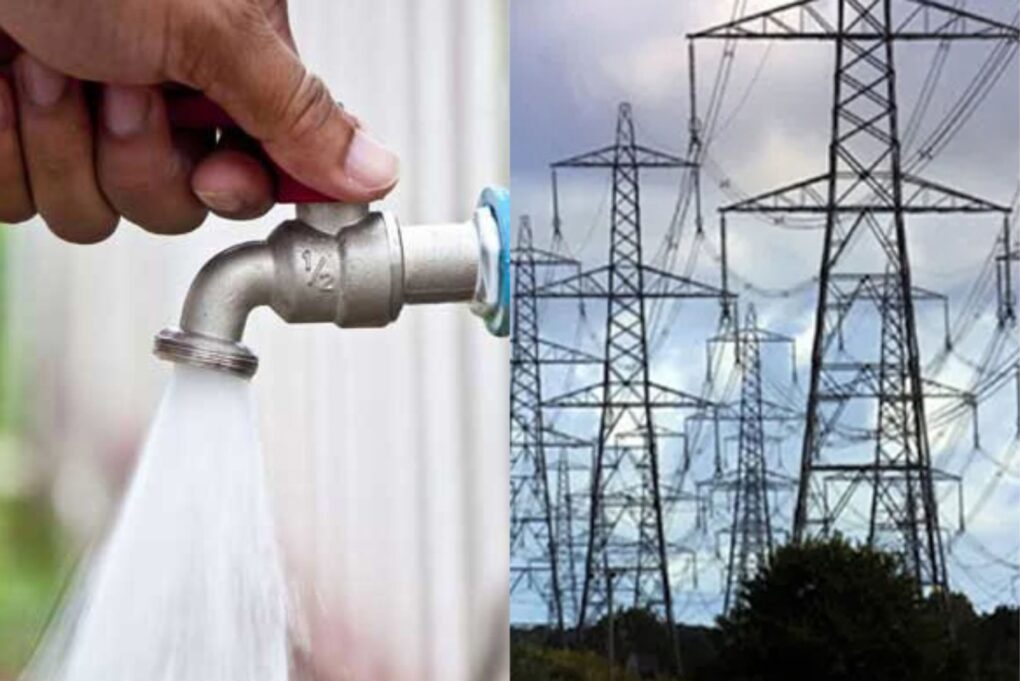
The Public Utilities Regulatory Commission (PURC) has assured households and businesses across Ghana of improved stability in electricity and water supply in 2027, following increased investments in utility infrastructure and strengthened regulatory supervision.
The assurance was given during the unveiling of the Centre of Excellence in Public Utility Regulation (CEPUR) in Accra. The centre is expected to provide professional training for utility sector workers in Ghana and other African countries.
PURC Executive Secretary, Dr Shafic Suleman, explained that electricity and water tariff adjustments for 2027 would be determined by key economic indicators, including exchange rate movements, inflation, the thermal-hydro electricity generation mix and the weighted average cost of natural gas.
He noted that although these economic factors influence utility tariffs, the Commission’s primary responsibility is to ensure reliable electricity and water services for consumers.
Dr Suleman stressed that Ghanaians should expect stable power supply in 2027, adding that PURC would continue working with relevant stakeholders to improve service delivery and protect consumers.
GWCL Reduces Water Losses Through Infrastructure Investment
Utility service providers have introduced several measures to reduce operational inefficiencies, minimise revenue losses and improve service delivery.
The Ghana Water Company Limited (GWCL), for instance, has replaced ageing concrete and asbestos water pipelines with modern high-density polyethylene (HDPE) pipelines as part of efforts to improve water distribution.
These infrastructure upgrades have contributed to a reduction in non-revenue water, which refers to treated water supplied into the distribution system but not paid for by consumers.
According to the figures presented, GWCL’s non-revenue water levels have declined from more than 50 per cent to approximately 46–47 per cent.
The improvements are expected to help reduce water wastage, strengthen distribution efficiency and improve access to reliable water supply.
ECG Records Improvement in Electricity Distribution Losses
The Electricity Company of Ghana (ECG) has also invested in transformers, electricity cables and other distribution infrastructure to improve power supply and reduce technical and commercial losses.
The company’s overall electricity distribution losses have reportedly declined from more than 30 per cent to approximately 26–27 per cent, while technical losses have reduced by 9.8 per cent.
ECG’s revenue mobilisation has also improved significantly, increasing from less than GH¢1 billion to approximately GH¢1.5 billion.
However, the amount remains below the regulator’s estimated annual revenue requirement of about GH¢2 billion, highlighting the need for further improvements in revenue collection and operational efficiency.
PURC Targets Improved Utility Services in 2027
The PURC expects electricity and water sector investments to increase in 2027, supported by stronger regulatory monitoring, improved workforce capacity and better infrastructure management.
These measures are expected to enhance the reliability of electricity distribution, improve water delivery and reduce operational challenges affecting utility service providers.
Although PURC did not announce any tariff adjustment for the fourth quarter of 2026, the cumulative quarterly adjustments throughout the year resulted in an estimated compounded increase of 8.4 per cent in electricity tariffs and 13.3 per cent in water tariffs.
Dr Suleman acknowledged that consumers had experienced several cost increases during 2026, including adjustments linked to taxes.
He indicated that the Commission’s priorities for 2027 would focus on utility service stability, consumer protection, regulatory accountability and improved service delivery.
PURC and GIMPA Establish Centre of Excellence in Utility Regulation
The newly unveiled Centre of Excellence in Public Utility Regulation (CEPUR) is a joint initiative between PURC and the Ghana Institute of Management and Public Administration (GIMPA).
The institution is expected to strengthen professional expertise and build the technical capacity of utility service providers through specialised education and training programmes.
With support from Enclave Power through its subsidiary, LMI, the centre also aims to position Ghana as a leading destination for public utility regulation training and professional development across Africa and beyond.
Dr Suleman called on other utility companies and private sector organisations to support similar initiatives, emphasising the importance of investing in education, professional training and human resource development.
The establishment of CEPUR is expected to contribute to stronger utility regulation, improved electricity and water service delivery, and the development of skilled professionals capable of addressing challenges in Ghana’s energy and water sectors.
Source: newsthemegh.com