
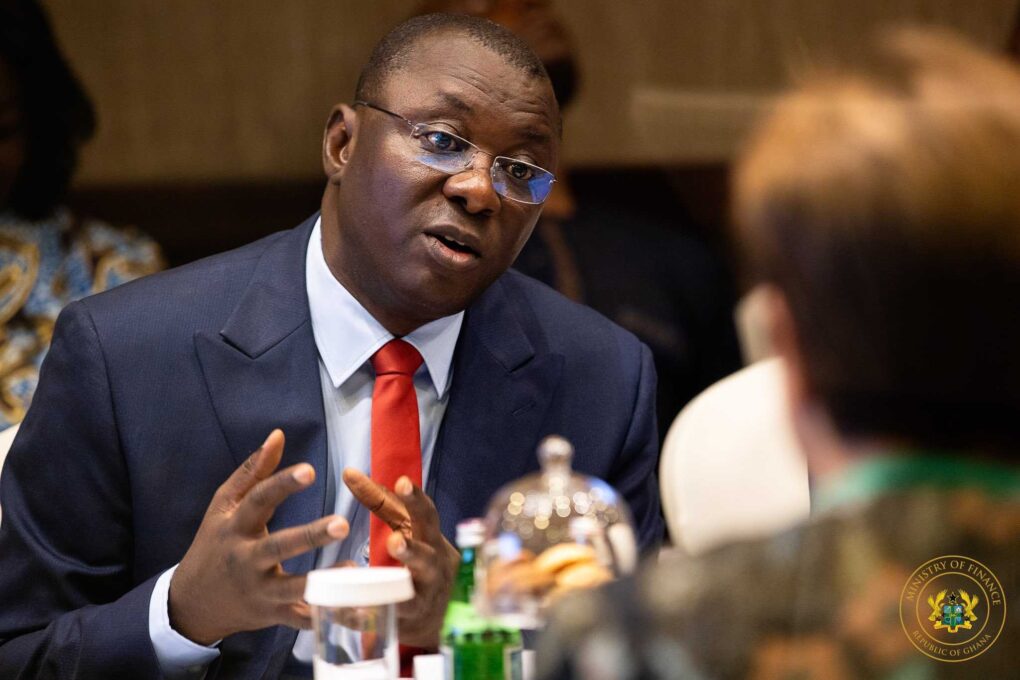
Former Finance Minister and Karaga MP, Dr Mohammed Amin Adam, has raised concerns over Ghana’s rising public debt, estimating that the country’s debt burden translates into approximately GH¢23,000 for every citizen, including newborn babies.
Speaking in Parliament on Wednesday, November 18, 2026, during debate on the 2027 Budget Statement, Dr Amin Adam argued that every Ghanaian effectively carries a share of the country’s national debt.
“Every Ghanaian, including the children, the Ghanaian child born yesterday, owes 23,000 Ghana cedis,” he stated.
Presenting the Minority’s position on the 2027 Budget, the former Finance Minister estimated Ghana’s public debt at US$65.3 billion as of the end of October 2026, compared with US$49.5 billion at the end of 2024.
Amin Adam Questions Mahama Government’s Economic Stability Claims
Dr Amin Adam rejected the government’s assessment of economic stability, describing the improvements being reported as artificial rather than sustainable.
He argued that important economic indicators, including public debt, inflation and the exchange rate, were showing signs of renewed pressure.
According to him, Ghana’s debt-to-GDP ratio had increased to 47.5%, from 44.7% after the country’s debt restructuring programme and the cedi’s appreciation in 2025.
He said the latest figure also differed from President John Dramani Mahama’s earlier assertion that the debt-to-GDP ratio stood at 45%.
The former Finance Minister further alleged that the government had accumulated an additional GH¢118 billion in public debt within 10 months, representing an increase of approximately 18%.
Citing Bank of Ghana figures, he put the country’s total public debt at GH¢759.3 billion, questioning the government’s assurances that it was not engaging in excessive borrowing.
Amin Adam Compares Akufo-Addo and Mahama Government Borrowing
In comparing the debt performance of the previous and current administrations, Dr Amin Adam claimed that the Akufo-Addo government reduced Ghana’s debt by US$11 billion between 2021 and 2024.
He contrasted this with what he described as an additional US$16 billion in borrowing under the Mahama administration since it assumed office.
He also claimed that average annual debt accumulation stood at US$1.8 billion during the first two years of the Akufo-Addo administration, compared with US$7.9 billion under the current government.
Ghana Inflation and Cedi Depreciation Raise Concerns
Dr Amin Adam also questioned the sustainability of Ghana’s recent macroeconomic gains, particularly the performance of inflation and the Ghana cedi.
He stated that inflation had increased from 3.2% in March to 5.5%, while the cedi, which appreciated by approximately 40% in 2025, had depreciated by 10.6% over the subsequent 10 months.
He further warned that the government’s projected exchange rate of GH¢13.70 to the US dollar for 2027 would represent an additional depreciation of approximately 18%.
Amin Adam Challenges Government’s Job Creation Promises
On employment, the Minority spokesperson accused the government of failing to provide sufficient accountability for the jobs promised under its previous budgetary programmes.
He questioned the progress of several employment initiatives, including:
- 800,000 jobs: Projected under the 2026 Budget.
- 1.7 million jobs: Expected from the 24-Hour Economy Programme by the end of 2028.
- 490,000 jobs: Projected under the government’s Big Push infrastructure programme.
- 27,000 direct jobs: Expected from three proposed garment factories.
Dr Amin Adam claimed that the three garment factories expected to generate 27,000 direct jobs had not progressed beyond the feasibility study stage.
He also criticised the government’s New Economy programme, describing it as a repackaging of the 24-Hour Economy initiative, which he believes has failed to deliver its intended results.
He questioned why GH¢165 million was still being allocated to the programme’s secretariat despite concerns about its implementation.
The former Finance Minister had previously called on the Finance Minister to acknowledge the alleged shortcomings of the 24-Hour Economy Programme before presenting the 2027 Budget.
Amin Adam Questions Ghana’s 2027 GDP Growth Forecast
The Karaga MP also challenged the government’s projected economic growth rate of 5.2% for 2027.
He argued that Ghana’s economic growth would fall to 3.4% without the contribution of the information and communication sector.
According to his presentation, the sector accounts for approximately 9% of the economy but is expected to contribute 41% of projected economic growth.
He also questioned the economic returns on government capital expenditure, particularly the GH¢41 billion reportedly spent during the year, largely on construction-related activities.
Despite the expenditure, he said the construction sector contributed only 0.2% to economic growth in the first half of the year.
“Were the contract prices inflated? Where did the money go?” he questioned.
GH¢85 Billion Government Borrowing Could Affect Private Sector Credit
Dr Amin Adam further expressed concern about the government’s borrowing plans for 2027, warning that the proposed GH¢85 billion in borrowing could limit access to financing for private businesses.
He noted that approximately GH¢59 billion of the planned borrowing would come from commercial banks.
According to him, increased government borrowing from the domestic financial market could crowd out private businesses by reducing the funds available for lending to companies and entrepreneurs.
He compared Ghana’s private-sector credit-to-GDP ratio of 8% with Kenya’s 35%, arguing that the country needs stronger access to financing to support business expansion and economic growth.
Ricketts-Hagan Challenges Amin Adam’s Debt Figures
However, the Minority’s criticisms were challenged by the Majority’s representative in the parliamentary debate, Kwaku Ricketts-Hagan.
Mr Ricketts-Hagan accused Dr Amin Adam of presenting figures that were not accurately reflected in the 2027 Budget documents.
He maintained that Parliament was a house of records and criticised what he described as incorrect statements made by the former Finance Minister in the media.
Although he agreed that Ghana’s debt-to-GDP ratio stood at 47.5%, he questioned the accuracy and interpretation of some of Dr Amin Adam’s other figures.
“I don’t know where his figures are coming from,” he remarked.
Mr Ricketts-Hagan defended the government’s fiscal consolidation strategy, explaining that the administration was focused on controlling public expenditure and ensuring that government spending remained aligned with available revenue.
“We are cutting our coat according to our size,” he stated.
The parliamentary exchange highlights the growing political debate over Ghana’s public debt, government borrowing, economic growth projections, job creation and the sustainability of the country’s ongoing economic recovery.
Source: newsthemegh.com