

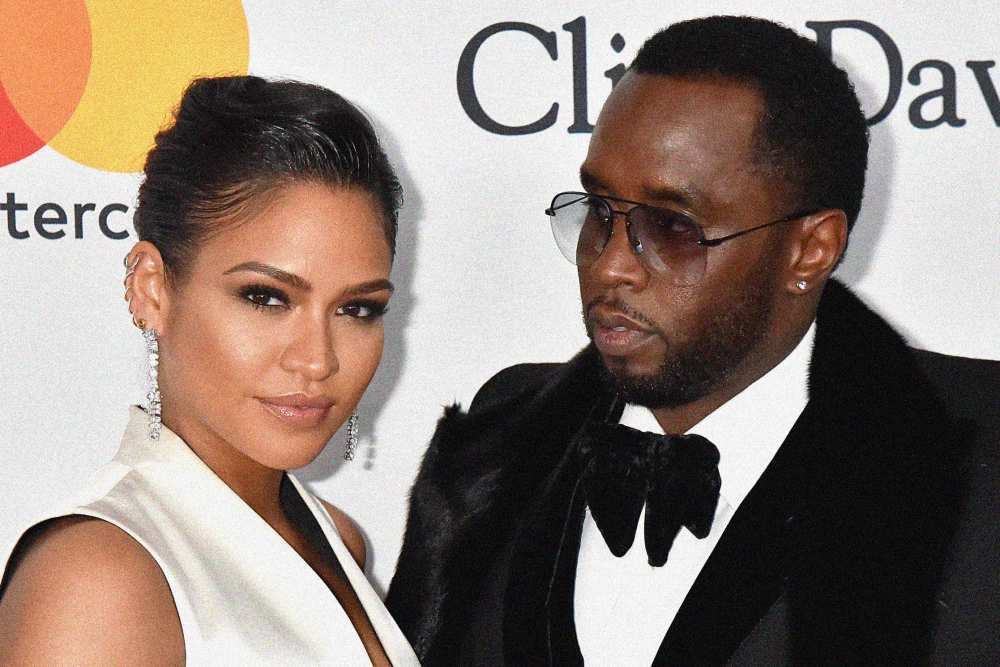
Casandra Ventura’s civil lawsuit against Combs was settled in a day, but it set the stage for a reckoning that will soon come to a head in federal court.
In June 2022, during his acceptance speech at the BET Awards, where he was honored with a lifetime achievement award, Sean Combs reflected on having been “in a dark place for a few years” and thanked a handful of people who he said had been there for him in that period.
He credited Cassie, his former longtime girlfriend, a model and R&B singer once signed to his music label whose real name is Casandra Ventura, with “holding me down in the dark times.”
Sign up for the “Diddy on Trial” newsletter for key developments and analysis
Roughly a year and a half later, in November 2023, Ventura filed a civil lawsuit against Combs in federal court in Manhattan, accusing him of repeated physical abuse over more than a decade, of forcing her to have sex with male sex workers while he masturbated and filmed them, and of raping her in September 2018, near the end of their relationship, among other accusations.
In the run-up to Combs’ trial, scheduled to start in May, here’s a look at what preceded the legal inquiry into one of the most prominent figures in the music industry, who founded Bad Boy Records and helped to make stars of Mary J. Blige, Usher and the Notorious B.I.G.
Combs is no stranger to allegations of violence, but the claims in Ventura’s suit, though settled in 2023, would not easily go away. Ventura and Combs settled privately in one day, with Combs denying any wrongdoing. But months after the settlement, federal agents raided Combs’ homes in Los Angeles and Miami Beach, and a steady stream of civil lawsuits accusing him of similar conduct followed.
Combs was indicted in September 2024 on federal charges of sex trafficking, racketeering and transportation to engage in prostitution. He pleaded not guilty and remains detained at a federal detention center in Brooklyn, awaiting his trial.
The indictment has been amended three times — most recently, this week to add a charge each of sex trafficking and of transportation to engage in prostitution.
Before the settlement was reached, a lawyer for Combs, Ben Brafman, said that over the previous six months, Ventura had demanded $30 million from Combs “under the threat of writing a damaging book about their relationship,” which Brafman said was “blatant blackmail.”
Ventura’s attorney, Douglas Wigdor, denied she was trying to blackmail Combs and said attorneys for each side had spoken before the suit was filed. Wigdor said Combs had offered Ventura “eight figures to silence her” and prevent her from filing the lawsuit, but she “rejected his efforts.” One of Combs’ attorneys in his federal case has since said Combs and Ventura reached an eight-figure settlement.
A week after Ventura filed her suit, another woman, Joi Dickerson-Neal, sued Combs, alleging he drugged and raped her in 1991 when she was a college student and that he recorded the assault without her knowledge.
A representative for Combs denied her allegations, and the lawsuit is pending.
Dickerson-Neal said in her suit that she decided to come forward after reading about Ventura’s lawsuit. Both women and dozens of others filed their claims under the Adult Survivors Act, a New York law that allows people who say they were sexually abused to file civil suits after the statute of limitations has expired.
The initial indictment against Combs referred only to a Victim-1, whose accusations closely mirrored those of Ventura. It has been amended three times to add new allegations, including that Combs coerced two additional women — Victim-2 and Victim-3 — into commercial sex acts and dangled a person over an apartment balcony and to add four years to the length of the alleged racketeering conspiracy, saying it lasted from about 2004 to about 2024. The original indictment said the conspiracy began by 2008. According to prosecutors, the racketeering charge involves a “criminal organization” responsible for such crimes as kidnapping, bribery, arson and obstruction of justice.

Ventura’s suit said that not long after she met Combs in 2005, when she was 19 and he was 37, he signed her to his record label and asserted complete control of her personal and professional life, including by plying her with drugs. Throughout their relationship, her suit said, Combs “was prone to uncontrollable rage” and would frequently beat her “savagely.” His staff and employees of his various businesses witnessed the beatings, the suit said, but none dared to speak up against him. Ventura said in the document that she was a victim of sex trafficking because Combs forced her to have sex with male sex workers — encounters he called “freak offs,” she said — in multiple jurisdictions, including at high-end hotels and his homes. Her suit said she was given alcohol in excessive amounts and “copious amounts of drugs” before and during the freak offs, which she took because “they allowed her to disassociate during these horrific encounters.”
The suit named a number of Combs’ associated companies as defendants and described multiple unsuccessful attempts by Ventura to leave Combs, including during a March 2016 freak off at the InterContinental Hotel in Los Angeles, in which she said Combs became extremely intoxicated and punched Ventura in the face, giving her a black eye.
The suit said that after Combs fell asleep, Ventura attempted to leave but Combs awoke, became enraged and followed her into a hotel hallway where he threw glass vases at her. The hotel’s security cameras captured Combs beating Ventura and throwing glass at her, but he paid the hotel $50,000 for the footage, the suit said.
Source: nbcnews.com