
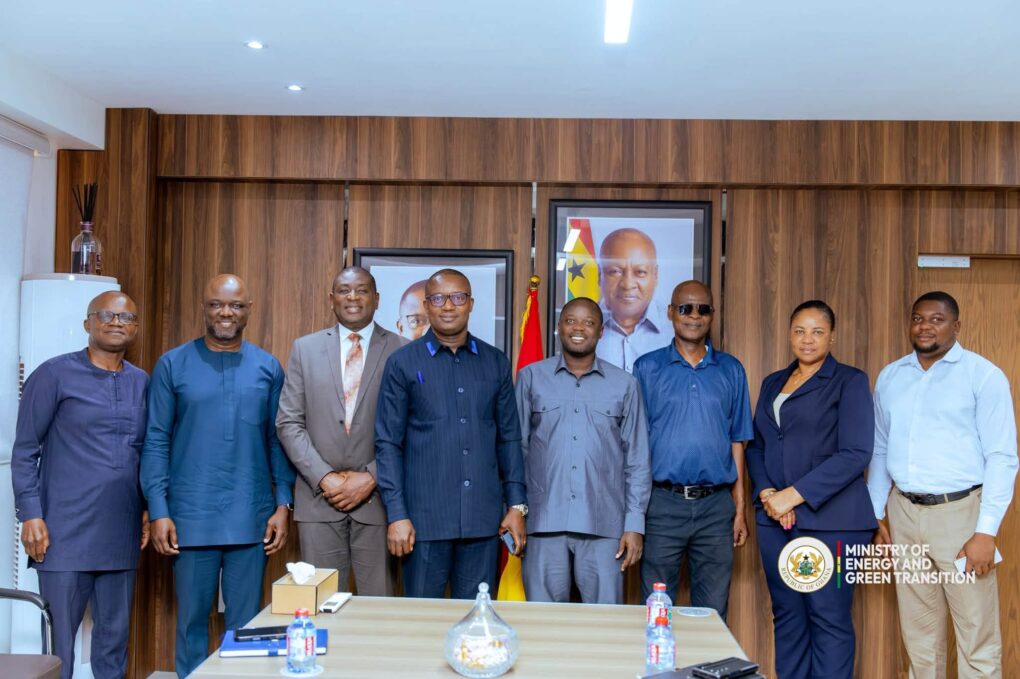
Energy Minister John Abdulai Jinapor has assured stakeholders that the proposed National Petroleum Authority (NPA) Bill will not be used to undermine the operations or financial stability of BOST Energies, the state-owned petroleum storage and distribution company.
The minister gave the assurance on Monday during an engagement with civil society organisations, energy experts and industry stakeholders to discuss the proposed legislation currently before Parliament.
According to the Information Services Department, the meeting was organised to gather feedback on the potential impact of the draft NPA Bill on Ghana’s downstream petroleum sector.
Among those present were energy advocates Kwadwo Poku and Ben Boakye, as well as Benjamin Nsiah of the Institute for Energy Security. Discussions largely focused on concerns that certain provisions in the proposed legislation could weaken BOST Energies and threaten its long-term operations.
However, Jinapor dismissed suggestions that the government intended to disadvantage the state-owned company. He maintained that the current administration had demonstrated its commitment to strengthening BOST Energies and that he would not support any policy that undermined its interests.
One of the most contentious provisions in the proposed legislation is Clause 103, which would allow private companies to establish and operate inland petroleum depots.
The proposal has triggered strong opposition from petroleum workers, who have threatened a nationwide strike if Parliament passes the bill without addressing their concerns.
BOST Energies currently plays a central role in Ghana’s inland petroleum storage and distribution system. Workers fear that allowing private investors to establish competing depots could divert petroleum products from the state company’s facilities, potentially reducing its operational capacity and threatening jobs.
The concerns have been particularly significant because of BOST’s recent financial and operational improvements.
The company’s permanent workforce increased from 440 employees in November 2024 to 743 in November 2025 following recruitment efforts to support round-the-clock petroleum distribution operations.
BOST Energies also recorded a profit of GH¢683.96 million in 2025 and paid its first dividend to the government, marking a significant development in its financial performance.
Although petroleum workers have expressed support for private sector investment in the downstream industry, they want such partnerships to be implemented through the Public-Private Partnership Act, 2020.
Their preferred approach is for private investors to collaborate with BOST Energies rather than establish independent inland depots that could compete directly with the state-owned company.
Meanwhile, the Ministry of Energy and Green Transition has indicated that Clause 103 could be amended during parliamentary committee deliberations without necessarily withdrawing the entire bill.
Ministry spokesperson Richmond Rockson explained that proposed legislation often undergoes revisions during parliamentary consideration and confirmed that discussions with BOST Energies were ongoing.
Speaking at the stakeholder engagement, Jinapor said the proposed NPA reforms were intended to strengthen regulatory oversight, improve efficiency and protect Ghana’s national interests in the downstream petroleum sector.
He stressed that the government had no intention of weakening existing state-owned institutions and encouraged civil society organisations and industry players to continue submitting their recommendations as Parliament examines the legislation.
Opposition to the proposed NPA Bill is not new. In September 2026, the Institute for Energy Research and Policy (IERPP) called on the government to withdraw and review the legislation before proceeding with its passage.
The Energy Minister formally presented the NPA Bill to Parliament on Thursday, November 19, 2026. The proposed legislation subsequently received its first reading and was referred to the Parliamentary Energy Committee for further consideration.
With Clause 103 emerging as a major point of disagreement, the committee’s deliberations are expected to be crucial in determining the future of private investment, petroleum depot operations and BOST Energies’ position within Ghana’s downstream oil and gas industry.
Source: newsthemegh.com