

By Ernest Bako WUBONTO
Civil Society Organisations (CSOs) focused on the extractive sector have called for further legislative reforms to strengthen the governance and transparency framework of the Minerals Income Investment Fund (MIIF).
The CSOs’ concerns centre largely on revisions to the Fund’s governing law, particularly the reduction of MIIF’s share of mineral income to just two percent. Under the revised arrangement, the bulk of royalties and dividends is now directed into the Consolidated Fund – a shift they argue could undermine MIIF’s original mandate and effectiveness.
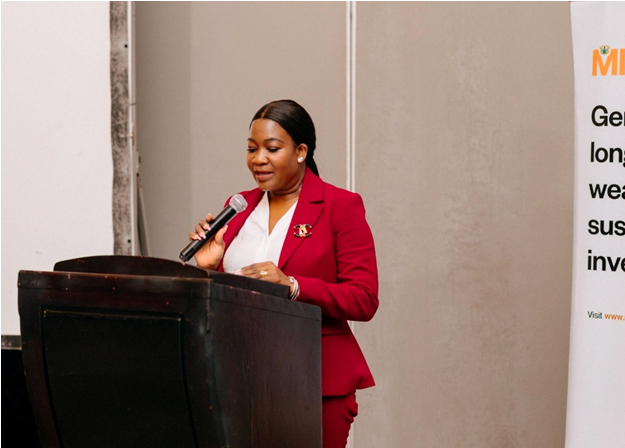
This came up during a CSO roundtable engagement in Accra convened by MIIF as part of a broader stakeholder outreach strategy.
The forum focused on updated provisions of the Minerals Income Investment Fund Act, 2018 (Act 978), as amended by Act 1137, and examined gaps that participants argued require further statutory attention.
Head of Legal at MIIF, Tuinese Edward Amuzu, touched on significance of the amendments introduced in 2020 and 2025 – noting that they have redefined the Fund’s operational framework and long-term strategic direction.
However, CSO representatives present at the session pressed for more robust oversight mechanisms and clearer public reporting obligations to be enshrined in the law.
The Executive Director-Institute for Democratic Governance (IDEG), Emmanuel Akwetey, questioned MIIF’s operational capacity and long-term sustainability under this new framework.
He recalled that under the Minerals Income Investment Fund Act, 2018 (Act 978), mineral revenues comprising royalties and dividends were paid into an account controlled by MIIF.

This structure allowed the fund to retain a substantial portion of these revenues for investment and operational purposes, while also allocating shares to other statutory bodies.
In contrast, Mr. Akwetey noted that the amended system requires all mineral income to first be deposited into a minerals income holding account managed by the Ministry of Finance (MoF) and Controller and Accountant-General.
From this pool only two percent is disbursed to MIIF, with the remainder transferred into the Consolidated Fund for other government expenditures.
He expressed concern that this change could constrain MIIF’s ability to function effectively as an investment vehicle.
Adding to these concerns, the founding president of IMANI Africa, Franklin Cudjoe, highlighted gaps in the systems used to evaluate investment performance and ensure value for money.
He pointed to MIIF’s investment in Asante Gold Corporation’s gold trading as an example, advocating a need for stronger monitoring and accountability mechanisms to assess outcomes and inform decision-making.
In response, MIIF acknowledged that while some of its investments have delivered positive results, others have encountered challenges and are currently being restructured.
Addressing the concerns, Chief Finance Officer at MIIF, David Awuah Mensah said: “Where we need to exit, we have exited”.
He added that efforts are underway to recover the funds involved.
The push for reform comes against a backdrop of MIIF’s strongest financial performance to date.
The fund recorded total mineral royalty inflows of GH₵5.43billion in 2025, a 10.8 percent increase over the GH₵4.91billion collected in 2024 and the highest annual figure in the institution’s history.
Chief Executive Officer-MIIF, Justina Nelson, attributed the revenue growth to “disciplined enforcement, strategic oversight and strong institutional commitment”, noting that internal compliance, risk management and monitoring systems had significantly improved operational efficiency under the leadership of President John Dramani Mahama.
Mrs. Nelson disclosed that the performance was achieved despite appreciation of the cedi, which typically depresses the local currency value of dollar-denominated mineral revenues.
She added that early figures from first quarter-2026 already exceed collections from the corresponding period in 2025: “I can say that MIIF has entered 2026 from a position of strength”.
The MIIF’s improved revenue collection has been reinforced by closer collaboration with Ghana Revenue Authority (GRA) and more efficient data-sharing systems, enabling better tracking and enforcement of royalty obligations.
On the investment side, Chief Technical Officer-MIIF Kwabena Barning outlined MIIF’s diversified portfolio strategy which spans equities, fixed income, alternative investments and cash holdings, with allocation limits aligned with global benchmarks to ensure competitiveness.
Established under Act 978, MIIF holds a threefold mandate: receiving mineral royalties on behalf of the state, investing those revenues for sustainable returns and managing the country’s equity interests in large-scale mining companies.
The model mirrors sovereign wealth fund structures employed in other resource-rich economies to convert extractive revenues into diversified financial assets.
Ghana remains one of Africa’s leading gold producers, with the metal accounting for more than 90 percent of mineral export receipts. Bauxite, manganese and emerging minerals, including lithium, continue to expand the country’s extractive portfolio.
CSO representatives at the Accra engagement argued that while the recent amendments represent progress, additional legislative safeguards are necessary to cement transparency, broaden stakeholder representation in governance structures and ensure the Fund’s long-term accountability to the public.
Source: thebftonline.com