
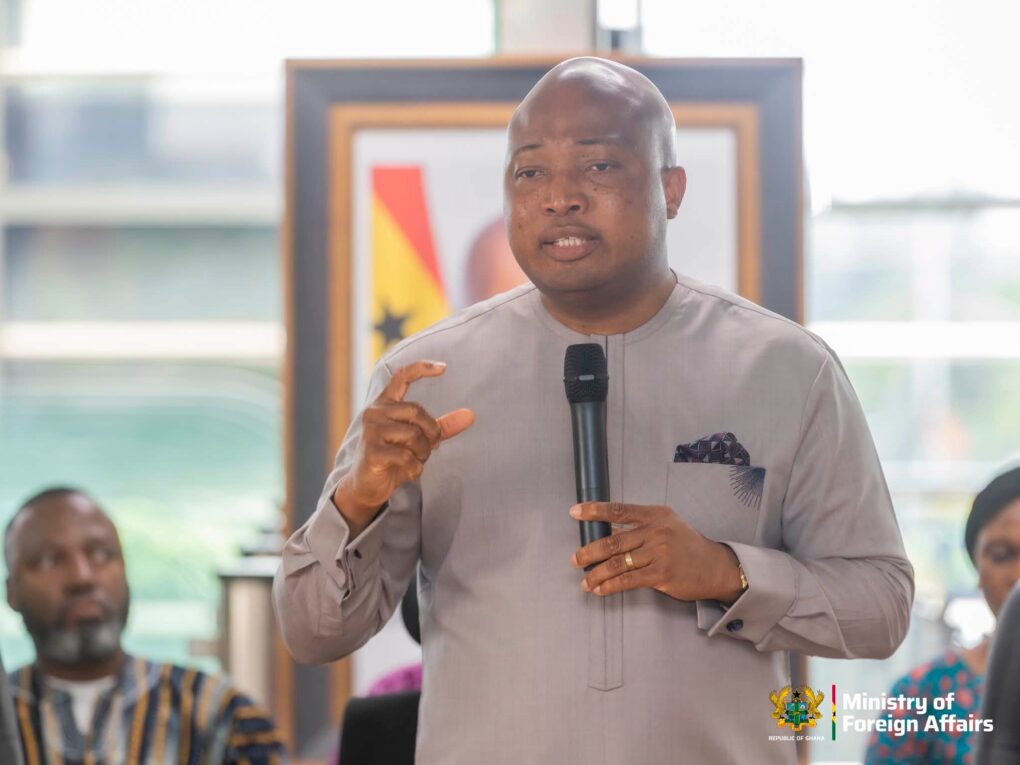
Ghana’s Minister for Foreign Affairs, Samuel Okudzeto Ablakwa, says growing acknowledgements and apologies from international leaders and religious institutions over the transatlantic slave trade demonstrate progress in Africa’s campaign for reparative justice.
According to Ablakwa, several world leaders and church authorities have expressed remorse for their historical connections to slavery and pledged to support efforts to return looted African artefacts and traditional regalia to their rightful owners.
Speaking on TV3’s The Key Points programme on Saturday, October 10, 2026, the Foreign Affairs Minister urged Ghanaians to recognise the country’s diplomatic efforts, particularly the adoption of a United Nations resolution on reparative justice.
He cited reported apologies from France, Denmark and religious leaders, including Pope Leo XIV and the Archbishop of Canterbury, as developments highlighting the growing international discussion about historical injustices against Africans.
Ablakwa also said commentators and international relations experts had acknowledged Ghana’s participation in the 81st United Nations General Assembly (UNGA).
Ghana Pushes for Reparations and the Return of Looted African Artefacts
The minister’s comments follow President John Dramani Mahama’s call for stronger international action on reparative justice after the adoption of the UN resolution.
Addressing a side event at the United Nations General Assembly in New York on September 23, 2026, President Mahama described the transatlantic slave trade as one of the gravest crimes against humanity and called for concrete measures to address its enduring consequences.
The President outlined three pillars to guide the next phase of the reparative justice campaign, emphasising international recognition, institutionalised restitution and Africa’s capacity to preserve its cultural heritage.
1. Recognising Progress in Artefact Restitution
President Mahama acknowledged countries and institutions that have taken steps towards documenting and returning African cultural objects.
He thanked the Netherlands for cataloguing 2,000 Ghanaian artefacts for possible return and recognised Germany’s engagement with the Kpando traditional area.
He also referred to France’s legislative efforts concerning the restitution of cultural property and the return of the Gigi Ayokwe talking drums, a set of sacred instruments associated with Côte d’Ivoire.
The President further acknowledged apologies from religious institutions over their historical involvement in slavery.
According to his remarks, the Archbishop of Canterbury apologised for the Church of England’s role in slavery and pledged £100 million towards a reparatory justice fund. He also welcomed acknowledgements and apologies associated with the Catholic Church.
However, Mahama stressed that individual apologies, financial pledges and isolated restitution initiatives would not be sufficient to achieve lasting justice.
He argued that a comprehensive approach was needed to ensure that commitments translated into meaningful and sustainable action.
2. Calls for a Permanent Global Restitution System
As the second pillar, President Mahama called for the establishment of a permanent international framework to facilitate the return of stolen African artefacts and human remains.
He urged UNESCO, the United Nations and countries holding African cultural objects to develop clear legal and diplomatic procedures for restitution.
The proposed framework would support provenance research, improve access to historical archives and reduce legal obstacles that delay the return of cultural property.
Mahama also called for the unconditional return of African human remains to their appropriate places of origin.
He maintained that restitution should be guided by transparent procedures and international cooperation rather than depending on individual countries’ goodwill.
3. Rejecting Arguments Against Returning African Heritage
President Mahama also challenged arguments that African countries lack the museums, infrastructure or technical capacity required to preserve returned artefacts.
He maintained that concerns about preservation capacity should not be used to justify the continued possession of African cultural property by foreign institutions.
Instead, he argued that international cooperation should help African countries develop the facilities and expertise needed to protect their heritage.
The President pointed to the African Union’s Agenda 2063 development framework and plans for the Great African Museum as part of efforts to strengthen the continent’s cultural infrastructure.
The proposed museum initiative is intended to contribute to preserving African history, protecting cultural heritage and providing a destination for artefacts returned from overseas.
Ghana’s Diplomatic Efforts on Reparative Justice
Ghana has continued to advocate for international recognition of the historical consequences of slavery, the restitution of looted cultural property and the establishment of mechanisms to address historical injustices.
Ablakwa’s remarks highlight the government’s emphasis on diplomacy and international cooperation in advancing these objectives.
The broader reparative justice debate covers issues including formal apologies, the return of stolen artefacts, compensation, historical education and measures to address the lasting social and economic effects of slavery.
For Ghana and other African countries, the central challenge is to translate international declarations and expressions of remorse into practical measures that support restitution, cultural preservation and historical accountability.
Source: newsthemegh.com