
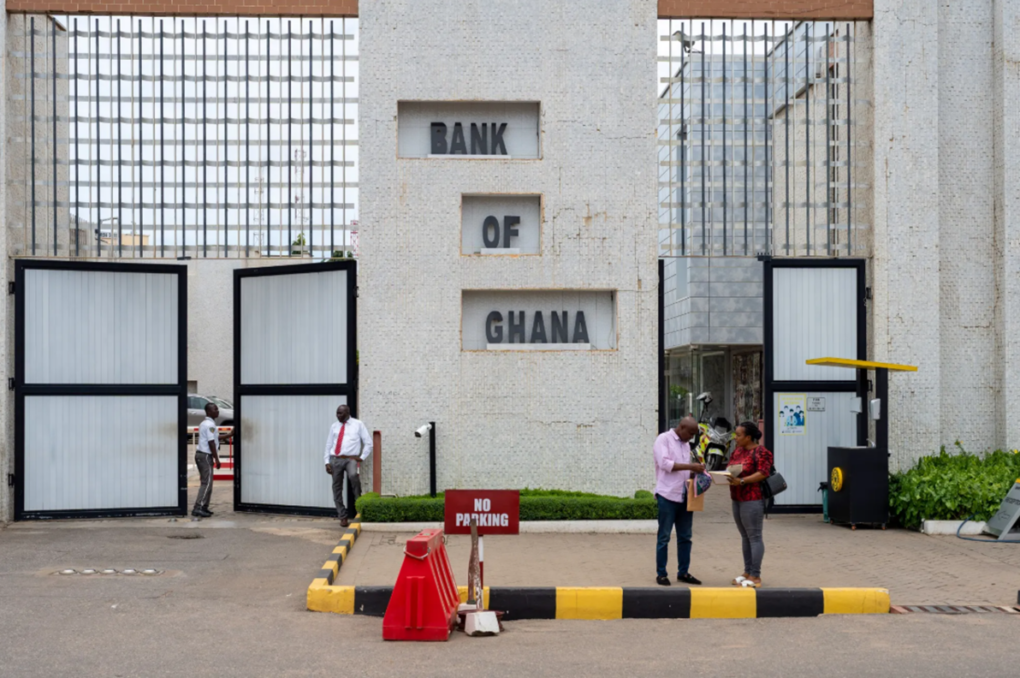
The Bank of Ghana (BoG) has introduced new regulatory directives requiring all Payment Service Providers (PSPs) and settlement banks to keep money collected on behalf of merchants in designated settlement accounts separate from their operational and business funds.
The central bank has warned that financial institutions and payment service providers that fail to comply with the new requirements could face regulatory sanctions and enforcement actions.
The directive, signed by the Secretary of the Bank of Ghana, Aimee Vyda Quashie, was issued under Section 101 of the Payment Systems and Services Act, 2019 (Act 987).
According to the Bank of Ghana, Payment Service Providers are licensed to facilitate electronic payment transactions and collect funds on behalf of merchants. However, their licences do not permit them to operate as deposit-taking institutions or exercise ownership rights over money collected for merchants.
The central bank explained that funds received on behalf of merchants must remain the property of the respective businesses until they are transferred in accordance with the settlement timelines and conditions outlined in the Service Level Agreements (SLAs) between merchants and payment providers.
Bank of Ghana Introduces Strict Rules for Merchant Funds
Under the new directive, all payments collected by PSPs on behalf of merchants must be deposited into designated settlement accounts.
These funds must be kept completely separate from the payment providers’ operational accounts and other business-related finances.
The Bank of Ghana further instructed PSPs to transfer collected merchant funds into the merchants’ designated bank accounts within the settlement periods agreed upon in their respective service agreements.
The directive also prohibits payment service providers from withdrawing, transferring, pledging or using merchant funds as security for loans or other financial obligations.
Similarly, PSPs are not permitted to place liens on merchant funds, offset outstanding debts against them or use the money for investment, financing or operational activities.
The only permitted transfers from settlement accounts are those necessary to pay merchants and transfer legitimately earned service fees and charges to the payment providers.
Settlement Banks Face New Responsibilities
The Bank of Ghana has also placed additional responsibilities on settlement banks to strengthen the protection of merchant funds within Ghana’s digital payment ecosystem.
Settlement banks are required to ensure that accounts holding money collected for merchants are operated exclusively for settlement purposes.
They must also prevent Payment Service Providers from accessing or using merchant funds for business operations, investment activities, financing arrangements or any other purpose unrelated to merchant settlements.
The central bank clarified that payment providers may transfer their agreed service fees and charges into their operational accounts, but only as part of the authorised settlement process.
BoG Demands Stronger Financial Records and Internal Controls
As part of efforts to improve financial accountability and protect businesses using digital payment services, the Bank of Ghana has directed PSPs and settlement banks to maintain proper financial records, internal controls and comprehensive audit trails.
These records must provide evidence that merchant funds are properly safeguarded, kept separate from operational finances and transferred within the agreed settlement periods.
The central bank has also reserved the right to request account statements from settlement banks regarding accounts used to hold funds collected on behalf of merchants.
Such statements must be submitted at intervals and in formats determined by the Bank of Ghana to support regulatory monitoring and supervision.
Non-Compliance Could Attract Regulatory Sanctions
The Bank of Ghana has cautioned that failure to comply with the new merchant fund protection requirements will constitute a breach of the country’s payment systems regulatory framework.
Institutions found violating the directive could face appropriate regulatory, supervisory and enforcement measures.
All Payment Service Providers and settlement banks have consequently been instructed to take immediate steps to achieve full compliance.
They are also required to review their existing operational arrangements, contractual agreements with merchants and internal financial control systems to ensure they meet the new regulatory standards.
The directive forms part of the Bank of Ghana’s broader efforts to strengthen payment system security, improve financial sector accountability and protect businesses that rely on electronic payment services.
By ensuring that merchant collections are properly safeguarded and not used for unrelated business activities, the central bank aims to promote confidence, transparency and stability in Ghana’s rapidly expanding digital financial services industry.
Source: newsthemegh.com