
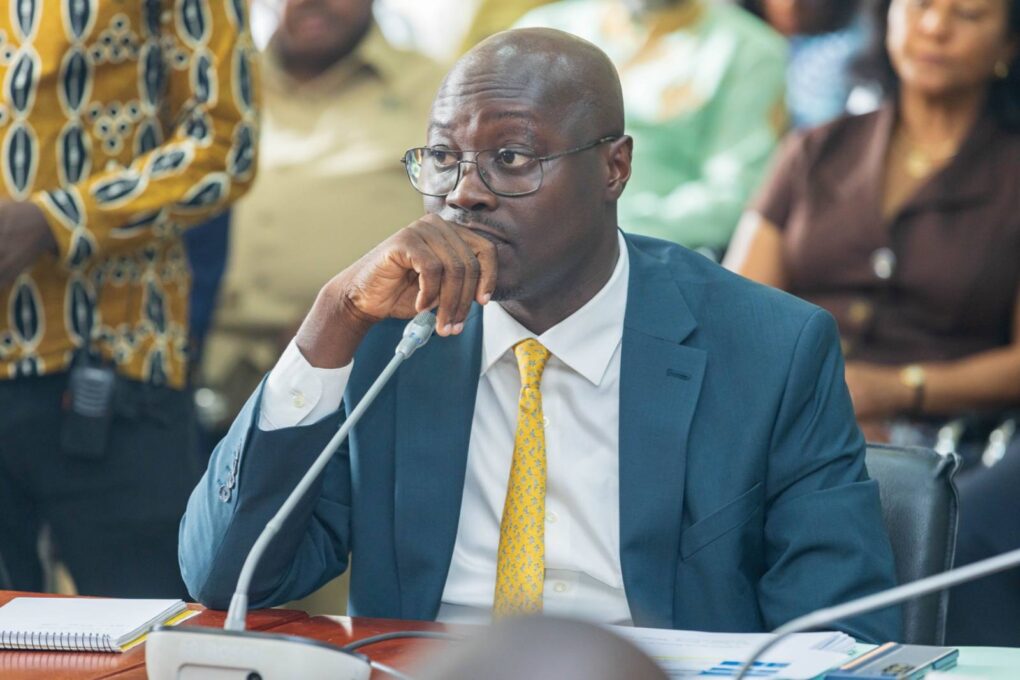
Finance Minister Dr Cassiel Ato Forson has called for a major transformation of Ghana’s economy, arguing that the country’s traditional economic model has failed to deliver sustainable growth, adequate employment opportunities and improved living standards over the past 69 years.
According to the Finance Minister, the government’s proposed New Economy initiative is designed to restructure the economy, promote sustainable development and create decent jobs for the increasing number of young Ghanaians entering the labour market.
Dr Forson made the remarks during an engagement with the National House of Chiefs as government prepares to present the 2027 Budget Statement and Economic Policy to Parliament on Thursday, November 12, 2026.
He appealed to traditional leaders to support the government’s economic transformation agenda, stressing that Ghana must abandon approaches that have consistently failed to generate sufficient long-term employment and economic opportunities.
Ato Forson Says NABCO and YEA Cannot Solve Ghana’s Unemployment Challenge
The Finance Minister questioned the long-term effectiveness of temporary employment programmes such as the National Builders Corps (NABCO) and the Youth Employment Agency (YEA) in addressing Ghana’s unemployment problem.
He acknowledged that such initiatives could provide short-term financial relief and work experience for beneficiaries but insisted that they could not serve as a permanent solution to the country’s growing unemployment challenge.
Dr Forson explained that young people needed reliable sources of income and sustainable livelihoods rather than depending on temporary employment placements that eventually come to an end.
He emphasised that the government’s priority was to establish an economic system capable of generating permanent employment opportunities and providing young people with a secure economic future.
According to him, Ghana must develop an economy where young people can build sustainable careers instead of moving from one temporary job opportunity to another.
New Economy Initiative to Drive Ghana’s Economic Transformation
Dr Forson said the proposed New Economy agenda would focus on restructuring Ghana’s economic system to create more opportunities for businesses, investors and workers.
The initiative is expected to promote productive economic activities, strengthen local industries and expand employment opportunities for the country’s growing youth population.
He maintained that Ghana could no longer depend on traditional economic policies that had failed to provide the scale of job creation required to improve the living conditions of citizens.
The Finance Minister also highlighted the importance of stronger collaboration between government and private-sector businesses in driving economic growth and creating sustainable employment.
Ato Forson Calls for Value Addition to Ghana’s Natural Resources
Another major priority highlighted by the Finance Minister was the need for Ghana to move away from exporting raw materials without sufficient local processing.
Dr Forson stressed that adding value to the country’s natural resources would help expand domestic industries, create employment and increase the economic benefits Ghana derives from its natural wealth.
He argued that developing local processing and manufacturing capacity would strengthen the country’s industrial base and support long-term economic transformation.
The approach is expected to create opportunities across agriculture, manufacturing, agro-processing and other productive sectors while reducing excessive dependence on raw commodity exports.
Finance Minister Promises Fiscal Discipline and Prudent Public Spending
Dr Forson also assured traditional leaders that the government remained committed to maintaining fiscal discipline and ensuring the responsible management of public funds.
He said government expenditure would be guided by prudent financial management, accountability and value for money, ensuring that every cedi spent delivers meaningful benefits to the country.
The Finance Minister maintained that responsible management of public resources was essential to achieving economic stability and financing the government’s development priorities.
Ghana’s Youth Unemployment Could Become a Social Crisis
Dr Forson warned that Ghana’s rising unemployment challenge could develop into a serious social crisis if sufficient employment opportunities were not created for the country’s expanding youth population.
He stressed that the increasing number of young people entering the labour market required urgent and sustainable economic interventions.
The Finance Minister therefore called for a stronger partnership between government and the private sector to expand businesses, attract investment and create the jobs needed to absorb new entrants into the workforce.
He further appealed to the National House of Chiefs and other stakeholders to support the New Economy initiative, describing their involvement as important to the success of Ghana’s economic transformation agenda.
Government Prepares to Present 2027 Budget
The engagement with the National House of Chiefs comes ahead of the presentation of the 2027 Budget Statement and Economic Policy to Parliament on Thursday, November 12, 2026.
The upcoming budget is expected to outline the government’s economic priorities, fiscal measures and development programmes for the next financial year.
Dr Forson’s remarks suggest that employment creation, industrial development, value addition, private-sector investment and prudent public spending will remain important considerations in the government’s broader economic transformation strategy.
The Finance Minister believes that moving beyond Ghana’s traditional economic model is necessary to build a stronger economy capable of delivering sustainable jobs, improved living standards and long-term prosperity for future generations.
Source: newsthemegh.com