
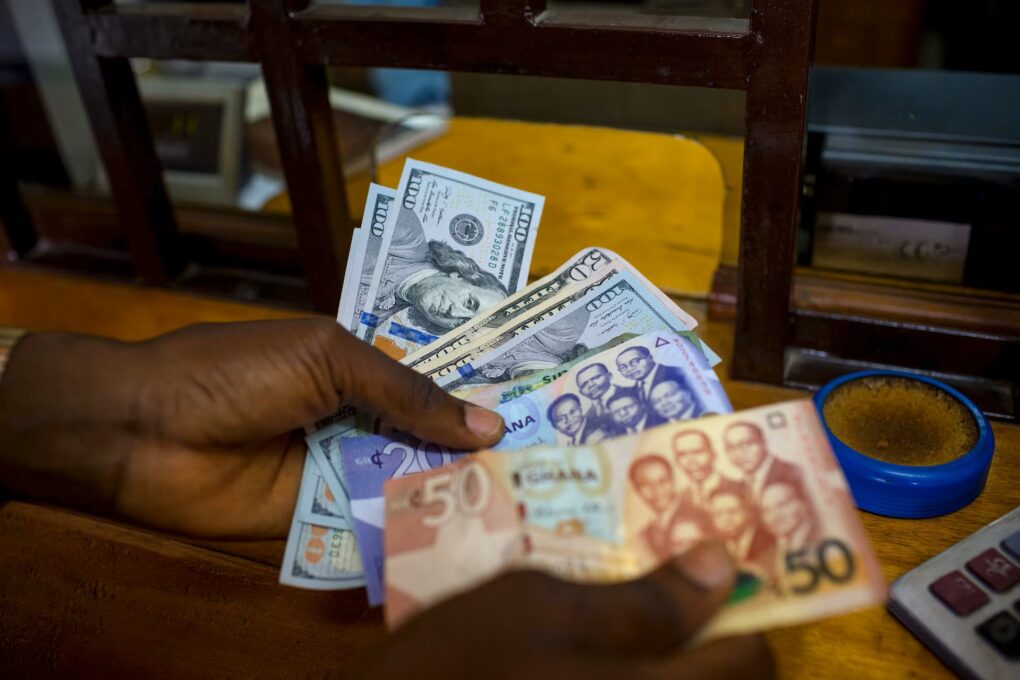
The Ghanaian cedi is expected to come under renewed pressure against the US dollar in 2027, with international research firm Fitch Solutions projecting an average exchange rate of GH¢12.40 to one dollar.
The forecast suggests a possible depreciation of the local currency, driven by anticipated moderation in international gold prices and the government’s efforts to rebuild Ghana’s foreign exchange reserves.
Associate Director at Fitch Solutions, Mike Kruiniger, explained that reduced foreign exchange inflows could limit the availability of dollars in Ghana’s domestic market, putting additional pressure on the cedi and potentially increasing the cost of goods and services.
He made the remarks during PwC’s 2027 Post-Budget Forum in Accra on Monday, November 16, where he discussed Ghana’s economic outlook and major currency market developments expected next year.
According to Mr Kruiniger, the combination of softer international gold prices and the government’s foreign reserve accumulation strategy could affect the country’s foreign exchange supply.
Fitch Solutions therefore anticipates that the Ghana cedi could weaken slightly in 2027, with the average exchange rate reaching approximately GH¢12.40 per US dollar.
He explained that the government’s efforts to accumulate foreign reserves under the Ghana Reserve Accumulation Programme (GANRAP), alongside a possible decline in gold export earnings, could reduce the amount of foreign currency circulating in the domestic market.
This situation could create additional pressure on the exchange rate, particularly if demand for US dollars remains strong.
Weaker Cedi Could Increase Import Costs and Inflation
A depreciation of the Ghana cedi could have wider implications for the economy, especially businesses and consumers who depend on imported goods and raw materials.
A weaker local currency generally increases the cost of importing fuel, machinery, food products, pharmaceuticals and industrial inputs. These higher costs could eventually translate into increased prices for consumers and renewed inflationary pressures.
Mr Kruiniger also identified movements in the US dollar and international gold prices as major external risks to Ghana’s economic performance in 2027.
He noted that a stronger US dollar could exert downward pressure on international gold prices, potentially reducing Ghana’s gold export earnings and foreign exchange inflows.
Such developments could further weaken the cedi and complicate efforts to maintain price stability.
The Fitch Solutions projection highlights the importance of international commodity prices, foreign exchange reserves, gold export revenues and currency market developments in determining Ghana’s economic outlook for 2027.
Source: newsthemegh.com