
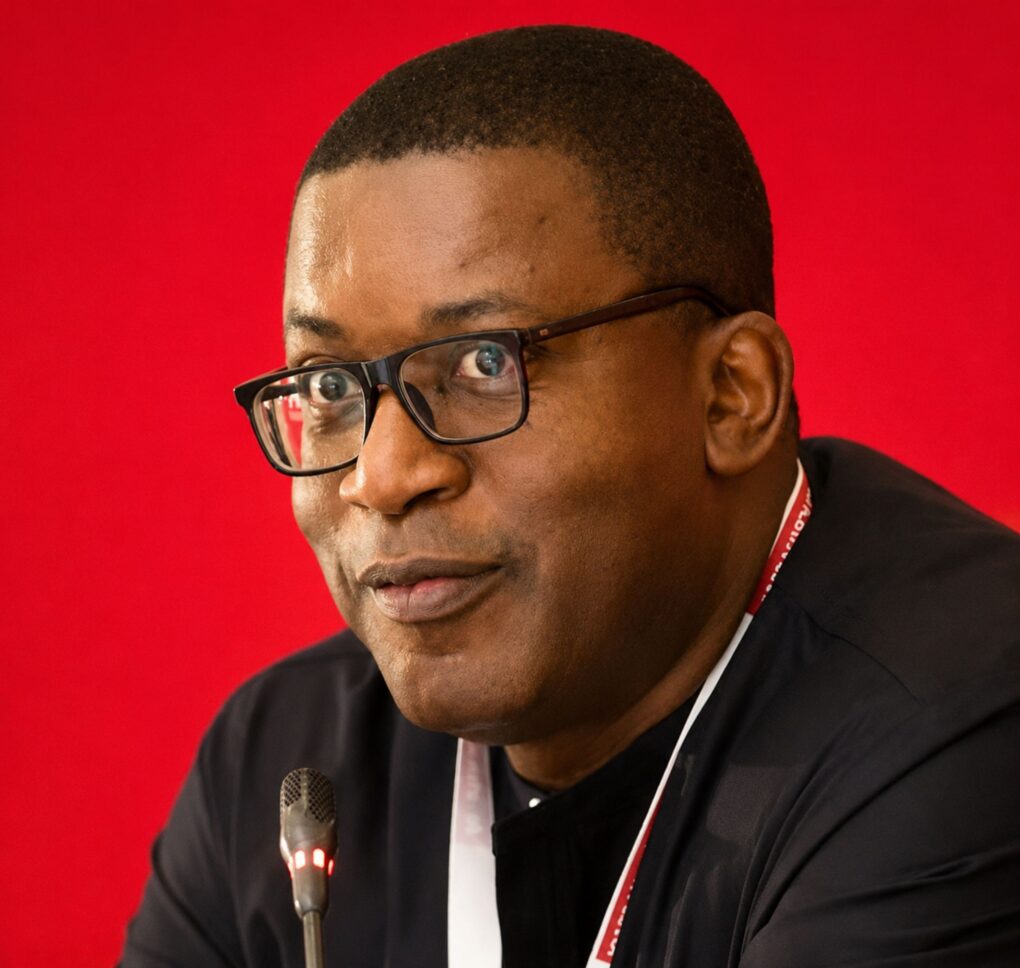
The Supreme Court of Ghana is expected to deliver its ruling on November 25, 2026, on an application filed by former Ghana Infrastructure Investment Fund (GIIF) Chief Executive Officer, Solomon Asamoah, challenging a High Court order in the ongoing Accra SkyTrain project case.
Mr Asamoah is seeking to overturn a directive by the trial court requiring him to testify before calling other defence witnesses. He argues that the order violates his constitutional rights, particularly his right to a fair trial and the right to remain silent.
The former GIIF boss has invoked the supervisory jurisdiction of the Supreme Court under Article 132 of the 1992 Constitution, asking the apex court to quash the High Court’s decision.
The five-member Supreme Court panel hearing the application comprises Justices Issifu Omoro Tanko Amadu, Samuel Asiedu, Janapare Adzua Bartels-Kodwo, Edward Amoako Asante and Anthony Forson Jnr.
Mr Asamoah and Professor Christopher Ameyaw-Ekumfi are facing six criminal charges at the Accra High Court over an alleged US$2 million financial loss to the state arising from the proposed Accra SkyTrain project.
The charges include conspiracy to wilfully cause financial loss to the state and the intentional dissipation of public funds.
At the hearing on Tuesday, November 24, 2026, defence counsel Victoria Barth urged the Supreme Court to grant her client’s application. She relied on the motion filed by Mr Asamoah and a subsequent reply submitted on November 24.
Ms Barth argued that the High Court acted beyond its legal authority by directing the former GIIF CEO to testify before presenting other defence witnesses.
According to the lawyer, the directive constitutes an error apparent on the face of the court record and infringes on Mr Asamoah’s constitutional protections under Article 19(2)(g) of the 1992 Constitution.
She further maintained that the trial court exercised powers that were not granted to it by law, making the order legally questionable and deserving of intervention by the Supreme Court.
However, Principal State Attorney Sefakor Batse opposed the application, urging the Supreme Court to dismiss the request.
Relying on the prosecution’s statement of case and affidavit in opposition filed on November 19, 2026, Ms Batse argued that the 1992 Constitution does not prescribe the specific procedure an accused person must follow when calling witnesses during a criminal trial.
She maintained that the High Court had the jurisdiction to issue the order and that Mr Asamoah’s disagreement with the court’s preferred sequence of presenting defence witnesses did not amount to an error requiring the Supreme Court’s supervisory intervention.
The state attorney also argued that the former GIIF CEO should have pursued an appeal against the High Court’s decision instead of invoking the supervisory jurisdiction of the Supreme Court.
She further submitted that Mr Asamoah had failed to provide sufficient evidence demonstrating that the trial court exceeded its jurisdiction or committed a legal error that would justify the intervention of the apex court.
Following the arguments from both parties, the Supreme Court adjourned the case to November 25, 2026, for its ruling.
The decision is expected to determine whether the High Court’s order requiring Solomon Asamoah to testify before calling other defence witnesses will remain in force as the Accra SkyTrain criminal trial continues.
Source: newsthemegh.com