

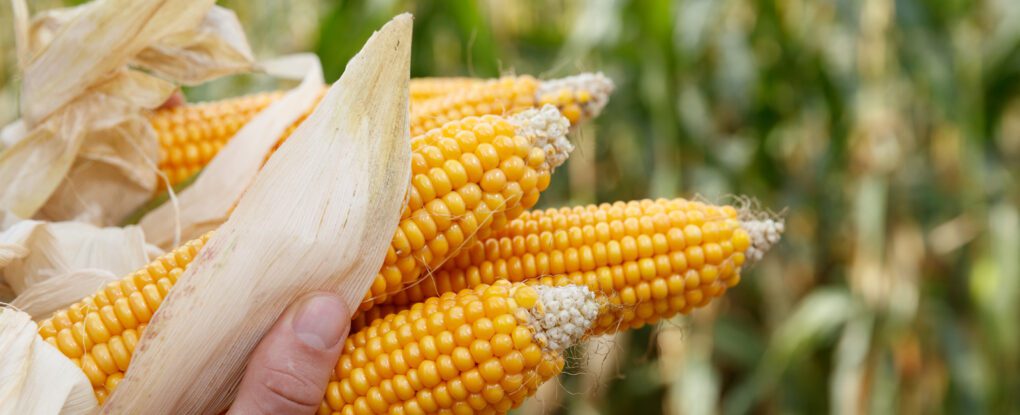
The Tumu Traditional Council has announced a new minimum price for maize, a bold move to protect the livelihoods of maize farmers in the Sissala area after consulting with other Traditional Councils in the region.
Major maize growers complained to the traditional council on multiple occasions following a precipitous decline in the market price, which appears to be endangering the financial stability of farmers throughout the communities that produce maize.
The price of maize has decreased from GHC 550 to as low as GHC 400 per 100kg bag in recent weeks, according to a statement released by Kuoro Richard Babini Kanton VI, President of the Tumu Traditional Council, in cooperation with the Gwollu, Zini, Welembelle, Pulima, Lambussie, Bawiesebelle, Banu, Kojikperie, and Funsi Traditional Councils.
Even though the Sissala region produces high-quality maize, this notable decline has caused many farmers to struggle to cover their production costs and to abandon their fields.
“The recent price decline is unacceptable and unsustainable for the farmers,” the statement read.
“We cannot stand by while our hardworking farmers, who produce some of the most sought-after maize in the world, are exploited and impoverished while input prices remain the same,” it added.
Following discussions with some of the region’s largest purchasers, such as the West African Regional Company (WARC), and private purchasers, the traditional council decided to establish a new minimum price of GHc 500 for a 100 kilogram bag of maize, which would take effect on July 8, 2025.
Therefore, farmers have been strongly instructed not to sell their produce to any customer, individual, or business for less than this price.
The chiefs emphasized that the action was intended to safeguard disadvantaged farmers and guarantee that agricultural production in the region remained sustainable in addition to stabilizing farmer income.
The instruction was issued in response to mounting worries that many farmers would be forced to stop cultivating maize, which is the mainstay of the local economy, if the price drop is not addressed.
In order to preserve one of Ghana’s most productive corn hubs, the statement urged all parties involved—buyers, farmers, and government officials—to lend their support.
The Ghana News Agency (GNA) in Tumu was informed by Mr. Mahamud Aduna, the president of the Sissala Union and a commercial maize farmer, that the majority of maize farmers were being priced out by middlemen who controlled the market, leaving nothing for the farmer after production.
He added that more than half of Ghana’s corn needs were met by the Sissala region’s output of maize and other grains, according to cautious estimates.
In order to maximize maize output for the nation and the subregion, Mr. Aduna encouraged the administration to implement unique efforts.
In order to lessen the region’s dependency on labor-intensive output, he also urged the government to give the area access to highways and agricultural mechanization.
They had hundreds of tons of corn built up, but selling them now at GHC 400 would deplete their production capital, according to Alhaji Kasim Buwale of the Sissala region farmers’ association.
He promised that with cooperation, the Sissala region could grow enough corn for the entire nation.
Source: newsthemegh.com