
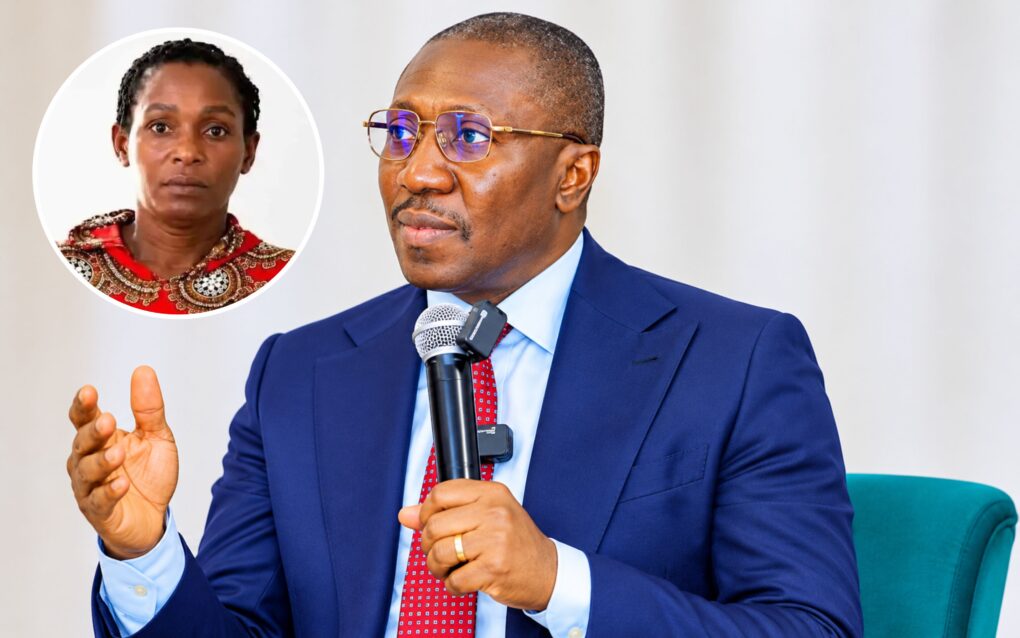
Minority Leader Alexander Afenyo-Markin has appealed to President John Dramani Mahama to grant a presidential pardon to 43-year-old Ghanaian TikToker Camila Alhassan, who is currently serving a one-year prison sentence for offensive conduct.
The Effutu Member of Parliament expressed concern over the imprisonment of the social media personality, arguing that criminal sanctions should not be the primary response to speech-related offences.
He urged President Mahama to consider exercising his constitutional powers of mercy to grant Alhassan clemency.
Afenyo-Markin made the appeal during the 30th Ghana Journalists Association (GJA) Media Awards held in Accra on Saturday, November 7, 2026.
Addressing journalists and other distinguished guests, the Minority Leader called for stronger protection of freedom of expression and a review of laws that could be used to criminalise public speech and criticism.
He emphasised the importance of protecting the constitutional rights of Ghanaians to express their opinions, question government policies and participate in national conversations without fear of intimidation or imprisonment.
Why Camila Alhassan Was Sentenced to One Year in Prison
Camila Alhassan was sentenced by an Accra Circuit Court on July 16, 2026, to one year in prison with hard labour after pleading guilty to a charge of offensive conduct conducive to a breach of the peace.
Her conviction followed a series of TikTok videos she published between June 30 and July 5, 2026, containing allegations against President John Dramani Mahama.
Among other claims, the TikToker alleged that President Mahama had sacrificed 32 cows to secure victory in the 2024 general elections.
She also alleged that the government’s distribution of sanitary pads to victims of the June 29, 2026 floods was intended to conceal the purported sacrifices.
However, prosecutors argued that her videos contained offensive and derogatory statements about President Mahama and First Lady Lordina Mahama, which could potentially provoke a breach of the peace.
MFWA Raises Concerns Over Criminalisation of Free Speech
The case subsequently attracted criticism from the Media Foundation for West Africa (MFWA), which expressed concern about what it described as the growing criminalisation of speech-related offences.
The organisation initially noted that Alhassan had faced charges under Sections 207 and 208 of the Criminal Offences Act, 1960 (Act 29), relating to offensive conduct and the publication of false news.
However, her lawyer, Kwadwo Gyamfi-Bonsu, explained that the court convicted her only on the offensive conduct charge under Section 207.
He indicated that the court did not have jurisdiction to determine the separate publication of false news charge.
The case has since generated considerable public discussion about the relationship between freedom of expression, social media responsibility and the use of criminal laws to address allegedly offensive statements.
Afenyo-Markin Calls for Repeal of Criminal Speech Laws
Speaking at the GJA Media Awards, Afenyo-Markin argued that criminal prosecution and imprisonment should not be the first option when dealing with public criticism, offensive remarks or disputed statements.
He called on the government to consider repealing Section 208 of the Criminal Offences Act, 1960 (Act 29), as well as Section 76 of the Electronic Communications Act, 2008 (Act 775).
According to him, disputes involving speech and alleged reputational harm should, where appropriate, be addressed through civil legal remedies rather than criminal prosecution.
He proposed alternatives such as public apologies, retractions of disputed statements and financial compensation for individuals who suffer reputational damage.
The Minority Leader maintained that protecting freedom of expression is essential to strengthening Ghana’s democracy, media freedom and public accountability.
His appeal for a presidential pardon for Camila Alhassan has added another dimension to the national debate over free speech, social media regulation and the appropriate legal response to offensive online publications.
Source: newsthemegh.com