
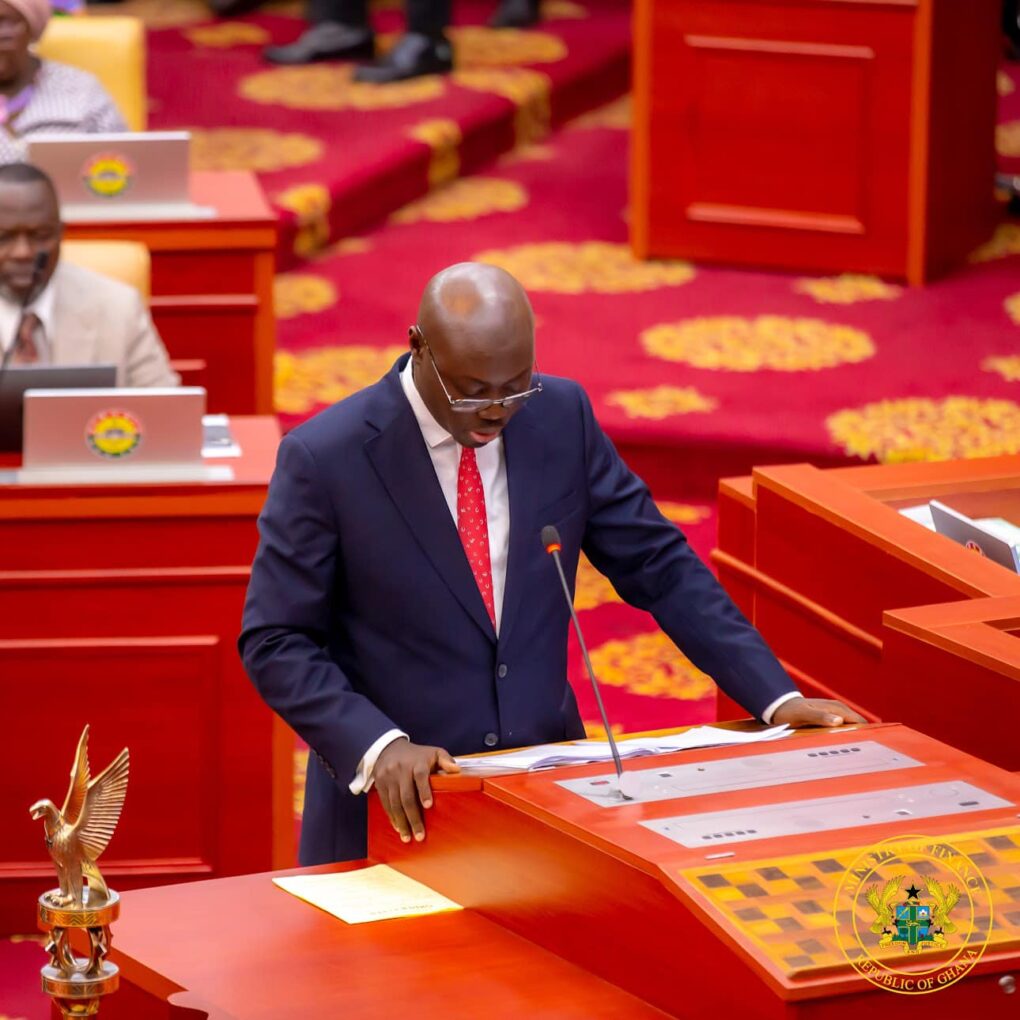
Finance Minister Dr Cassiel Ato Forson has assured Ghanaians that the country is gradually recovering from its economic difficulties, saying improvements in economic conditions have restored stability and renewed confidence in the economy.
However, he has cautioned that Ghana must take advantage of the current economic recovery to build a stronger and more productive economy capable of generating employment, supporting businesses and delivering sustainable prosperity.
Presenting the 2027 Budget Statement and Economic Policy to Parliament on Thursday, November 12, 2026, Dr Forson described the restoration of economic stability and investor confidence as a major milestone in Ghana’s economic recovery.
According to the Finance Minister, the country has made significant progress and must now focus on converting the gains into long-term economic opportunities for its citizens.
” Ghana has made significant gains. Stability has returned. Confidence is back. And Ghanaians can breathe again. Now, Mr Speaker, Ghana must decide what to do with that breathing space. That decision will shape the lives of millions of Ghanaians and improve their circumstances,” he stated.
Ato Forson Calls for Jobs and Improved Living Standards
Dr Forson explained that the next phase of Ghana’s economic transformation must prioritise improving the living conditions of ordinary citizens rather than concentrating exclusively on favourable economic statistics.
He identified several groups whose economic circumstances must improve, including unemployed graduates searching for jobs, farmers seeking dependable markets for their agricultural produce and traders whose business capital has been affected by inflation.
The Finance Minister also highlighted the difficulties facing pensioners affected by the domestic debt restructuring programme and entrepreneurs struggling to access affordable, long-term financing to expand their businesses.
He maintained that the true success of Ghana’s economic recovery would be measured by its impact on household incomes, employment opportunities, business growth and the overall cost of living.
Government Warns Against Repeating Ghana’s Economic Challenges
The Finance Minister cautioned that Ghana must avoid returning to the recurring economic instability that has disrupted national development and weakened the financial position of households and businesses.
He observed that the country had experienced several periods of economic improvement followed by financial difficulties, including currency depreciation, fiscal imbalances, rising inflation and painful economic adjustments.
Dr Forson noted that these recurring boom-and-bust cycles had prevented Ghana from sustaining economic progress and delivering consistent improvements in living standards.
“Our people have experienced repeated episodes of hope, followed by hardships, growth, followed by instability, fiscal expansion, followed by painful correction, a stable currency, followed by sharp depreciation, and now new opportunities, followed by job losses,” he said.
He stressed that Ghana could no longer afford to repeat these economic patterns, insisting that the current stability must be protected and converted into sustainable development.
“These boom and bust cycles must cease, Mr Speaker,” he emphasised.
2027 Budget Targets Production, Industrialisation and Job Creation
Dr Forson described the 2027 Budget as a significant step towards moving Ghana beyond economic stabilisation into a new phase of production-led growth and industrial development.
He explained that the government’s economic agenda would focus on expanding domestic production, strengthening industrialisation, supporting private-sector investment and creating sustainable employment opportunities.
The Finance Minister indicated that the government intends to use the economic gains achieved so far to stimulate productive sectors and build a more resilient economy.
He further stressed that economic growth must translate into tangible benefits for businesses, workers, farmers, entrepreneurs and households across the country.
Ato Forson Recalls Nkrumah’s Vision of Economic Independence
In outlining the government’s development ambitions, Dr Forson reflected on Ghana’s post-independence economic aspirations and the vision of the country’s first President, Dr Kwame Nkrumah.
He recalled that Nkrumah understood that political independence would have limited meaning without economic freedom and the ability of the country to control its productive resources.
“At independence, Ghana carried the hope of Africa. We had natural and human resources and a place of distinction in the world. Admired and respected by many, a successful Dr Kwame Nkrumah understood that political freedom required economic emancipation,” the Finance Minister stated.
He explained that Nkrumah and his contemporaries envisioned an industrialised Ghana supported by reliable electricity, modern infrastructure, quality education and strong public institutions.
Dr Forson said the current government’s economic priorities were aligned with the need to strengthen Ghana’s productive capacity and create the foundation for sustainable national development.
He reiterated that the government would consolidate the gains from economic stabilisation and channel resources into productive sectors to expand business opportunities, generate employment and improve the living standards of Ghanaians.
The Finance Minister maintained that Ghana’s next economic chapter must be defined not only by financial stability but also by increased production, industrial growth, job creation and lasting prosperity.
Source: newsthemegh.com