
The Ghana Government has paid approximately US$1.47 billion in legacy debt within the energy sector, Energy and Green Transition Minister Dr John Abdulai Jinapor has disclosed.
According to the Minister, the debt repayment has helped restore confidence in Ghana’s energy sector while improving its financial stability and long-term viability.
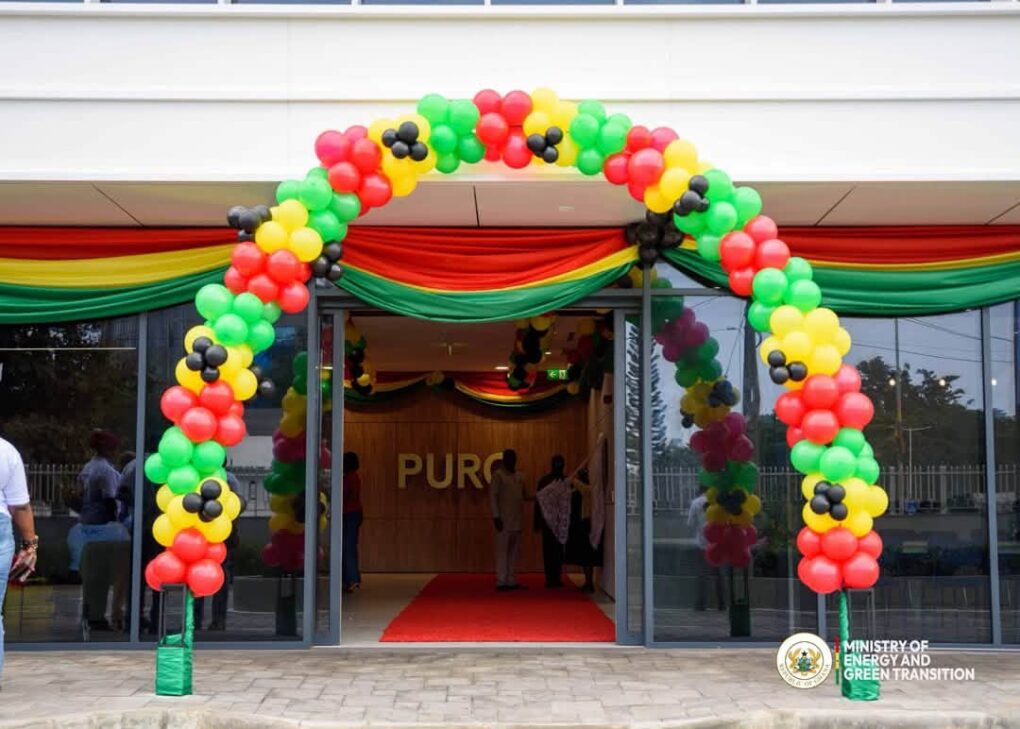
Dr Jinapor made the disclosure while representing President John Dramani Mahama at the commissioning of the new Head Office Complex of the Public Utilities Regulatory Commission (PURC) in Accra.

Ghana energy sector records financial improvements
The Energy Minister said the government’s energy sector reforms had resulted in significant improvements in payments to Independent Power Producers (IPPs).
He explained that the transition from expensive liquid fuels to natural gas for power generation had generated savings of approximately US$500 million.
The savings, he said, form part of broader government measures aimed at reducing electricity generation costs, improving the financial position of the power sector and ensuring a more sustainable electricity supply system.
Cash Waterfall reforms improve IPP payments
Dr Jinapor also highlighted reforms to Ghana’s Cash Waterfall Mechanism, which he said had significantly improved payments to power producers.
According to the Minister, IPPs are now receiving close to 100% of their invoiced amounts, representing a major improvement compared with the situation before the current government assumed office.
He disclosed that only about 16% of funds declared under the Cash Waterfall Mechanism previously reached IPPs, with power producers receiving approximately 42% of their invoices.
“Today, we declare close to GH¢15 billion every month into the Cash Waterfall Mechanism, and IPPs receive about 100 per cent of their invoice bills,” he said.
The reforms are expected to help prevent the continued accumulation of energy sector arrears, which Dr Jinapor said stood at approximately GH¢80 billion when the government took office.

Government renegotiates IPP agreements
The Minister further revealed that the government had renegotiated agreements with some Independent Power Producers, generating savings of around US$250 million.
He said the renegotiated agreements, debt repayments and other energy sector reforms were designed to restore financial stability and create a more sustainable environment for electricity generation and distribution in Ghana.
The measures are also expected to strengthen the government’s ability to meet its obligations to power producers and reduce pressure on the country’s energy sector finances.
PURC urged to strengthen regulatory oversight
Dr Jinapor called on the Public Utilities Regulatory Commission to intensify its regulatory oversight, particularly regarding the commercial performance of utility companies.
He identified the Electricity Company of Ghana (ECG) as a key player in the financial sustainability of the electricity sector.
According to him, ECG’s ability to recover revenue from electricity customers has a direct impact on the wider power supply chain and the financial health of the energy sector.
The Minister therefore urged PURC to ensure that consumers experience the regulator’s impact through faster resolution of complaints, stronger enforcement of regulations and greater accountability from utility providers.

Government targets reliable electricity supply
Dr Jinapor said the government remains committed to working with PURC, utility companies, IPPs and other stakeholders to improve the reliability of electricity supply across Ghana.
He added that strengthening the financial sustainability of the energy sector would remain a major priority as the government works to reduce power generation costs, settle outstanding debts and improve electricity distribution.
The latest reforms form part of broader efforts to build a financially stable and sustainable energy sector in Ghana, while ensuring that consumers have access to reliable electricity.
Source: newsthemegh.com