
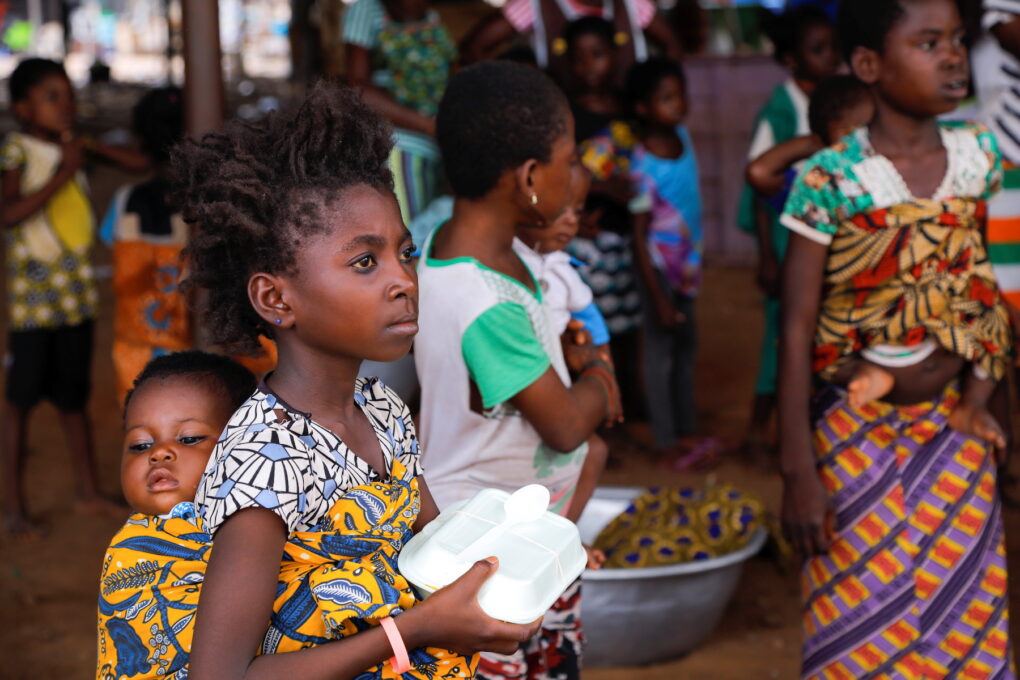
Approximately 2.69 million people in Ghana were living in households vulnerable to food insecurity during the third quarter of 2026, highlighting persistent challenges with food access, household income and food security across the country.
This is according to the latest Mobile Vulnerability Analysis and Mapping (mVAM) survey released by the Ghana Statistical Service (GSS), which assessed the food consumption patterns and economic conditions of households between July and September 2026.
The survey covered 7,752 households and found that although 93.5 per cent recorded acceptable food consumption, about 6.6 per cent, representing approximately 606,000 households, experienced borderline or poor food consumption.
Despite the relatively high national rate of acceptable food consumption, the findings revealed significant regional disparities, with northern Ghana recording the highest levels of food insecurity.
The North East Region emerged as the most affected, with 42.2 per cent of households experiencing vulnerable food consumption. It was followed by the Upper East Region with 30.1 per cent and the Upper West Region with 29.5 per cent.
The report also identified a considerable gap between rural and urban communities. Rural households recorded a vulnerable food consumption rate of 10.7 per cent, compared with 3.8 per cent among households in urban areas.
Education Levels Influence Household Food Security
The educational background of household heads was also identified as an important factor influencing food consumption and vulnerability.
According to the GSS findings, households headed by individuals without formal education recorded a vulnerable food consumption rate of 23.5 per cent. In comparison, the rate dropped significantly to 2.3 per cent among households whose heads had attained tertiary education.
The findings suggest that education and access to economic opportunities remain important considerations in addressing household poverty and improving food security in Ghana.
Millions of Households Resort to Food Coping Strategies
The GSS report cautioned that acceptable food consumption figures do not necessarily mean households are financially secure or free from economic difficulties.
It revealed that 30.1 per cent of households, representing approximately 2.79 million, relied on medium or high short-term food coping strategies to manage their circumstances.
Additionally, 11.3 per cent, equivalent to about 1.05 million households, resorted to crisis or emergency livelihood strategies that could undermine their long-term economic wellbeing.
The report further indicated that 30.9 per cent of households with otherwise acceptable food consumption had crossed at least one coping threshold.
This suggests that many Ghanaian families are maintaining their food consumption levels by making difficult financial and livelihood decisions that may not be sustainable over time.

Rising Cost of Food Places Pressure on Household Budgets
The survey also highlighted the growing economic pressure facing households, particularly the high proportion of income spent on food.
About 50.5 per cent of households, representing approximately 4.69 million, spent more than 75 per cent of their total expenditure on food.
This leaves many families with limited financial resources to meet other essential needs, including healthcare, education, housing and transportation.
Market accessibility was another major concern, with approximately 22.6 per cent of households reporting that they were unable to reach a market at some point during the month preceding the survey.
The findings underscore the importance of improving food distribution networks, transportation infrastructure and access to affordable food commodities, particularly in underserved communities.
Limited Government and Social Protection Assistance
Another major concern identified by the Ghana Statistical Service was the low level of assistance reaching vulnerable households.
Only 0.9 per cent of households, representing approximately 83,000, reported receiving assistance during the month before the survey.
The report noted that the low coverage of assistance was particularly concerning compared with the 11.3 per cent of households relying on crisis or emergency livelihood coping strategies.
It consequently highlighted the need to review the coverage, targeting and delivery of social protection interventions to ensure that assistance reaches households facing the greatest food security challenges.
Food Insecurity Remains a Long-Term Challenge for Some Households
Tracking 5,050 households across four quarters, the GSS found that food insecurity is not necessarily a temporary problem for all affected families.
While 82.1 per cent of households included in the panel never experienced vulnerable food consumption, 17 per cent faced the challenge during some quarters.
A further 0.9 per cent experienced vulnerable food consumption throughout all four quarters, indicating persistent food insecurity.
The report identified rural households and communities across several northern regions as particularly vulnerable to prolonged food consumption challenges.
GSS Calls for Targeted Measures to Address Food Insecurity
The Ghana Statistical Service has called for early and targeted interventions to address food insecurity and strengthen household resilience across the country.
It recommended that government agencies and local authorities incorporate food consumption trends, household coping strategies, market accessibility and recurring vulnerability data into national early-warning and social protection systems.
The report also urged policymakers to prioritise regions with high levels of food insecurity when implementing social intervention programmes.
In addition, it recommended increased investment in climate-resilient agriculture, food storage facilities, transportation infrastructure and agricultural value chains to reduce food losses, improve distribution and strengthen long-term food availability.
The findings highlight the need for coordinated efforts to tackle poverty, improve agricultural productivity, expand social protection and ensure that vulnerable households across Ghana have sustainable access to affordable and nutritious food.
Source: newsthemegh.com