
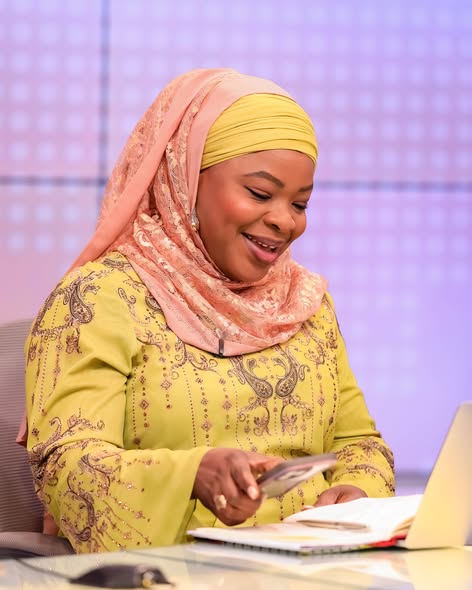
The government has called for stronger cooperation between the media and security institutions, describing responsible journalism as a vital tool for preventive security, early warning and national stability in Ghana.
Deputy Presidential Spokesperson Shamima Muslim, speaking as Special Guest Speaker at a capacity-building workshop on Responsible Security Reporting for PRINPAG Members, said the media has an important role to play in identifying potential threats and helping prevent security challenges before they escalate.
The workshop was held under the theme, “Media as a Strategic Partner in Preventive Security and Early Warning in Ghana.” Shamima Muslim delivered the speech on behalf of the Minister for Government Communications, Felix Kwakye Ofosu.
She noted that Ghana’s location within a volatile West African region makes accurate, responsible and professional security reporting increasingly important.
According to her, Ghana faces a number of regional and domestic security concerns, including military coups in neighbouring countries to the north, the spread of jihadist activities from the Sahel, internal tensions and the rapid spread of false information and misinformation online.
Media Plays Key Role in Ghana’s Security and Democracy
Shamima Muslim described the workshop as timely because it brings the government and private media together to address two major challenges: national security threats and the growing difficulties facing traditional print media.
She highlighted the historical relationship between Ghana’s media and political development, noting that journalism played a significant role in the country’s struggle for independence, democratic governance and public accountability.
She cited newspapers including the Ashanti Pioneer, Accra Evening News, Legon Observer and Daily Graphic as publications that contributed significantly to public discourse and Ghana’s democratic development.
The Deputy Presidential Spokesperson also pointed to several areas where the media has contributed to Ghana’s democratic progress, including the country’s return to constitutional rule in 1992, advocacy for the Right to Information Act, peace journalism, anti-corruption investigations and public health awareness campaigns.
She further referenced media advocacy surrounding legislation on domestic violence, human trafficking and affirmative action, saying such efforts demonstrated how journalism can influence public policy and highlight important social issues.
“These moments confirm that when we rise above narrow interests, journalism and politics deepen democracy and protect the public good,” she said.
Ghana’s Print Media Faces Growing Financial Pressure
Despite the important role of journalism, Shamima Muslim expressed concern about the challenges confronting Ghana’s print media industry.
She said newspapers are experiencing declining circulation and advertising revenue while facing intense competition from digital platforms and social media.
According to her, newspapers are no longer the primary source of news for many Ghanaians, as social media increasingly influences what people see, share and discuss.
The rising cost of newspaper production, particularly the price of imported newsprint, was also identified as a major challenge affecting the sustainability of traditional media organisations.
Misinformation and AI Deepfakes Threaten Security
Beyond the financial difficulties facing the media industry, Shamima Muslim identified credibility and misinformation as some of the most serious challenges confronting journalism today.
She noted that the widespread use of smartphones and social media means that virtually anyone can create and distribute information, forcing professional journalists to compete with rumours, unverified claims and sensational content.
She warned that the consequences can be particularly serious when national security and public safety are involved.
While social media may quickly reveal that residents are angry in a particular community or that soldiers have been deployed to an area, she said professional journalism must go further by verifying the information, establishing the context and explaining what is actually happening.
She also raised concerns about the growing threat posed by artificial intelligence (AI), deepfakes and digital disinformation.
“In this era of AI deepfakes and disinformation, a fake letterhead of a Minister can cause a bank run. A careless headline ‘Soldiers Invade Town’ for a routine patrol can erode 30 years of civil-military trust,” she cautioned.
Responsible Security Reporting Can Prevent Conflict
Shamima Muslim described the training programme as more than a professional development initiative, arguing that it forms part of Ghana’s broader preventive security and early warning framework.
She said failures in both politics and journalism can have serious consequences, particularly in situations involving political vigilantism, chieftaincy disputes, religious tensions, ethnic conflicts and misinformation.
She cited the activities of political vigilante groups over the years, arguing that sensational media coverage could sometimes unintentionally give undue publicity and celebrity status to members of such groups.
The violence recorded during the 2019 Ayawaso West Wuogon by-election was also referenced as an example of how political violence can undermine public confidence and affect Ghana’s democratic reputation.
Media Urged to Handle Ethnic and Religious Conflicts Carefully
The Deputy Presidential Spokesperson further highlighted historical and ongoing tensions associated with chieftaincy and ethnic conflicts, including the Konkomba-Nanumba conflict, the Dagbon crisis and tensions in Bawku.
She urged journalists to avoid simplistic, inflammatory or provocative descriptions when reporting on ethnic conflicts because irresponsible language can deepen divisions and potentially contribute to further violence.
She also cautioned media organisations against publishing unverified religiously sensitive content, especially digitally manipulated videos and images that could inflame tensions between Christian and Muslim communities.
“False videos of Quran desecration or church burning, 90% fake, AI-generated from outside, but when a credible newspaper republishes without verification, it becomes real in Nima or Aboabo,” she said.
The government therefore urged journalists and media organisations to strengthen fact-checking, source verification and responsible security reporting as Ghana works to protect national peace, democratic stability and public safety in an increasingly digital information environment.
Shamima Muslim outlined five principles stated below:
Source: newsthemegh.com