
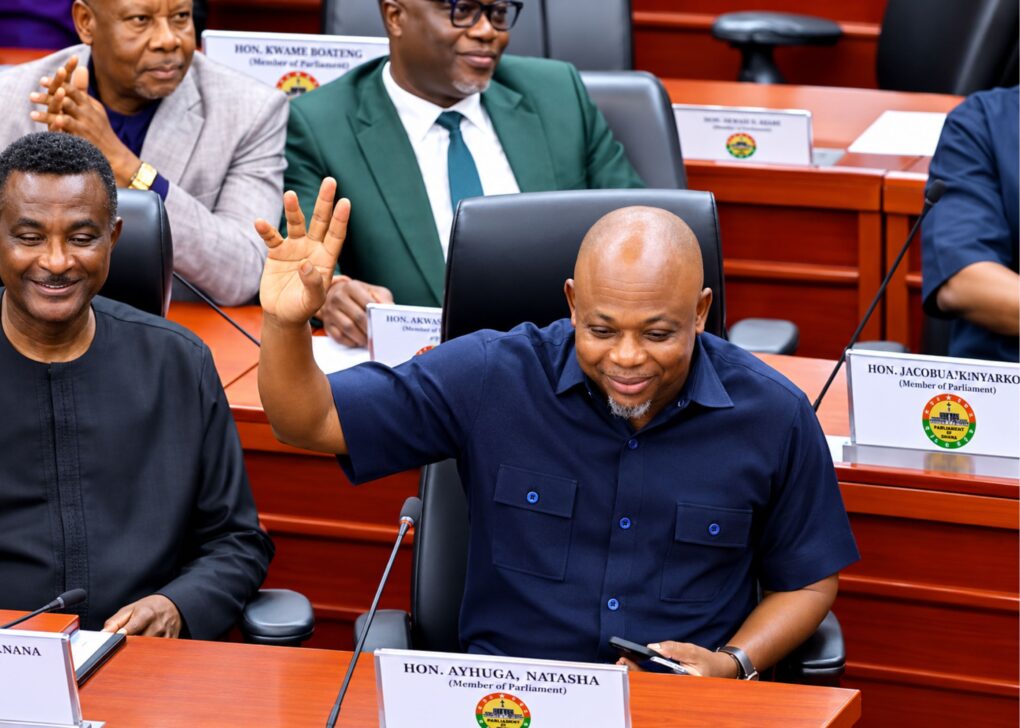
Majority Leader James Agalga has accused the opposition New Patriotic Party (NPP) of creating conditions that facilitated cocaine smuggling into Ghana, insisting that the party has a poor record in the fight against illicit drug trafficking.
Speaking in Parliament on Thursday, November 26, 2026, Agalga alleged that the previous NPP administration deliberately removed the Narcotics Control Commission (NACOC) from Ghana’s ports of entry, creating opportunities for the illegal movement of narcotic substances into the country.
He questioned the reasons behind the decision, arguing that removing NACOC personnel from the country’s entry points weakened efforts to prevent drug trafficking and cocaine smuggling.
According to the Majority Leader, the decision created an environment that made it easier for criminal networks to transport cocaine into Ghana.
“It is the same NPP that dislodged the Narcotics Control Commission from our ports. Why did you dislodge them from the ports of entry? You dislodged them because you wanted to create a conducive atmosphere for cocaine to be smuggled into this country,” he alleged.
Agalga also dismissed accusations from the Minority that the current government should be held responsible for cocaine shipments entering Ghana and alleged attempts to export narcotics through the country.
He warned the NPP lawmakers against challenging the government on the cocaine trafficking issue, maintaining that the opposition party had little credibility to question the current administration’s handling of narcotics-related matters.
“I have always cautioned them, don’t attempt to engage us in any debate on cocaine because your record stinks,” he stated.
Ghana’s Cocaine Trafficking Cases Under Investigation
The parliamentary exchanges come at a time when Ghana is dealing with investigations and court proceedings involving major international cocaine trafficking cases linked to the country.
In September 2026, French customs officials intercepted approximately 3.9 tonnes of cocaine concealed in a shipping container containing plastic waste that had arrived from Ghana at the Port of Dunkirk in France.
The seized narcotics were estimated to have a street value of approximately €225 million, with part of the consignment reportedly intended for Antwerp, Belgium.
The major cocaine seizure triggered investigations in Ghana, leading to the arrest and prosecution of several individuals suspected of involvement in the attempted exportation of the drugs.
Four Ghanaian nationals were remanded by an Accra High Court over their alleged involvement in the shipment, while six other individuals were arraigned before the Kwabenya Circuit Court in connection with the case.
The accused persons face charges including conspiracy to export narcotic drugs, unlawful exportation of narcotics and abetment of crime.
Lebanon Airport Cocaine Seizure Triggers Ghana Investigation
In another international drug trafficking case, Lebanese authorities seized a 46.7-kilogramme consignment of cocaine at Rafic Hariri International Airport in Beirut on October 31, 2026.
The drugs were reportedly recovered from a Syrian national who had travelled from Accra, Ghana.
Following the seizure, the Narcotics Control Commission arrested three foreign nationals in Ghana on November 3 as part of investigations into the suspected international drug trafficking network.
The suspects, comprising Syrian, Tunisian and Lebanese nationals, are being investigated over their alleged connections to the cocaine shipment.
Martin Kpebu Questions NACOC’s Handling of Cocaine Suspects
Meanwhile, private legal practitioner Martin Kpebu has raised concerns about the continued detention of some suspects in connection with the 3.9-tonne cocaine seizure.
Speaking to Citi News on November 23, Kpebu criticised the Narcotics Control Commission over what he described as delays in establishing the involvement of certain suspects in the international drug trafficking operation.
He argued that some individuals had remained in custody for more than two months without investigators presenting sufficient evidence linking them to the intercepted cocaine consignment.
Kpebu specifically questioned why suspects arrested at East Legon were still being detained, claiming that NACOC had not demonstrated that they owned any portion of the seized narcotics.
He further alleged that other individuals arrested in separate cocaine investigations had also been held without formal charges or being brought before a court.
The legal practitioner’s comments have added to public scrutiny of Ghana’s narcotics investigations, particularly regarding the handling of suspects, the presentation of evidence and respect for due process.
The developments have renewed attention on Ghana’s efforts to combat international drug trafficking, strengthen border security and prevent the country from being used as a transit point for illegal narcotics shipments.
Source: newsthemegh.com