
The Minerals Income Investment Fund (MIIF) is projecting mineral royalty collections of approximately GH¢9 billion by the end of 2026, representing a significant increase over the GH¢5.43 billion recorded in 2025.
The strong revenue outlook has been attributed largely to high global gold prices, which continue to boost Ghana’s mining revenue and government earnings from the country’s gold sector.
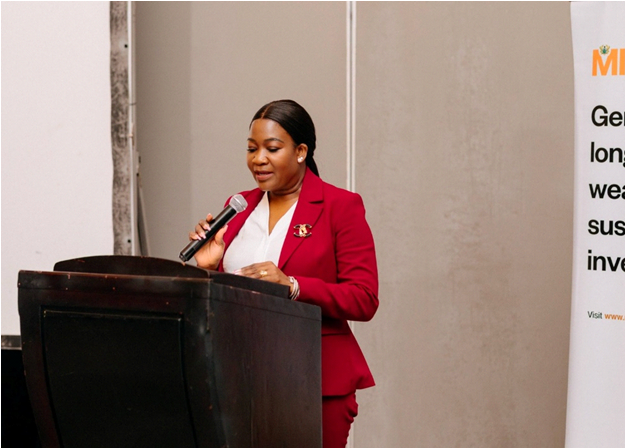
MIIF Chief Executive Officer Justina Nelson disclosed the projection on Wednesday, September 2, 2026, when Chief Justice Paul Baffoe-Bonnie, together with a delegation from the Judicial Service and Ghana School of Law, paid a working visit to MIIF’s office in Cantonments, Accra.
MIIF Records Strong Growth in Mineral Royalties
According to Ms. Nelson, MIIF collected approximately GH¢5.3 billion in mineral royalties during the first half of 2026, compared with about GH¢2.6 billion during the corresponding period in 2025.
She described the pace of royalty collections as unprecedented in the history of the Fund.
MIIF expects the strong performance to continue through the second half of the year, with the Fund targeting approximately GH¢9 billion in mineral royalty revenue for 2026.
The projected figure would represent a substantial increase compared with the GH¢5.43 billion collected during the whole of 2025.
MIIF Posts GH¢1.1 Billion Profit in 2025
The strong 2026 performance follows a profitable 2025 financial year, during which MIIF recorded an audited profit of GH¢1.1 billion.
This performance was achieved despite changes to the Minerals Income Investment Fund Act, 2018 (Act 978), which significantly reduced the Fund’s statutory share of mineral royalties and free-carried dividend income.
MIIF’s statutory entitlement was reduced to 2 percent in 2025, compared with substantially higher allocations in the previous year.
Despite the reduced allocation, total royalty collections increased from approximately GH¢4.9 billion in 2024 to GH¢5.4 billion in 2025.
Ms. Nelson attributed the Fund’s improved financial position to broader government efforts to strengthen the performance of state-owned enterprises (SOEs).
She said improvements in retained earnings, the Fund’s equity-to-assets position and reduced liabilities had placed MIIF among state-owned enterprises working towards sustained profitability.
Gold Prices Boost Ghana’s Mining Revenue
MIIF’s increased royalty collections come at a time when the international gold market has experienced significant price movements.
Gold prices reportedly reached an intraday record of more than US$5,589 per ounce in January 2026, before moderating to between approximately US$4,000 and US$4,700 during the middle of the year.
Market movements have been influenced by expectations surrounding US Federal Reserve monetary policy, the strength of the US dollar and geopolitical tensions, including conflicts in the Middle East.
The World Bank’s Commodity Markets Outlook has projected that precious metals prices could average 42 percent higher in 2026 than in 2025, making precious metals the strongest-performing commodity group during the year.
Strong central bank demand, safe-haven investment and limited supply have been identified among the factors supporting gold prices.
Large-Scale Gold Mining Drives MIIF Royalties
Large-scale gold mining contributed more than 98 percent of MIIF’s total royalty receipts during the first half of 2026.
The significant contribution reflects both elevated international gold prices and Ghana’s sliding-scale royalty regime, under which government revenue from mining increases as commodity prices rise.
However, analysts have cautioned that MIIF’s ability to achieve its GH¢9 billion full-year royalty target will depend heavily on the performance of gold prices during the remaining months of 2026.
The heavy concentration of royalty collections in gold means that any substantial decline in the international price of the precious metal could affect the Fund’s projected revenue.
MIIF Board Praises Management Performance
MIIF Board Chairman Kwame Asante said the Fund’s 2025 and 2026 results demonstrate the resilience of its management and research teams.
He noted that the teams had successfully adapted to the reduced statutory allocation following amendments to the Minerals Income Investment Fund Act.
Despite the reduction in MIIF’s share of royalties and dividends to 2 percent, the Fund has continued to expand its operations and meet its obligations to the government.
Chief Justice Highlights Role of Judiciary in Mining Investment
During the working visit, Chief Justice Paul Baffoe-Bonnie emphasised the importance of an efficient and reliable judiciary in attracting investment into Ghana.
He argued that investors require confidence that contractual disputes will be resolved fairly, efficiently and promptly before committing capital to the country.
The Chief Justice said this principle has informed his judicial reform agenda, including support for the proposed establishment of specialised courts to handle cases related to illegal mining, oil and shale extraction.
The proposed reforms are of particular interest to MIIF and stakeholders in Ghana’s mining industry, given the potential impact of illegal mining and resource-related disputes on investment and national revenue.
Chief Justice Baffoe-Bonnie stressed that investment tends to move towards countries where there is peace, stability and confidence that investments will be protected.
He further noted that the judiciary plays a much broader role in economic development than simply enforcing the rule of law.
Ghana Judiciary Introduces Court Reforms
The Chief Justice also outlined reforms concerning the judiciary’s annual vacation period.
Under the new arrangement, selected vacation judges will remain available to handle urgent matters, including injunction applications and cases requiring immediate court orders, while other judges take leave on a rotational basis.
The judiciary is also implementing new procedural rules, representing its first major revision since 2004.
Other reforms include changes to legal education, the establishment of a new regulatory council and the scrapping of the previous entry-level bar examination.
MIIF and Judiciary Explore Greater Collaboration
Both MIIF and the Judicial Service described the working visit as an opportunity to strengthen engagement between the two institutions.
MIIF’s investment advisory arm could benefit from legal and judicial expertise when structuring investment transactions, while both institutions emphasised the importance of maintaining their respective independence.
The latest developments highlight the growing importance of Ghana’s gold mining sector, mineral royalties and mining revenue to the national economy, particularly as strong global gold prices continue to support government revenue and MIIF’s financial performance.
Source: newsthemegh.com