
By Charles Ekow Panyin-Atkins | Published by Francis Buetey
For decades, road tolls have been a key source of funding for road maintenance and infrastructure development across many countries.
In Ghana, however, the road toll system has faced several challenges, including limited coverage, high operational costs, revenue leakages and concerns about fairness among road users.
The suspension of road toll collection in 2021 created a significant gap in funding for road maintenance, leaving the country searching for a more efficient, transparent and sustainable mechanism to finance the development and upkeep of its road network.
As Ghana continues to expand its infrastructure agenda and support economic activities through initiatives such as industrialization and the 24-Hour Economy, the need for a reliable road financing model has become more urgent.
The question is no longer whether Ghana needs a road user financing system; the question is how to design one that is efficient, inclusive and easy to administer.
The Challenge with Traditional Toll Booths
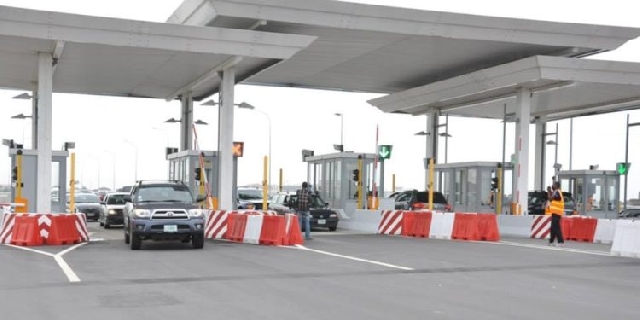
The traditional toll booth model has limitations. Toll booths only capture vehicles that pass through specific locations. This means that a significant number of road users who benefit from Ghana’s road infrastructure contribute little or nothing towards its maintenance.
A driver operating within Accra, Kumasi or other urban areas may use several roads daily without passing through a toll point. Similarly, commercial vehicles operating in rural communities benefit from roads but may never encounter a toll booth.
This creates an imbalance where only a section of road users contributes directly, while the cost of maintaining the entire road network is carried by government through limited public resources.
Additionally, maintaining physical toll booths comes with operational challenges, including traffic congestion, administrative costs and potential revenue losses.
Ghana therefore needs to move towards a more modern road user financing system that captures all vehicle owners fairly.
A New Approach: Integrating Road User Charges into DVLA Renewals
One practical solution is to integrate an annual road user charge into the existing vehicle registration and roadworthiness renewal process managed by the Driver and Vehicle Licensing Authority (DVLA).
Every vehicle owner already interacts with the DVLA annually to renew roadworthy certificates and vehicle documentation. This platform provides an efficient, transparent and nationwide mechanism to collect road maintenance contributions.
Rather than establishing multiple toll points across the country, Ghana can introduce a simple annual road infrastructure levy based on vehicle categories.
Under this proposed system:
Private Saloon Cars, Motor Bikes and Tricycles
Annual Road User Charge: GH¢50
SUVs and Larger Private Vehicles
Annual Road User Charge: GH¢100
Commercial Vehicles, Trucks and Trailers
Annual Road User Charge: GH¢200
These figures can be reviewed periodically based on economic conditions, road maintenance needs and stakeholder consultations.
The objective is not to create an additional burden on citizens but to establish a predictable contribution system where every vehicle owner supports the infrastructure they use.
Why this system makes sense
It Creates Universal Participation
A major weakness of the traditional toll system is that it only captures vehicles passing through toll booths.
The DVLA-based approach ensures that every registered vehicle contributes, regardless of where it operates.
A taxi driver in Accra, a farmer transporting goods from a rural community and a logistics company moving goods across Ghana would all participate in maintaining the national road network.
It Reduces Revenue Leakages
A digital payment system integrated into DVLA processes can significantly improve accountability and reduce the risks associated with manual toll collection.
Payments can be tracked electronically, creating better transparency and allowing government to accurately monitor collections.
It Supports Road Maintenance Planning
A dedicated road user charge can provide a predictable revenue stream for road maintenance.
Rather than depending heavily on government budget allocations, road agencies can plan long-term maintenance programmes based on more reliable funding.
It Recognizes Different Levels of Road Impact
Not all vehicles create the same level of pressure on road infrastructure.
Heavy trucks, trailers and industrial vehicles contribute significantly more to road deterioration than smaller private cars.
A categorized system ensures that those who place greater demands on roads make a proportionately higher contribution.
Ensuring Public Trust: The Missing Link
For such a system to succeed, public confidence will be essential.
Ghanaians must clearly see how these funds are being used. The government should therefore consider establishing a transparent road maintenance fund with:
- Clear reporting on collections and expenditure.
- Annual public accountability reports.
- Independent audits.
- Digital tracking of projects is financed through road user charges.
- Visible improvements in road maintenance.
Citizens are more willing to pay when they see value.
The Bigger Picture: Financing Ghana’s Infrastructure Future
Road infrastructure is not just about transportation; it is the backbone of economic growth. Roads connect farmers to markets, businesses to customers and industries to supply chains.
As Ghana seeks to become a more competitive economy, infrastructure financing must move beyond traditional government funding models.
Countries around the world have adopted different forms of road user charging systems because sustainable infrastructure requires sustainable financing.
Ghana must therefore develop a system that reflects its own realities while embracing modern approaches.
Conclusion: Time for a Smarter Road Financing Model
The future of Ghana’s road financing system should not depend solely on physical toll booths. The country needs a smarter, broader and more efficient approach.
Integrating an annual road user charge into the DVLA vehicle renewal and roadworthy certification process provides a practical pathway.
A small annual contribution from millions of vehicle owners can create a significant pool of resources to maintain roads, improve transportation networks and support economic growth.
The goal should be simple: every vehicle using Ghana’s roads should contribute to maintaining Ghana’s roads.
A modern road financing system built on fairness, transparency and accountability can help Ghana move from repairing roads reactively to maintaining them sustainably.
Source: thebftonline.com