

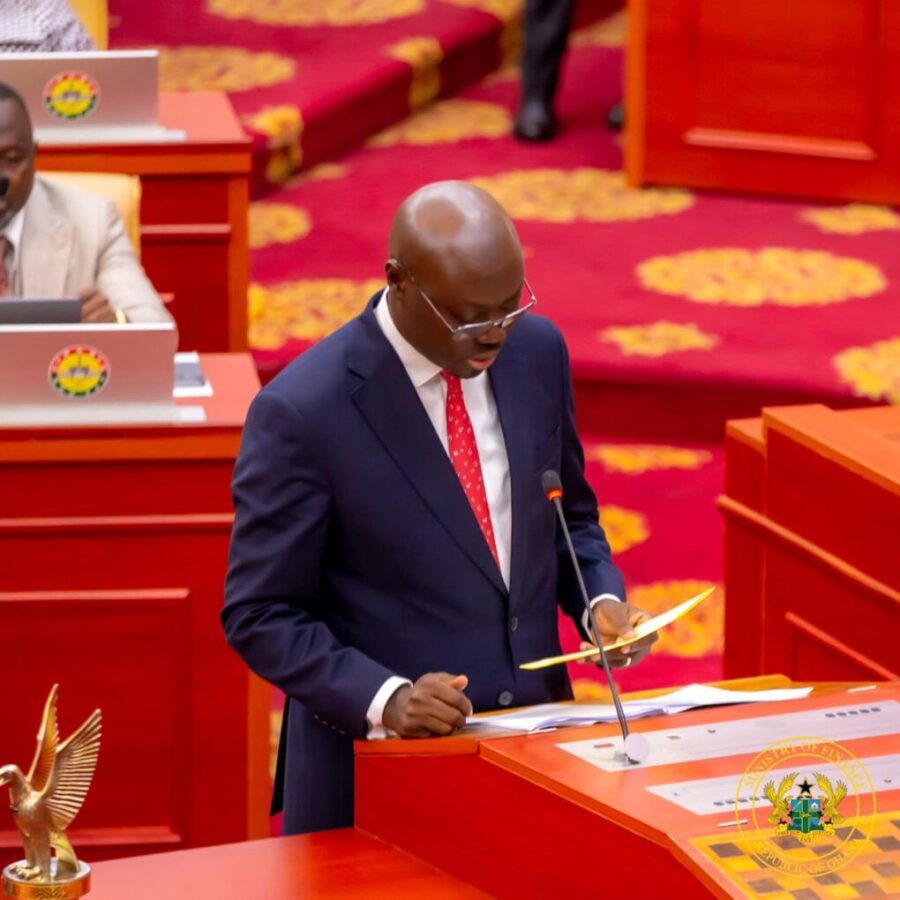
Dr. Cassiel Ato Forson, the Finance Minister, will deliver the eagerly awaited 2025 Mid-Year Budget Review today, and all eyes will be on Parliament.
Whether the administration will stick to its initial spending plan or ask for a supplemental budget in response to political and economic pressures is the main concern for many analysts.
Ghana’s macroeconomic indicators are currently exhibiting notable improvements, which supports expectations for a policy direction that supports price stability, investor confidence, and fiscal consolidation.
By the end of June 2025, inflation had drastically decreased from 23.5 percent at the start of the year to 13.7 percent.
Analysts are hopeful that Ghana may end the year with single-digit inflation, significantly higher than the government’s initial end-of-year target of 11.9 percent, thanks to this encouraging disinflation trend.
At the beginning of President Mahama’s second term, the cedi’s volatility was one of the main issues facing people and businesses.
In January, the local currency was worth about GH¢15 to the US dollar on the interbank market. Today, it is worth about GH¢10.45, which is a significant increase.
While producers continue to keep an eye on the cedi’s stability within a 60-day window agreed upon with major business associations, this recovery has started to show in some retail shops through slight price adjustments.
On the revenue side, however, many people have praised the elimination of the betting tax.
Nonetheless, there has been some public opposition to the new GH¢1 fuel fee that was implemented earlier this month.
Many industry observers are curious to know if a sunset clause or withdrawal timeline will be included in today’s review.
The government had previously predicted that the GDP would expand by 4.4 percent in 2025.
But according to figures from the Ghana Statistical Service, growth in the first quarter alone was greater than anticipated at 5.3%, which is probably going to lead to an upward revision in today’s budgetary estimate.
In terms of money, Ghana’s gross international reserves have increased to US$11.1 billion, which is better than the original goal of only three months’ worth of imports.
Compared to the US$8.98 billion recorded at the end of 2024, this is a substantial increase.
Improved inflows from gold and cocoa exports, remittances, and rekindled investor confidence have all contributed to the cedi’s impressive performance, which has seen it rise 42.6 percent year-to-date against the US dollar.
The message to government, according to many economists, is straightforward: even while the numbers are positive, fiscal restraint needs to be maintained, particularly as important infrastructure projects start to take shape in the second half of the year.
Stakeholders from a variety of industries, including manufacturers, investors, civil society, and international partners, will be keenly monitoring the Finance Minister’s speech for indications of discipline, the legitimacy of the policy, and long-term economic direction.

Source: newsthemegh.com