

RR & COMMS UPDATE-MoTAI
Hon. Sampson Ahi, the Deputy Minister for Trade, Agribusiness, and Industry, has urged governmental institutions to take immediate, concerted action to eliminate enduring obstacles in Ghana’s trade system that impede the flow of commodities and raise operating expenses.
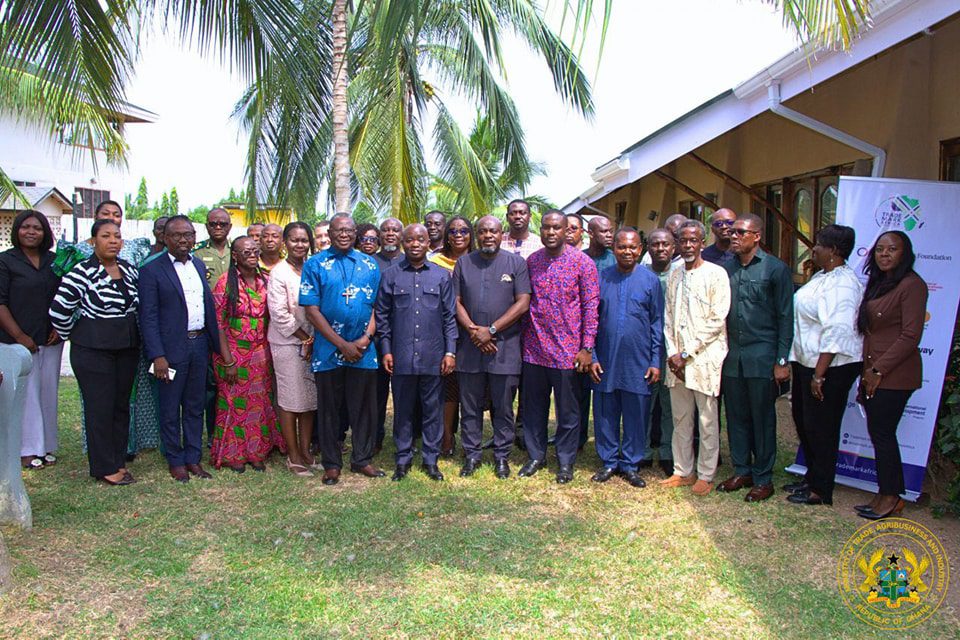
Speaking on Monday, March 9, 2026, at the commencement of the National Trade Facilitation Committee’s (NTFC) first quarter meeting at the Sogakope Beach Resort, Hon. According to Ahi, importers, exporters, and manufacturers bear significant financial costs as a result of delays at ports, borders, and the products clearance procedure, which ultimately affects regular Ghanaians.
He affirms that needless delays cost exporters time and force importers to pay additional fees. Uncertainty can also cause production disruptions for manufacturers who rely on imported commodities.
Delays are not a nuisance that can be handled later for dealers that deal in perishable commodities. He explained that a single preventable delay can damage the value of goods and erode consumer trust, making it a direct danger to revenue, market access, and corporate viability.
According to Hon. Ahi, the NTFC’s job is essential to making sure Ghana’s trade systems run smoothly and inspire trust among investors and the business sector.
To address issues affecting trade, the Committee brings together representatives from the business sector, development partners, ministries, departments, and agencies. Additionally, it is a component of Ghana’s responsibilities under the World Trade Organization Trade Facilitation Agreement, which mandates that member nations organise a national committee to enhance trade processes and coordination.
The Deputy Minister acknowledged that certain aspects of the trade clearance system still have delays, duplication, and ambiguity, even though substantial progress has been made in streamlining processes and enhancing agency coordination.
He emphasised that effective and predictable trade policies that facilitate business operations are essential to the government’s attempts to increase output, exports, and investment.
According to Hon. Ahi, “the business community does not judge government only by the policies we announce.”
“It is judged by how our systems behave, the time it takes to clear goods, the predictability of procedures, and how well institutions work together.”
He continued by saying that the Committee would concentrate on creating an action plan to enhance the flow of perishable items, which are more susceptible to delays, such fresh fruit, fish, and meat.
As a result, Hon. Ahi asked Committee members to concentrate on workable solutions by identifying problem areas, giving pertinent institutions clear duties, and reaching a consensus on implementation deadlines for reforms.
He gave participants the assurance that the Ministry of Trade, Agribusiness, and Industry would keep supporting initiatives to enhance trade processes, cut down on delays, and create a more dependable and effective trading environment for Ghanaian companies.
Mr. Kwamina Ekremet, the Program Manager for West Africa and AfCFTA at TradeMark Africa, also spoke at the conference and emphasised the significance of robust trade facilitation systems in enhancing Ghana’s competitiveness and fostering cross-border trade.
He clarified that effective trade systems boost a nation’s involvement in regional and international markets, lower transaction costs, and increase transparency.
Mr. Ekremet reiterated the organization’s dedication to helping Ghana carry out workable reforms that will enhance border agency coordination, expedite processes, and speed up the flow of commodities.
He pointed out that industries that deal with perishable goods, whose clearance delays can result in large financial losses, need special attention.
Source: newsthemegh.com