
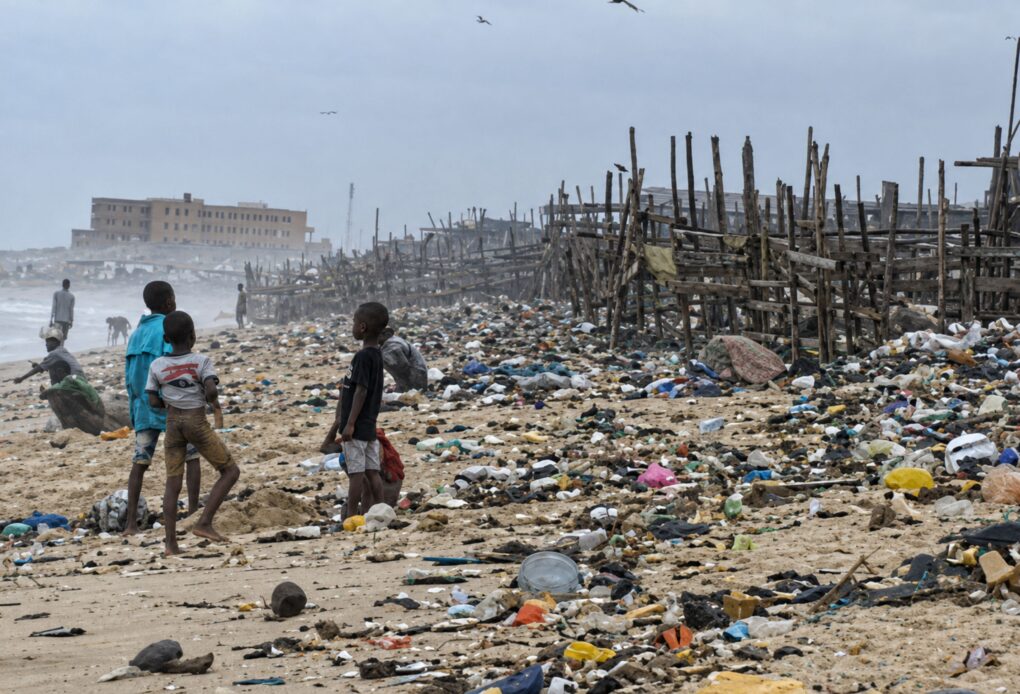
An estimated 5.4 million people in Ghana continue to practise open defecation, while the country loses approximately $290 million every year due to poor sanitation, according to the Ministry of Local Government, Chieftaincy and Religious Affairs.
The Deputy Minister, Rita Naa Odoley Sowah, disclosed this at the 2026 National Commemoration of World Toilet Day held in Bongo in the Upper East Region on November 19, 2026. She described the situation as a national emergency that requires urgent intervention and collective efforts to improve access to safe sanitation facilities.
Although Ghana has made progress in reducing open defecation, she said millions of citizens still lack access to proper toilet facilities, exposing communities to serious public health and environmental sanitation challenges.
According to the deputy minister, the estimated $290 million spent annually on the consequences of inadequate sanitation could instead be invested in essential infrastructure, including schools, hospitals, clinics and roads.
She stressed that open defecation was not only a public health concern but also a major threat to the safety, dignity and educational opportunities of women and girls.
Sowah explained that women and girls without access to household toilets often have to venture into isolated areas, particularly at night or before sunrise, exposing themselves to potential dangers. Such conditions, she noted, could also affect school attendance and reinforce gender inequality.
The 2026 World Toilet Day celebration, organised in partnership with WaterAid Ghana under the theme “From Open Defecation to Open Opportunity through the Gender Lens”, brought together government representatives, traditional leaders and development partners to discuss sustainable sanitation solutions.
Bongo District Records High Open Defecation Rate
The Paramount Chief of the Bongo Traditional Area, Naba Baba Salifu Atamale Lemyaarum, revealed that approximately 80 per cent of the district’s population practised open defecation, according to the 2021 Population and Housing Census.
He said findings from WaterAid Ghana’s 2024 World Service Level Assessment also confirmed the severity of the sanitation challenge, indicating that Bongo’s open defecation rate was more than four times the national average of approximately 18 per cent.
Concerned about the situation, the traditional council introduced the Bongo Sanitation Challenge after signing the district’s Water, Sanitation and Hygiene (WASH) Compact in September 2025.
Under the initiative, 690 household toilets have been constructed at an estimated cost of GH¢2 million, providing improved sanitation access to approximately 3,700 residents.
Naba Lemyaarum explained that the project was also creating economic opportunities for local artisans, construction workers and suppliers of building materials.
The traditional council has additionally established a WASH Fund to support financially disadvantaged and vulnerable households in constructing toilet facilities and improving sanitation infrastructure in public spaces.
With 42 communities under its traditional authority, the Bongo Traditional Area has set a target of achieving an open-defecation-free status by 2030.
WaterAid Ghana Calls for Accessible and Safe Toilet Facilities
WaterAid Ghana Country Director, Ewurabena Yany-Akufur, said access to proper sanitation should be recognised as a fundamental necessity linked to public health, equality and human dignity.
She observed that inadequate toilet facilities disproportionately affect vulnerable groups, particularly girls, pregnant women, older persons and people living with disabilities.
She therefore called for sanitation infrastructure that is safe, accessible, functional and properly maintained to ensure that everyone can enjoy improved hygiene and living conditions.
Yany-Akufur also urged government institutions to strengthen local sanitation delivery systems, improve regulatory enforcement and promote sustained behavioural change alongside investments in toilet facilities.
She emphasised that access to a toilet should not be treated as a privilege but as an essential service that every individual deserves.
Upper East Regional Minister Urges Assemblies to Prioritise Sanitation
The Upper East Regional Minister, Donatus Akamugri Atanga, has called on all 15 municipal and district assemblies in the region to intensify efforts to improve sanitation and expand access to household and public toilet facilities.
He urged local authorities to strengthen public education on proper sanitation practices and encourage communities to take greater responsibility for maintaining clean and healthy environments.
According to the Regional Minister, tackling open defecation requires sustained investment, community participation and behavioural change.
He further described the inauguration of the Bongo WASH Fund Committee as an important step towards mobilising financial resources to support sanitation projects and improve access to toilet facilities across the district.
The government has also reaffirmed its commitment to supporting sanitation programmes through resource allocations to Metropolitan, Municipal and District Assemblies (MMDAs), with portions of the funding earmarked for sanitation-related interventions.
The latest revelations highlight the scale of Ghana’s sanitation challenges and the need for stronger collaboration between government, traditional authorities, development organisations and local communities to achieve improved sanitation coverage and eliminate open defecation by 2030.
Source: newsthemegh.com