

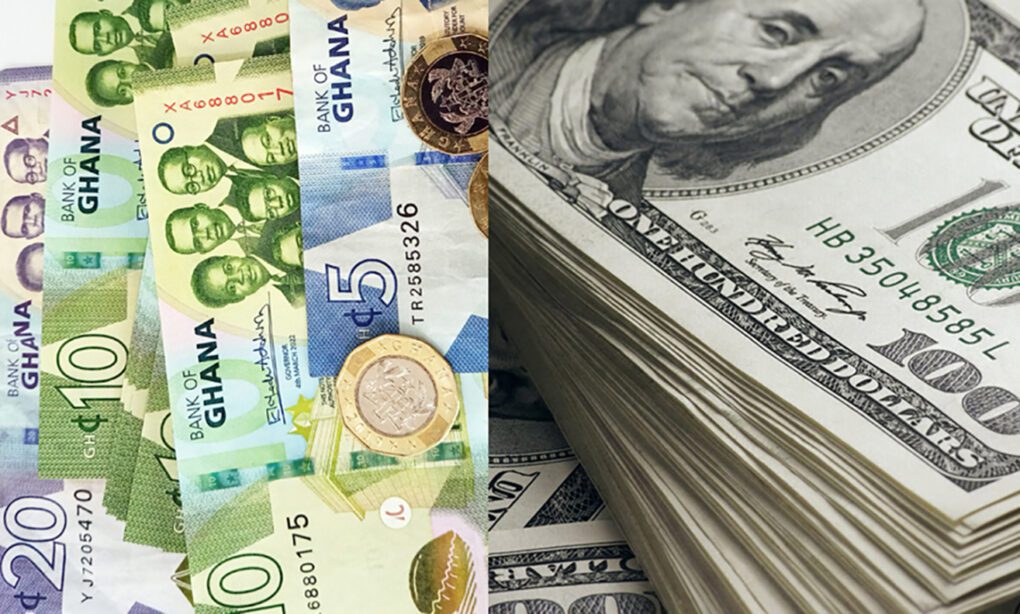
Pressure on the Ghana cedi is lessening as the year comes to a close, signalling a significant shift after years of unrelenting volatility.
The increased stability benefits enterprises that rely largely on predictable currency rates for planning, pricing, and cross-border operations.
Last week, the Ghana cedi began trading on the interbank market at GH˼11.50 to the US dollar, GHǼ15.36 to the Pound Sterling, and GHǼ13.47 to the Euro.
By midweek, it had marginally gained, with prices at GH¢11.36 to the dollar, GH¢15.31 to the pound, and GH¢13.37 to the euro.
The improvement alleviated concerns about currency volatility, which has historically followed seasonal increases in foreign exchange demand.
The cedi is on a good footing as the year draws to a conclusion, with the interbank market pricing the dollar at GHC˼11.11, the pound at 15, and the Euro at GHC 13.08.
This is in stark contrast to the same period last year, when the dollar traded at GH¢14.71, the pound at GH¢18.49, and the Euro at GH¢15.33.
The cedi’s easing pressure is the result of a variety of factors, including a drop in seasonal forex demand due to festival imports and increased inflows from the diaspora, which have increased foreign exchange supply and supported currency stability.
The gains are also supported by a current account surplus, which is supplemented by positive balances in the capital and finance accounts, boosting Ghana’s external position and providing a cushion for the domestic currency.
Businesses and individuals who rely on a stable and appreciating cedi are optimistic that the favourable trend will continue into the new year, lowering the cost of doing business.
Source: newsthemegh.com