
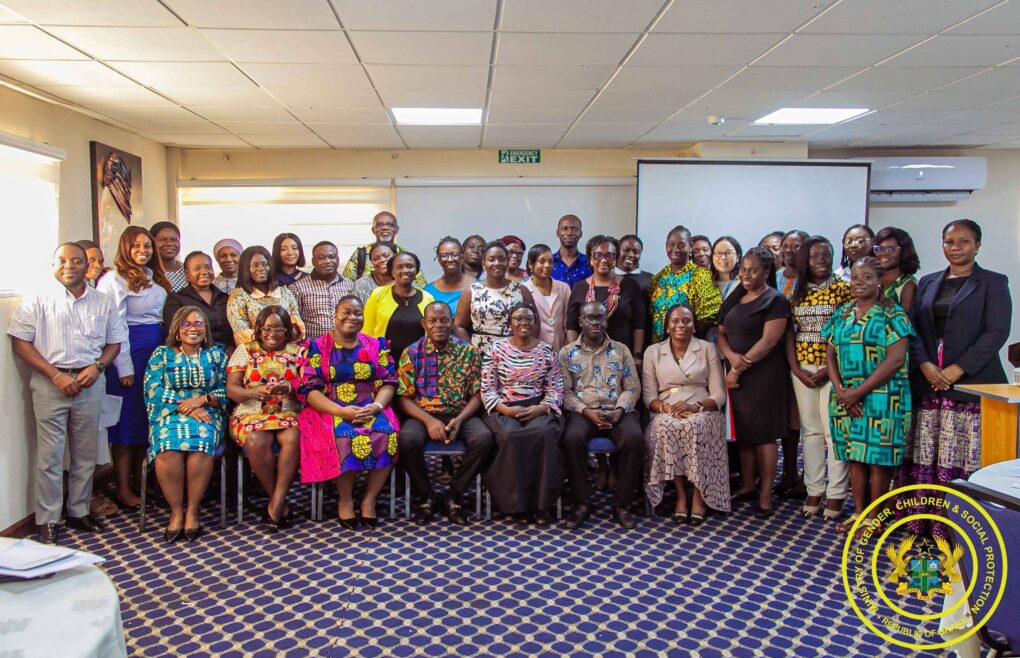
The Ministry of Gender, Children and Social Protection’s (MoGCSP) Child Marriage Unit, in partnership with UNFPA and UNICEF Ghana, convened a one-day consultative meeting in Accra to review and update the National Strategic Framework (NSF) on Ending Child Marriage and to evaluate progress towards ending the practice by 2030.
The purpose of the meeting, which was held as part of the UNFPA/UNICEF Global Programme to End Child Marriage (Phase III), was to gather feedback from interested parties regarding significant successes, difficulties, and lessons discovered throughout the National Strategic Framework’s implementation between 2017 and 2025.
Additionally, it sought to pinpoint systemic issues and implementation bottlenecks while gathering useful information from frontline implementers to guide the framework’s modification.
Ghana’s commitment to protecting each child’s rights, dignity, and potential is reflected in the National Strategic Framework, according to Madam Saphia Tamimu, Head of the Child Marriage Unit, who spoke on behalf of Dr. Afisah Zakariah, Chief Director of MoGCSP.
The Affirmative Action Gender Equity Act, 2024 (Act 1121), the Social Protection Act (Act 1148), and the execution of the Children’s Act are only a few examples of the notable advancements in legislation and policy that she pointed out.
She claims that these initiatives have improved the Ministry’s comprehension of the systemic flaws that lead to child marriage in the nation.
“This has necessitated a review and update of our strategic directions, particularly as only four years remain to achieve Sustainable Development Goal target 5.3 on ending child marriage by 2030,” she added.
Representatives from UNFPA and UNICEF Ghana emphasised the importance of evidence-based programming and strong partnerships in eliminating child marriage.
They emphasised that Phase III of the Global Programme focusses on scaling up proven interventions, strengthening systems, and amplifying teenage girls’ voices to promote long-term change.
Participants engaged in detailed discussions about the framework’s priority actions, implementation strategies, and coordination structures.
The consultative process allowed stakeholders to express their perspectives, validate recommended interventions, and ensure that the new framework reflects developing realities, national development aspirations, and the lived experiences of girls at risk of child marriage.
Source: newsthemegh.com