

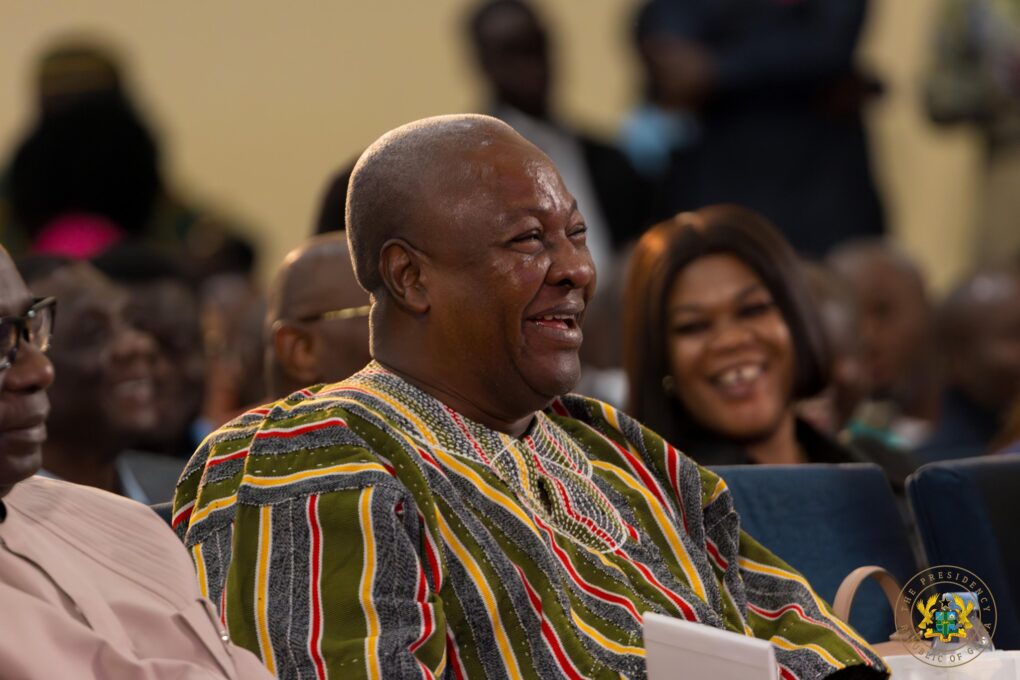
Ghana’s President John Mahama has reiterated calls for United Nations reform to offer Africa permanent seats on the UN Security Council.
He reiterated that addressing the continent’s historical absence from the Council’s decision-making process was a question of global justice.
In his speech at Chatham House in London, the President made the appeal while discussing Ghana’s viewpoint on “Navigating a Changing Global Order: Ghana’s Strategic Priorities.”
According to him, Ghana felt that rather than reflecting the power structures of 1945, the institutions of global governance needed to change to reflect comprehensive political realities.
The President claimed that while large segments of the human population were still fundamentally under-represented in international decision-making, the international system could not sustainably maintain its legitimacy.
He claimed that despite having 54 UN members and a population expected to make up about 25% of all people by 2050, Africa is still not allowed to have permanent representation on the UN Security Council.
“This is not nearly a procedural anomaly; it is a historical injustice. And a structural imbalance that undermines the credibility of the multilateral system itself.”
According to President Mahama, Ghana is still in favour of extensive UN system reform, including fair representation of Africa on the Security Council.
Despite its flaws and injustices, he claimed that the post-1945 international order created significant institutions and standards that contributed to the relative stability of the world.
He pointed out that the United Nations Charter promoted ideas meant to govern state-to-state relations, sovereign equality, territorial integrity, peaceful dispute resolution, non-interference, and the joint pursuit of peace and development.
According to him, many formerly colonised countries, like Ghana, were able to secure their independence and declare their sovereignty because of the normative underpinnings these ideas established.
“Today, however, many of these norms are on the street. We increasingly witness a selective application of international law, the erosion of multilateral consensus, and the growing tendency for strategic competition to take precedence over collective responsibility,” the President said.
He noted out that although climate finance pledges remained unfulfilled and development assistance was declining in many places, violence across regions continued to test the legitimacy of the international system, exposing the weakness of the institutions intended to maintain peace and stability.
According to President Mahama, the world is growing more electronically linked while remaining politically divided.
He claimed that whether or not the global order was shifting was no longer the main concern for nations in the Global South.
“The question is how to navigate this transition with resilience, strategic clarity, and sovereign confidence.”
The President stated that this movement called for deliberate involvement rather than retreat or apathy on Ghana’s part.
He stated that the four overarching strategic targets served as the foundation for Ghana’s response to this shifting global environment.
These include increasing sovereign agency over a national development trajectory, fostering balanced and mutually beneficial alliances, spearheading African integration, and reforming global governance.
Source: newsthemegh.com