
Ghana’s One Million Coders Programme has recorded significant growth, with 141,954 registered accounts and 27,782 learners actively participating in digital skills training as of August 2, 2026.
Minister for Communications, Digital Technology and Innovations Samuel Nartey George disclosed the latest figures as government intensifies efforts to equip young Ghanaians with technology skills required to participate in the country’s rapidly expanding digital economy.
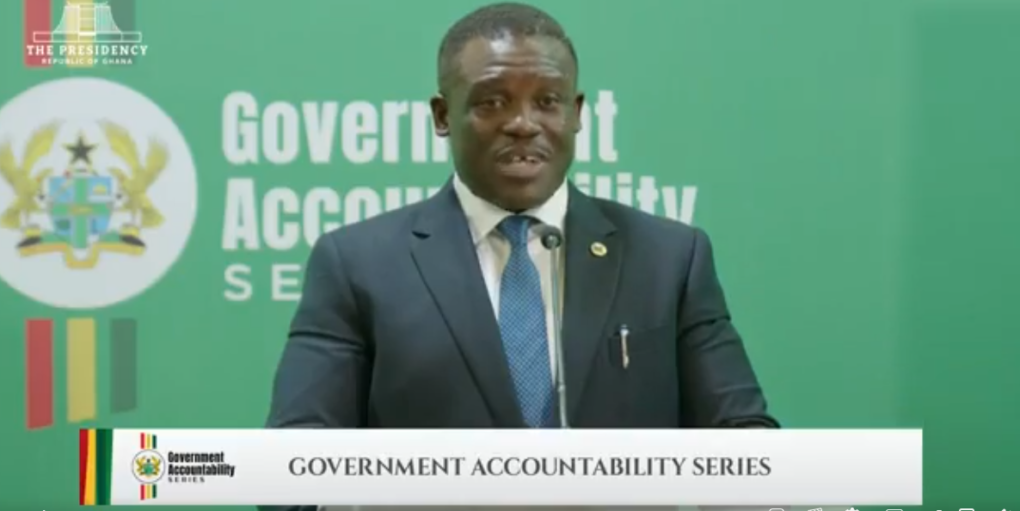
Speaking on Monday, September 7, 2026, at the Government Accountability Series at Jubilee House in Accra, the Minister said the programme had also recorded 5,812 completed courses.
Cybersecurity Leads One Million Coders Training
According to Samuel George, cybersecurity has emerged as the most popular course among participants, attracting 8,570 learners.
Other highly sought-after areas include data analytics, artificial intelligence (AI) and project management, reflecting the growing demand for digital and technology skills in Ghana’s labour market.
“Our One Million Coders Programme has become a genuine national movement,” the Minister said.
He explained that 24,394 learners were undertaking self-paced courses, while 6,050 participants required support through physical training centres.
Between June 1 and August 15, the programme also recorded 11,683 cumulative attendances across 118 reporting centres, highlighting growing interest in digital education among Ghanaians.
11 Universities Join Ghana’s Digital Skills Initiative
The Communications Ministry has also entered into Memoranda of Understanding (MoUs) with 11 universities to integrate digital certifications into existing degree and diploma programmes.
Institutions involved include the University of Ghana, Kwame Nkrumah University of Science and Technology (KNUST), University of Energy and Natural Resources (UENR), Ghana Communication Technology University (GCTU) and University of Cape Coast (UCC).
The initiative is expected to strengthen the connection between higher education, digital certification and employment opportunities, while giving graduates additional technology skills relevant to the modern job market.
Government is also collaborating with the Ministry of Education and Ghana Education Service (GES) to expand foundational digital skills training for students between the ages of 13 and 19.
Ghana Advances National Artificial Intelligence Strategy
The Minister further disclosed that Cabinet has approved Ghana’s National Artificial Intelligence Strategy 2025–2035, signalling a major step towards strengthening the country’s artificial intelligence ecosystem.
As part of the government’s AI development agenda, 240 civil servants have already undergone artificial intelligence literacy training.
Samuel George said the Ministry plans to extend AI capacity-building initiatives by December to 50 Digital Champions, as well as Chief Directors and Directors across the Civil Service.
The Ministry is also working to finalise a National AI Delivery Framework, which will establish key targets and milestones for artificial intelligence development in Ghana through to 2035.
The government’s digital transformation agenda, supported by the One Million Coders Programme and National AI Strategy, is aimed at developing a digitally skilled workforce, improving technology adoption and positioning young Ghanaians to benefit from emerging opportunities in the global digital economy.
Source: newsthemegh.com