
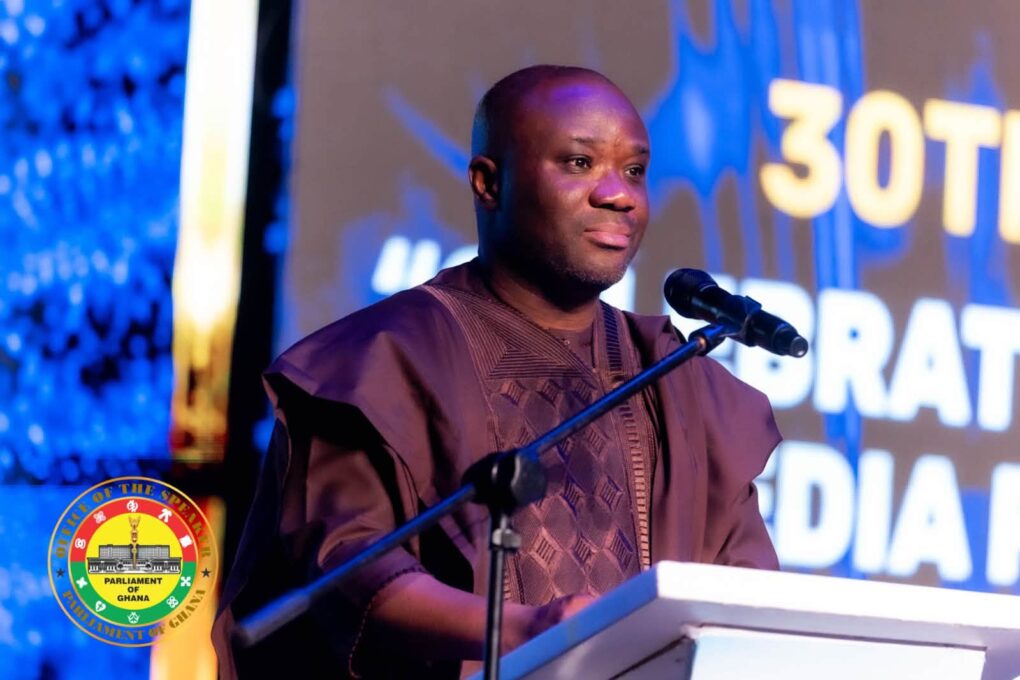
The Minister of Government Communications, Felix Kwakye Ofosu, has defended the economic performance of President John Dramani Mahama’s administration, insisting that the current government has managed Ghana’s economy better than the previous New Patriotic Party (NPP) government.
According to him, economic conditions have improved to the extent that Ghanaians can now afford goods and services more easily compared to the previous administration.
Speaking to journalists in Parliament ahead of the presentation of the 2027 Budget Statement on Thursday, November 12, 2026, Kwakye Ofosu maintained that the government had made significant progress in managing the economy, although further improvements were necessary.
He expressed confidence that the country’s economic recovery would continue, adding that the government was committed to implementing additional policies to improve living standards and strengthen economic growth.
New Economy Programme to Create Jobs for Ghanaian Youth
Kwakye Ofosu also highlighted the government’s proposed New Economy Programme, which was expected to feature prominently in the 2027 Budget.
He explained that the initiative was designed to transform Ghana’s economic structure over the next four years, with particular emphasis on job creation, private sector development and improved economic opportunities for young people.
According to the Government Communications Minister, the New Economy Programme is not intended to be a routine government policy but a strategic intervention aimed at delivering measurable economic benefits.
He further explained that the government’s 24-Hour Economy policy was designed as a long-term economic initiative rather than a one-time event.
The programme seeks to encourage private businesses to operate extended shifts through incentives and other government support measures, ultimately increasing production, expanding businesses and creating employment opportunities.
Kwakye Ofosu acknowledged that although considerable work had gone into developing the initiative, its full impact was yet to be realised.
Ghana’s 2027 Budget to Focus on Economic Transformation
The 2027 Budget, themed “The New Economy,” was scheduled for presentation to Parliament at 6 p.m. on Thursday, November 12, 2026.
Speaker of Parliament Alban Bagbin explained that the decision to move the sitting to the evening followed a request from Finance Minister Dr Cassiel Ato Forson, which he approved after receiving sufficient justification.
The budget is expected to outline the government’s economic priorities, fiscal policies and development plans for 2027, with particular attention to economic growth, job creation, infrastructure development and improved living standards.
ISSER Director Urges Government to Increase Capital Expenditure
Ahead of the budget presentation, the Director of the Institute of Statistical, Social and Economic Research (ISSER), Professor Robert Darko Osei, called on the government to increase capital expenditure to support infrastructure development and improve business productivity.
Speaking on JoyNews’ PM Express Business Edition, Professor Osei disclosed that government spending on capital projects during the first half of 2026 fell more than 40 per cent below its target.
He attributed the shortfall partly to reductions in planned infrastructure projects as the government pursued fiscal consolidation and efforts to meet its budgetary targets.
The ISSER Director warned that excessive cuts in capital expenditure could undermine the infrastructure needed to support businesses, reduce operating costs and improve Ghana’s overall economic competitiveness.
He argued that public infrastructure investment should be treated as a critical component of the government’s economic transformation agenda, rather than simply another area of government spending.
According to him, infrastructure development must create an enabling environment for businesses to operate efficiently, expand production and generate employment.
ISSER Warns Against Infrastructure Spending Cuts Under New Economy Plan
Professor Osei further questioned the consistency of reduced infrastructure expenditure with the government’s proposed New Economy Programme, which was described in his remarks as a US$9 billion development plan covering 2027 to 2030.
He urged the government to use the fiscal space created through its economic stabilisation measures to increase productive public investment, particularly in infrastructure projects that could stimulate private sector growth.
However, he cautioned that increasing capital expenditure alone would not guarantee economic transformation.
He stressed the need for effective project supervision, financial accountability, transparency and value-for-money assessments to ensure that public funds deliver the intended results.
According to the ISSER Director, the quality and efficiency of government expenditure are just as important as the amount of money allocated to development projects.
He therefore encouraged the government to balance fiscal discipline with strategic infrastructure investment to support businesses, accelerate economic growth and create sustainable employment.
The 2027 Budget is expected to provide further details on how the Mahama administration intends to finance its New Economy agenda while maintaining fiscal discipline and supporting Ghana’s economic recovery.
Source: newsthemegh.com