
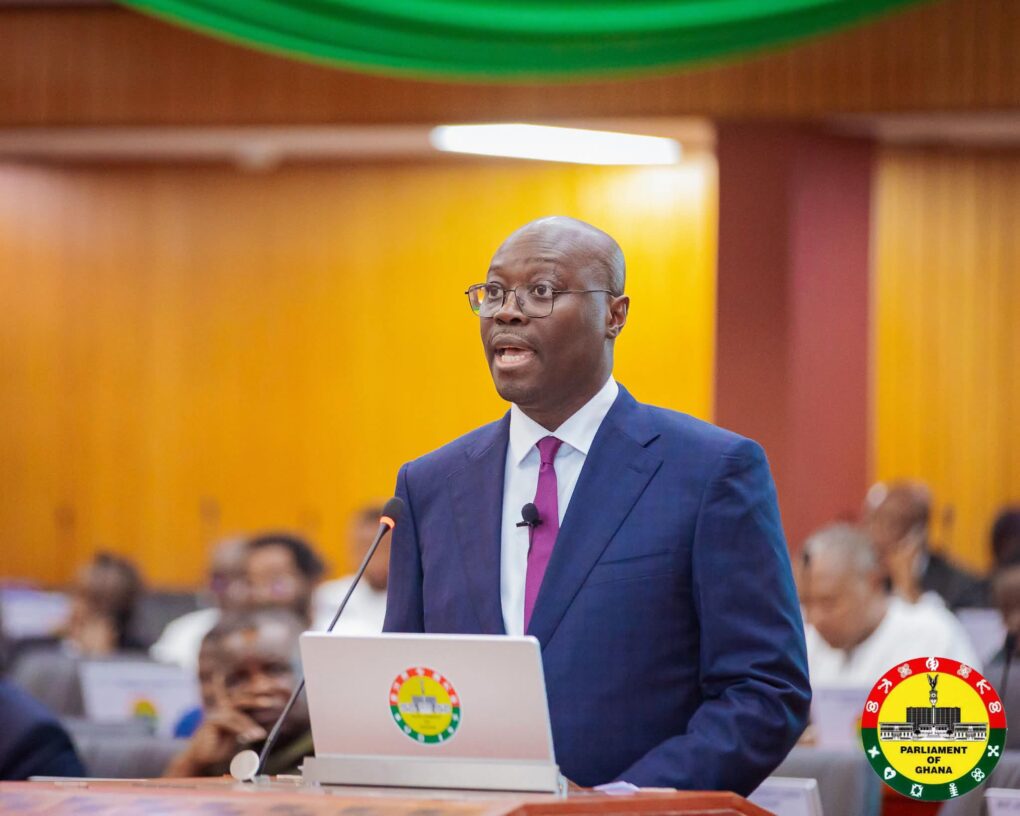
The Government of Ghana has earmarked GH¢30 billion for its proposed New Economy Programme in 2027 as part of an ambitious strategy to restructure the economy, strengthen local industries, expand businesses and create employment opportunities.
Presenting the 2027 Budget Statement and Economic Policy to Parliament on Thursday, November 12, 2026, Finance Minister Dr Cassiel Ato Forson said the allocation represents 1.5 per cent of Ghana’s Gross Domestic Product (GDP).
He explained that the funding would support the government’s economic transformation agenda by promoting industrial development, boosting domestic production and creating a more competitive private sector.
Ghana Targets Sugar Self-Sufficiency by 2030
As part of the New Economy Programme, the government has announced plans to achieve self-sufficiency in sugar production by 2030 to reduce the country’s dependence on imported sugar.
Dr Ato Forson identified the sugar industry as one of eight integrated agro-industrial sectors targeted under the government’s economic transformation strategy.
” Ghana will pursue self-sufficiency in sugar requirements by 2030,” the Finance Minister told Parliament.
The initiative is expected to strengthen Ghana’s agricultural sector, encourage local sugar production, promote agro-processing and create employment opportunities across the agricultural value chain.
Ghana currently depends significantly on imported sugar to satisfy domestic consumption, despite opportunities to develop local sugar production and processing capacity.
Achieving the 2030 target will require increased investment in sugarcane cultivation, industrial processing facilities, agricultural infrastructure and other supporting businesses.
The government’s strategy is expected to promote value addition, improve food security and reduce the country’s import bill.
Government Uncaps Exim Bank Levies to Support Local Poultry Industry
In another major policy announcement, the government will remove the cap on levies allocated to the Ghana Export-Import Bank (Ghana Exim Bank) to strengthen its financial capacity and support domestic poultry production.
Dr Ato Forson said the decision would provide the bank with additional resources to finance poultry farming, expand local production and support the manufacturing of poultry feed.
According to the Finance Minister, the intervention is intended to position Ghana Exim Bank as a key financial institution in supporting local poultry businesses and reducing the country’s dependence on imported poultry products.
The uncapping of the levies is expected to improve access to financing for poultry farmers, encourage investment in the livestock industry and strengthen Ghana’s domestic agricultural production.
The initiative also forms part of broader efforts to develop local industries, support small and medium-sized enterprises (SMEs), create jobs and retain more economic value within the country.
New Economy Programme to Drive Ghana’s Economic Transformation
The GH¢30 billion allocation, sugar self-sufficiency target and additional financing for the poultry industry demonstrate the government’s commitment to strengthening Ghana’s productive sectors.
Through the New Economy Programme, the government aims to accelerate agro-industrial development, increase local manufacturing, promote import substitution and establish sustainable sources of employment.
The success of these initiatives will depend on effective implementation, private sector investment and the development of the infrastructure needed to support large-scale domestic production.
Source: newsthemegh.com