

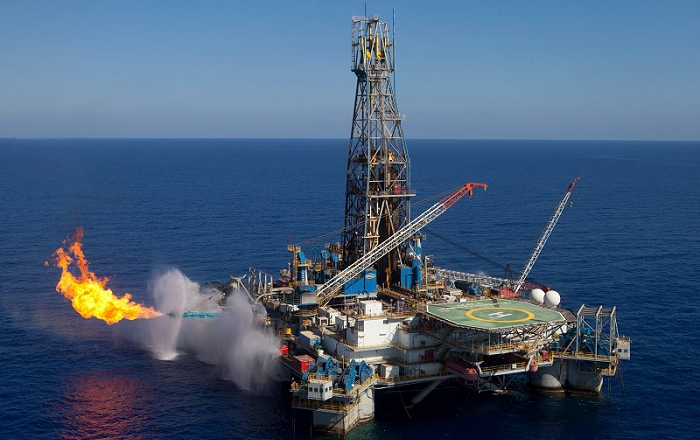
The Public Interest and Accountability Committee (PIAC) reports that despite a sustained drop in crude oil production, Ghana’s petroleum revenue increased dramatically in 2024, hitting its second-highest annual amount.
The 2024 Annual Report provides a thorough examination of petroleum production, revenue, and utilization under the Petroleum Revenue Management Act (PRMA). It was delivered by Mr. Samuel Bekoe, a PIAC member representing Think Tanks, at the Eastern Zonal Media Engagement in Koforidua.
Petroleum activities brought in US$1.36 billion for Ghana in 2024, a 27.8% increase over the US$1.06 billion generated in 2023.
Since oil production started in 2010, this represents the second-highest annual petroleum revenue, with 2022 having the highest at US$1.42 billion.
Despite a slight year-over-year drop in crude oil production, the increase was mostly ascribed to favorable global oil prices.
Following a five-year decline from a peak of 71.44 million barrels in 2019, total production dropped to 48.24 million barrels.
Mr. Bekoe said, “The revenue performance reflects the resilience of Ghana’s petroleum sector in the face of declining output.”
Regarding Gas Production and Utilization, he stated that the SGN field contributed over half of the 280,511.03 MMSCF in 2024 that was produced from raw gas.
According to utilization data, 10.2% of the gas was flared, 44.3% was injected, 4.2% was utilized as fuel, and 41.3% was exported.
Since 2014, Ghana’s total commercial raw gas production has exceeded 1.77 trillion MMSCF.
Additionally, US$603.5 million in Carried and Participating Interest (CAPI), US$502.87 million in Corporate Income Tax (CIT), US$239.98 million in Royalties, and additional revenue sources such as surface leases and PHF interest were used to fund petroleum.
The following were the revenues distributed by the Petroleum Holding Fund (PHF): Ghana Stabilization Fund (GSF): US$409 million; Ghana Heritage Fund (GHF): US$175.3 million; GNPC: US$280.6 million; Annual Budget Funding Amount (ABFA): US$493.3 million.
US$11.2 billion of the US$11.21 billion in total petroleum receipts since 2011 have been disbursed through the PHF.
The report further stated that the ABFA was allotted to four priority areas for 2023–2025 that were approved by Parliament: industrialization; roads, rail, and other critical infrastructure; education and health infrastructure; and agriculture, including fisheries.
However, there was no funding for industrialization in 2024, which raises questions about whether the PRMA’s prioritization system was followed.
GHC7 million for road construction in Atekyem, Koforidua; GHC2.6 million for a CHPS compound in Asuogyaman; GHC1 million for bitumen surfacing of feeder roads; and GHC600,000 for a rural market and boreholes in Upper Manya Krobo were among the noteworthy ABFA-funded projects in the Eastern Region.
The report emphasized a number of important topics, including the fact that no new petroleum agreements were signed in 2024, which is in line with a five-year pattern.
GNPC Explorco brought the total amount of outstanding revenues to almost US$489 million after failing to send US$145.7 million from liftings into the PHF.
International oil corporations owed $2.89 million in surface rental arrears, of which 60% was owed by companies whose contracts were terminated in 2021.
Make-Up Gas (MUG) worth 1,186.81 MMSCF was forfeited by Ghana from the SGN field.
Despite having the lowest yield, the TEN field had the highest development expenses, with state payments increasing by more than 400%.
Among the suggestions given by the PIAC was that Parliament enforce adherence to Regulation 8 of L.I. 2381, specifically with relation to the GSF cap, which was kept at US$100 million rather than the necessary US$517.43 million.
Loan commitments unrelated to GNPC and GNPC Explorco’s primary missions ought to be excluded.
In order to draw in upstream investments, the Ministry of Energy needs to step up its efforts.
To recoup unpaid surface rentals, the Bank of Ghana, Petroleum Commission, and Ghana Revenue Authority should work together.
PIAC underlined that the government must make sure industrialization is not only a declared priority but also one that is financially supported.
Source: newsthemegh.com