
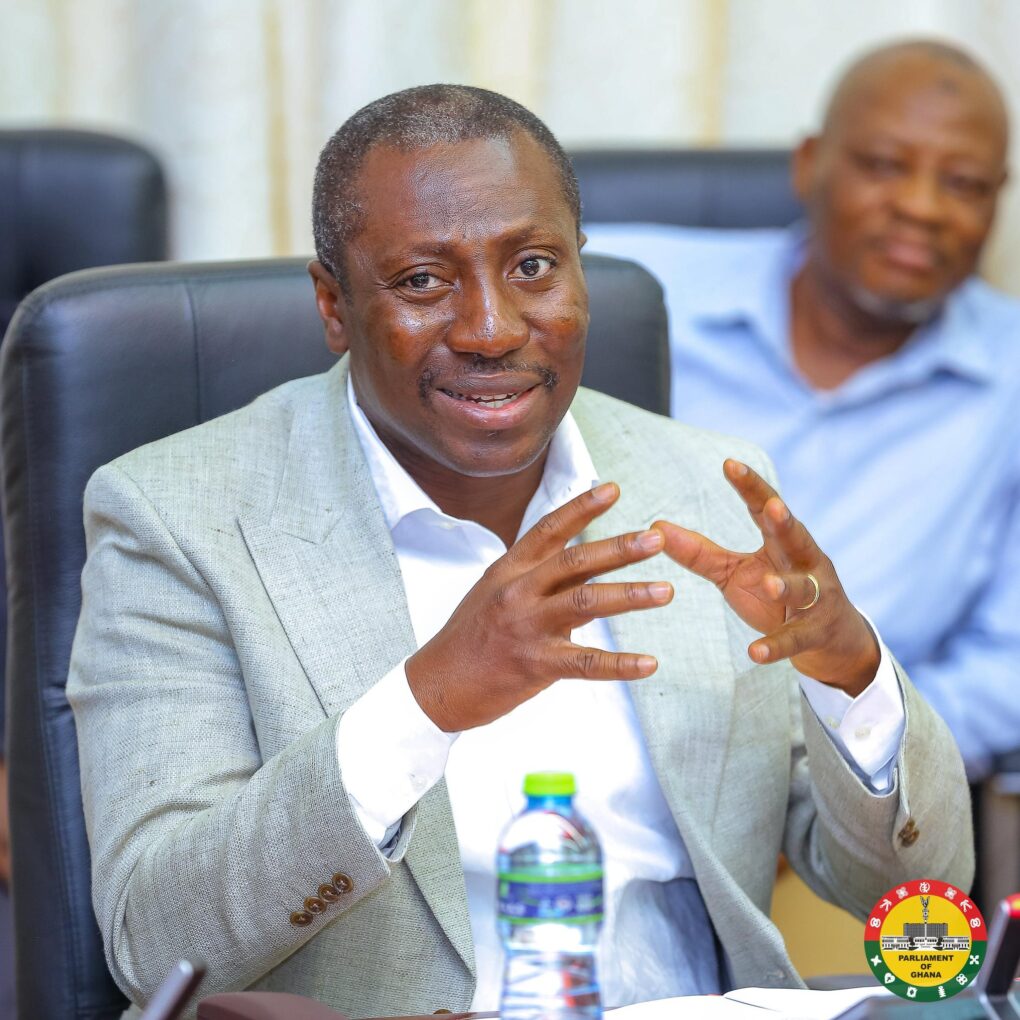
Minority Leader in Parliament, Alexander Afenyo-Markin, has called on the Bank of Ghana (BoG) to provide clarification over the identity of a woman whose portrait appears on the newly redesigned Ghanaian banknotes.
The call follows concerns raised by relatives of the late Ghanaian national flag designer, Theodosia Salome Okoh, who have questioned whether the portrait represents Mrs Okoh or renowned Ghanaian scientist Dr Letitia Obeng.
Mr Afenyo-Markin has urged the central bank to release the reference photographs used in designing the portrait and engage the affected family to resolve the controversy.
In a statement, the Effutu Member of Parliament said the issue required transparency, fairness and sensitivity, particularly because of the historical significance of Ghana’s national symbols and cultural heritage.
Controversy Over Identity of Woman on New Banknotes
The controversy began after Dr Eddie Obeng, a nephew of Theodosia Salome Okoh, questioned the identity of the woman featured on the redesigned Ghanaian currency.
Dr Obeng reportedly raised concerns about whether the portrait was intended to represent his aunt, Mrs Okoh, or his mother, Dr Letitia Obeng, a celebrated Ghanaian scientist.
Afenyo-Markin, who is also the Minority Leader and a leading member of the New Patriotic Party (NPP), has called on the Bank of Ghana to disclose the photographs used as references during the design process.
He said consultations with the family would help establish the identity of the personality depicted on the banknotes and prevent further misunderstandings.
The Minority Leader emphasised that the recognition of historical figures on Ghana’s currency must be guided by accuracy, fairness and respect for their contributions to the country’s development.
Afenyo-Markin Questions Removal of the Big Six
Beyond the disputed portrait, Mr Afenyo-Markin has raised concerns about the broader changes introduced to Ghana’s redesigned banknotes, particularly the removal of the collective image of the Big Six.
He argued that redesigning the currency should not result in selective historical recognition or undermine Ghana’s independence history.
The Big Six were prominent leaders of the United Gold Coast Convention (UGCC) who were detained by British colonial authorities following the 1948 disturbances. They include Dr Kwame Nkrumah, Dr J.B. Danquah, Edward Akufo-Addo, William Ofori Atta, Ebenezer Ako-Adjei and Emmanuel Obetsebi-Lamptey.
The Minority Leader recalled that the collective portrait of the Big Six was introduced on Ghana’s redenominated banknotes in 2007 during the administration of former President John Agyekum Kufuor.
He further noted that the introduction of the GH¢2 banknote featuring Dr Kwame Nkrumah under the late President John Evans Atta Mills did not result in the removal of the Big Six from other currency denominations.
Debate Over Recognition of Ghanaian Historical Figures
While welcoming the recognition of Theodosia Okoh and other prominent Ghanaian personalities, including Ephraim Amu, composer of Yen Ara Asaase Ni, Mr Afenyo-Markin questioned why the inclusion of new national figures should require the removal of previously honoured personalities.
He suggested that other influential figures, including Chief Simon Diedong Dombo and Otumfuo Sir Osei Agyeman Prempeh II, should also be considered for recognition on Ghana’s currency because of their contributions to the country’s political, cultural and constitutional development.
Minority Leader Calls for Non-Partisan Decisions on National Symbols
Mr Afenyo-Markin has called on President John Dramani Mahama to ensure that decisions concerning Ghana’s national symbols are guided by national interest and historical accuracy rather than partisan political considerations.
He maintained that Ghana’s currency represents all citizens and should reflect the country’s diverse historical experiences while honouring patriots from different political backgrounds.
The debate over the redesigned banknotes has renewed public discussion about Ghana’s national identity, historical representation, currency design and the recognition of personalities who contributed to the country’s independence and development.
Source: newsthemegh.com