
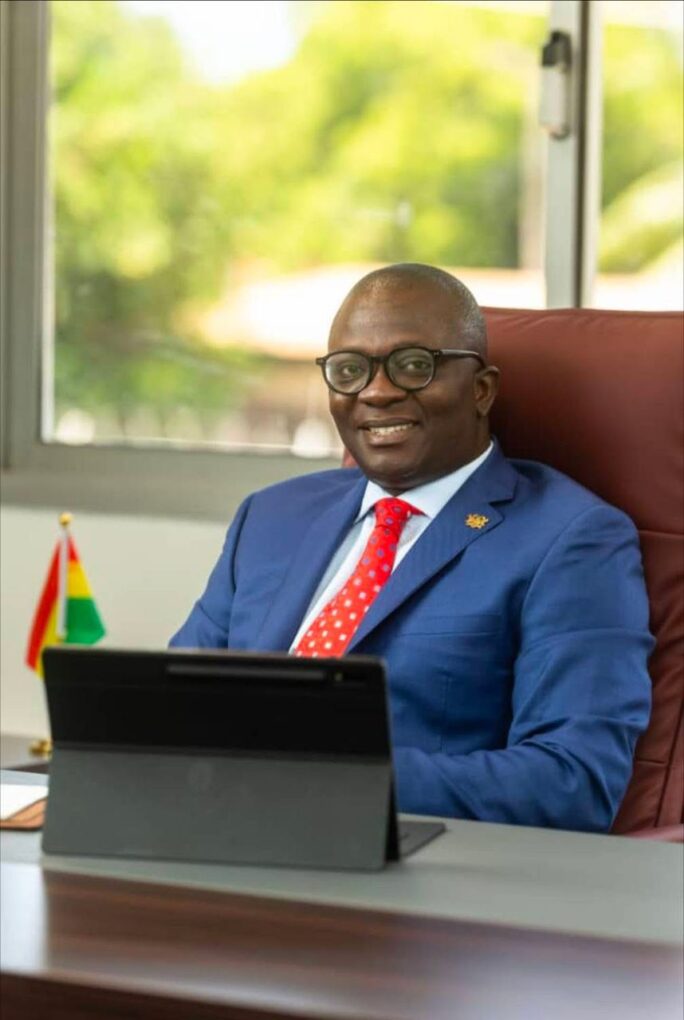
The Member of Parliament for Abetifi, Bryan Acheampong, has criticised the government’s flagship Nkoko Nkitinkiti programme, claiming it has delivered fewer than three million birds within two years, representing less than one per cent of Ghana’s estimated annual chicken consumption.
The former Minister for Food and Agriculture said the figures raise concerns about the government’s efforts to increase domestic poultry production, strengthen food security and reduce Ghana’s reliance on imported chicken.
Speaking during the parliamentary debate on the 2027 Budget Statement and Economic Policy on Thursday, November 19, Mr Acheampong said the government had committed significant financial resources to the poultry initiative in two consecutive budgets but had failed to achieve results matching its stated objectives.
He estimated Ghana’s annual chicken consumption at approximately 350 million birds, based on an estimated demand of 350,000 metric tonnes and an average dressed chicken weighing one kilogramme.
“If a dressed bird is about one kilogramme, that translates to about 350 million birds. In two budgets, you have only delivered less than three million birds. Less than one per cent of our consumption,” he said.
Mr Acheampong further argued that the programme had fallen significantly short of its targets, questioning the government’s ability to deliver on its promise to expand local poultry farming and improve Ghana’s chicken production capacity.
“You promised us Nkoko Nkitinkiti, and within two years you have not been able to deliver even 2%. We can’t even make light soup with the Nkoko Nkitinkiti you have produced,” he added.

Nkoko Nkitinkiti Programme Faces Parliamentary Criticism
The Abetifi MP questioned the progress of the Nkoko Nkitinkiti initiative, which was introduced to support poultry farmers, increase local chicken production and reduce the country’s dependence on imported poultry products.
He described the programme as a flagship government policy but expressed concern about the limited number of birds reportedly delivered since its implementation.
“Yet this is your flagship programme,” he said.
Mr Acheampong said his concerns were not limited to what he described as inadequate coordination between the Ministry of Food and Agriculture and the Ministry of Finance, but extended to the broader implications for Ghana’s food supply and agricultural development.
He warned that poor implementation of poultry production policies could undermine efforts to improve food security, create jobs in the agricultural sector and strengthen the local poultry industry.
“I am not worried about the failure of cooperation between the Agriculture Ministry and the Finance Ministry. I am worried about the effect on our food systems in this country,” he said.
Ghana’s Poultry Industry and Chicken Import Dependency
The Nkoko Nkitinkiti programme is intended to increase domestic poultry production, support local farmers and reduce Ghana’s dependence on imported chicken.
However, Mr Acheampong’s criticism has renewed questions about the effectiveness of government agricultural programmes, budget allocations for poultry farming and the country’s ability to meet growing demand for chicken through local production.
The debate also highlights the importance of investing in poultry feed, hatcheries, farmer support, infrastructure and sustainable agricultural financing to improve Ghana’s poultry industry and reduce the cost of imported poultry products.
His comments came during discussions on the 2027 Budget, where lawmakers examined government expenditure, agricultural policies, economic development programmes and initiatives aimed at strengthening Ghana’s productive sectors.
Source: newsthemegh.com