
Writer Charles Moncar | [email protected]
One heavy rainfall exposed a problem that has existed for decades.
The recent floods in Ghana did more than destroy homes and businesses. They exposed outdated systems, blocked drainage channels filled with plastic waste, and emergency clean-up efforts that still relied heavily on shovels, wheelbarrows, pickaxes, and cutlasses.
While communities worked tirelessly to clear mountains of mud and debris by hand, one question became impossible to ignore.
Can Africa continue solving today’s problems with yesterday’s tools?
Across many parts of the continent, the answer is becoming increasingly clear.
Working Hard Is Not the Same as Working Smart
Africans are among the hardest-working people in the world. The challenge has never been effort. The challenge is productivity.
Across agriculture, landscaping, drainage maintenance, construction, and public sanitation, jobs that modern machines could complete in hours often take days because outdated tools are still widely used.
The same pattern exists in public services, where people often spend hours standing in long queues instead of using simple digital systems that save time.
Small investments in technology may seem minor, but across millions of people, they can save countless hours, improve efficiency, and boost productivity every single day.
One Small Solution Could Prevent a Bigger Disaster
The recent floods in Ghana exposed a problem that has existed for years. Drains overflowed with plastic bottles, food containers, sachet water wrappers, sand, and other debris, leaving roads underwater, homes flooded, and communities struggling to recover. Cleanup crews then spent days removing waste with shovels, wheelbarrows, and other manual tools.
If you’ve watched recent flood coverage from Reuters or other news outlets, you’ve seen the scale of the problem firsthand. Streets became rivers, waterways were clogged with waste, and countless hours were spent clearing debris after the damage had already been done. That’s exactly why Africa must shift from reacting to disasters to preventing them.
One practical solution already used in other parts of the world can help achieve that.
The Technology Africa Should Be Talking About: Geosynthetic Trash Nets
Sometimes the most effective solutions are also the simplest.
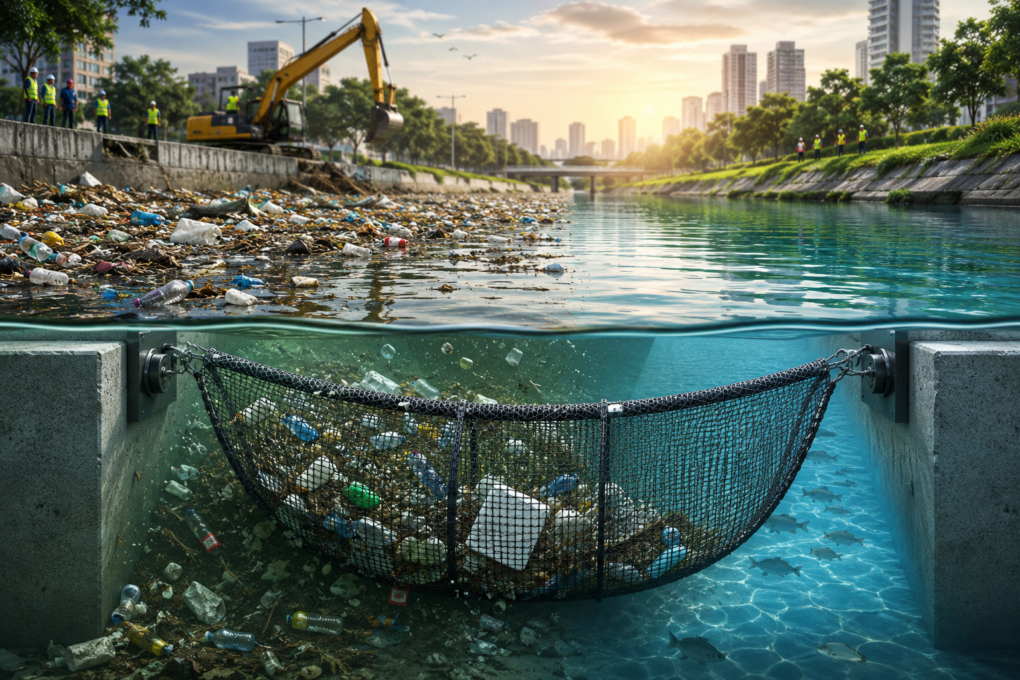
One technology already being used in different parts of the world has the potential to significantly reduce the amount of plastic waste flowing into Africa’s rivers, streams, lakes, and drainage systems. It is called Geosynthetic Trash Nets, also known as gross pollutant traps.
These heavy-duty mesh nets are installed inside storm drains, culverts, canals, and waterways to capture plastic bottles, food containers, bags, branches, and other floating debris before it blocks drainage channels or reaches rivers and the ocean. Once the nets are full, maintenance teams simply remove the collected waste for recycling or proper disposal while allowing water to continue flowing freely.
How This Simple & Smart Technology Can Transform African Communities
Instead of spending millions every year cleaning blocked gutters after floods, governments and municipalities could prevent much of the problem before it starts.
The benefits are practical and long-lasting:
- Reduces flooding by preventing plastic waste from blocking drains and waterways.
- Protects rivers, lakes, and coastal areas by stopping trash before it spreads downstream.
- Keeps stormwater flowing, reducing the chances of roads and neighborhoods becoming flooded.
- Creates recycling opportunities because collected plastics can be sorted and turned into products such as paving blocks, outdoor furniture, plastic lumber, drainage pipes, and other construction materials.
- Creates jobs for engineers, installers, maintenance crews, recycling companies, transport operators, and environmental inspectors.
- Lowers cleanup costs by collecting waste at specific points instead of removing it after it has spread across entire communities.
- Supports smarter environmental management, making cities cleaner while protecting ecosystems and public health.
According to the United Nations Environment Programme, around 23 million metric tons of plastic waste enter rivers, lakes, and oceans every year, and that figure could nearly quadruple by 2040 without stronger action.
Geosynthetic trash nets provide one practical way to intercept that waste before it reaches natural waterways.
Technology Creates Jobs Instead of Replacing Them
Many people fear automation because they believe it removes jobs.
In reality, it often creates new industries.
Installing geosynthetic nets help remove plastic waste from water and requires engineers, technicians, maintenance crews, recycling companies, transport operators, environmental inspectors, and manufacturers.
Collected plastics can be recycled into construction materials, paving products, furniture, drainage pipes, and packaging instead of polluting rivers.
The same thinking applies to agriculture.
Modern harvesters, excavators, compact loaders, and landscaping equipment allow workers to complete projects faster while improving safety and increasing productivity.
Human skill becomes more valuable when supported by better equipment.
AI Can Help Africa Prepare Instead of React
Flood response should begin long before the rain starts.
Today, AI can analyze weather forecasts, monitor drainage systems, identify flood-prone communities, predict waste accumulation, and even schedule maintenance before problems develop.
Combined with drones, sensors, and satellite imagery, governments can make faster decisions while reducing damage to homes, businesses, and public infrastructure.
Several cities around the world already use these technologies. Mobile flood alert systems are essential for improving public safety and reducing the impact of flooding.
Africa can too.
The Time to Build a Smarter Africa Is Now
The problems facing Africa are growing faster than traditional solutions.
Flooding, rapid urbanization, plastic pollution, illegal mining, erosion, and aging infrastructure demand new thinking.
Grass and better landscaping can reduce erosion before sand reaches gutters.
Modern drainage equipment can replace weeks of manual labor.
Automated street lighting can improve safety while reducing electricity waste.
Digital banking queues can respect people’s time.
These ideas are not dreams for the future. They do already exist and being envisioned by the author of this article Mr Abraham Charles Moncar
Africa has never lacked determination.
Now it is time to match that determination with technology, AI, modern machines, Power Tools and other practical solutions like Geosynthetic Nets, Improved Digitalization and Domestication.
The future belongs to nations that choose to work smart, invest wisely, and solve tomorrow’s challenges with today’s innovations. Are we Ready?
Source: newsthemegh.com