

Ghana’s economic stability is being threatened by mounting losses, deepening negative equity, growing reliance on erratic income sources, and rising monetary policy costs.
There have been new warnings that the Bank of Ghana’s (BoG) financial situation could jeopardise the country’s economy if it is not addressed.
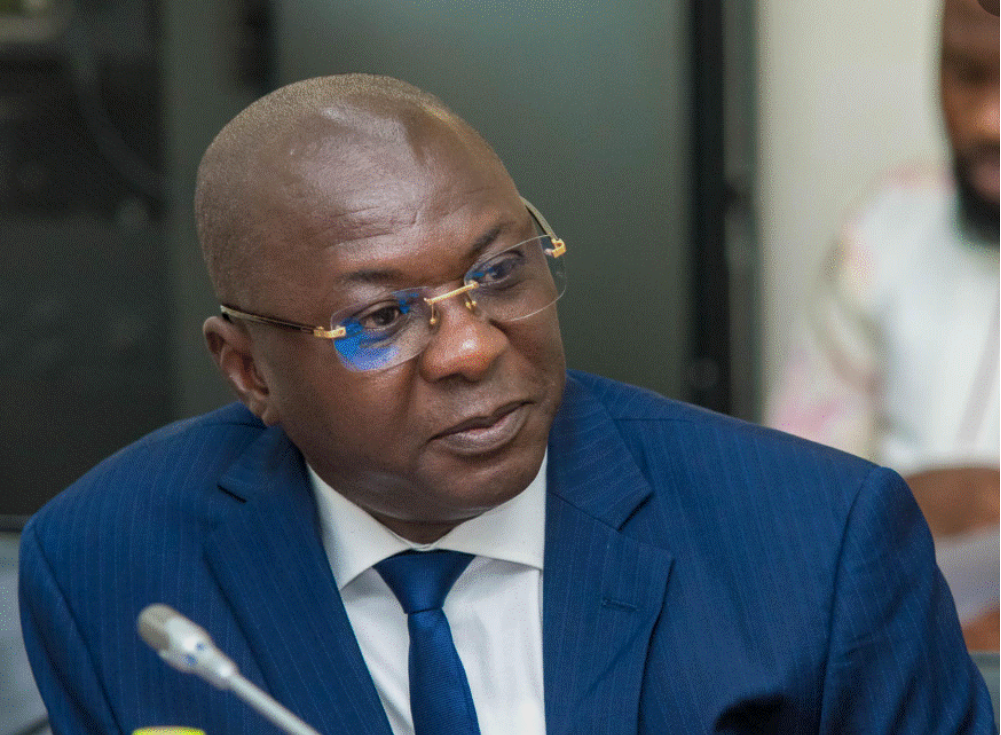
Following a formal petition to the International Monetary Fund (IMF) by former Finance Minister and Karaga MP Dr. Mohammed Amin Adam, which warned that the central bank’s 2025 financial results indicate deeper structural weaknesses with far-reaching implications for fiscal sustainability, debt dynamics, and investor confidence, these concerns have gained international attention.
Dr. Amin Adam made the case in a thorough seven-page letter to the IMF Mission Chief in charge of Ghana’s Extended Credit Facility program that the discussion surrounding the Bank of Ghana’s losses should go beyond the numbers and concentrate on the underlying risks present in its balance sheet, which he feels could have an impact on the entire economy, especially after the IMF program concludes.
He emphasised that the central bank’s most recent financial statements should be seen as a warning sign for the post-program period, even as he acknowledged the IMF’s crucial role in assisting Ghana in navigating the 2022–2023 economic crisis.
He asserts that the numbers reveal weaknesses in the public sector balance sheet that go beyond the Bank itself, thereby shifting risk to government funds.
His main point is that the Bank’s equity position has rapidly declined and is now further in negative territory.
He characterised this trend as an impending fiscal liability that will eventually necessitate government intervention rather than as a technical accounting problem.
“The Bank of Ghana’s negative equity is effectively a deferred fiscal cost,” he said, cautioning that recapitalization, whether through direct fiscal support or bond issuance, could greatly raise public debt and put further pressure on already constrained government finances.
He warned that such a result could undo recent progress made under the IMF-backed program and jeopardise attempts at fiscal consolidation.
Dr. Amin Adam also contested claims that the losses incurred by the central bank are controllable.
He contended that the actual financial impact is much higher when other comprehensive losses are taken into account, despite the Bank reporting an operational loss of GH¢15.63 billion.
He stated that this more comprehensive metric indicates a more serious decline in the Bank’s financial situation than is generally recognised.
He also expressed worries about the Bank’s income structure’s durability, pointing out that a sizable amount of its profits came from one-time sources, especially transactions involving gold.
He cautioned that although these operations can strengthen reserves and offer short-term liquidity, they are intrinsically unstable and cannot be relied upon as a steady source of income.
“Gold sales can support liquidity and reserves management, but gains are sensitive to prices, exchange rates, timing of disposal, and accounting treatment,” he said, noting that relying too much on these strategies could conceal fundamental flaws and provide the impression that policy is stable.
The former Finance Minister identified the growing expense of implementing monetary policy as a significant risk element in addition to revenue problems.
He cited fundamental inefficiencies in liquidity management as seen by the dramatic rise in open market operation costs, which have almost doubled in just a single year.
He cautioned that if these expenses continue, they may result in recurrent quasi-fiscal losses, in which central bank operations produce deficits that the government must eventually cover.
He contended that this dynamic might make it harder to distinguish between fiscal and monetary policy, erode the independence of central banks, and put more strain on public finances.
He highlighted the danger that the central bank would grow more reliant on government assistance to maintain its operations by writing, “The key issue for macroeconomic stability is whether monetary policy can be implemented without generating recurring quasi-fiscal losses.”
Serious concerns regarding governance and transparency were also brought up by the petition, especially with regard to transactions involving gold.
According to Dr. Amin Adam, these procedures can entail complicated and possibly recurrent hazards that are not completely disclosed, raising questions about the actual scope of their financial advantages.
He argued that increased openness is necessary to rebuild trust in the central bank’s financial standing and urged for more clarity on how such transactions are organised, authorised, and accounted for.
He also highlighted how the Bank’s balance sheet is affected by exchange rate volatility, pointing out that the Bank’s capital base has been severely undermined by substantial revaluation losses.
He stated that these value consequences underscore the central bank’s precarious position and expose it to additional financial instability.
According to Dr. Amin Adam, the wider meaning of these difficulties is that Ghana’s economic recovery is still at risk, especially as the IMF program draws to a close.
Although there has been progress in lowering inflation and replenishing reserves, he cautioned that if underlying fiscal risks, particularly those connected to the central bank, are not properly identified and addressed, these benefits may not last long.
In order to avoid distorting debt sustainability assessments and undermining investor confidence in the economy, he requested the IMF to include the cost of central bank recapitalisation in Ghana’s fiscal framework.
He contended that the nation runs the risk of entering the post-program phase with concealed liabilities that could lead to new macroeconomic instability in the absence of a credible plan to restore the Bank of Ghana’s financial health.
The creation of a clear and open recapitalisation strategy, improved disclosure of quasi-fiscal operations, and the implementation of a policy solvency framework that excludes one-time gains like gold sales are some of the steps suggested to mitigate these risks.
Stronger protections against the monetary financing of government deficits and an independent assessment of accounting procedures were other demands he made, cautioning that such actions could further erode fiscal restraint.
Dr. Amin Adam suggested building a post-program fiscal risk dashboard to track important metrics such contingent liabilities, sterilisation costs, and central bank equity levels in order to improve monitoring.
He contended that having such a tool would increase openness and help policymakers react to new threats more skilfully.
The petition’s complaints have political overtones as well; the former finance minister speculates that the current administration may have hindered the pace of reform.
He mentioned that this would provide further problems as Ghana moves into post-program surveillance, albeit he did not go into great detail.
In the end, his message is clear: the Bank of Ghana’s financial problems are systemic rather than isolated, and if immediate action is not taken, they might destabilise the entire economy.
He warned that failing to address these risks head-on could undo the hard-won gains of Ghana’s recent economic recovery and expose the nation to fresh fiscal and macroeconomic shocks.
“The durability of that progress will depend on whether fiscal consolidation is supported by transparent recognition of all public-sector obligations,” he concluded.
Source: newsthemegh.com