
Ghana’s government has declared plans to completely finance the Accra-Kumasi Motorway without borrowing, as part of a larger drive to shift petroleum income to key infrastructure projects.
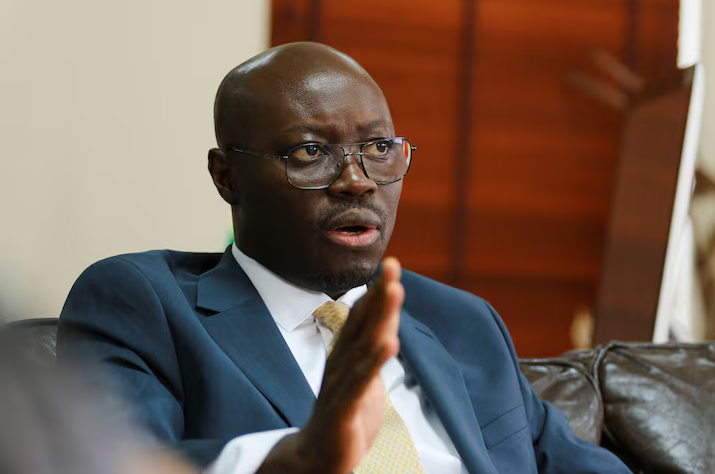
Finance Minister Cassiel Ato gave a speech at the Ishmael Yamson & Associates Business Roundtable.
According to Forson, the project is expected to cost roughly $4 billion, and he is certain that it can be completed by 2027 without the need for outside borrowing.
“Granted, the Accra-Kumasi Expressway is going to cost us $4 billion. We’ll fund it without borrowing. 2025, 2026, 2027, we’ll be able to have $4 billion to link Accra to Kumasi,” he said.
“Some of the things we’ve done is, for example, in the past, the oil revenue accrued to the budget was shared so thin,” he stated.
He explained that the government’s strategy for using petroleum revenue has been updated in response to worries about its prior dispersed distribution among other expenses.
According to Dr. Forson, the law has since been changed to guarantee that petroleum profits are only used for infrastructure development.
“We’ve said that use Ghana’s oil revenue only for infrastructure use. And it’s the responsibility of the government of the day that, at least for the next four years, you need to earmark all this oil revenue for one major infrastructure and name it as such,” he said.
He also disclosed that, because to rising gold prices worldwide, Ghana earned an additional $500 million from mineral royalties in addition to roughly $500 million from oil earnings in 2025.
He states that the government has rerouted mineral royalties to fund infrastructure instead of investing them in Treasury bills through the Minerals Income Investment Fund.
According to Dr Forson, the Accra–Kumasi Motorway is already receiving the entire $1 billion.
According to forecasts, petroleum and mineral earnings might bring in an additional $1.5 billion this year, increasing the total amount of financing available to almost $2.5 billion between 2025 and 2026.
“All of that, we’ve stopped it. And we are targeting major infrastructure. After 2027, we’ll target another project. And gradually, we’ll build the country going into the future,” he added.
Additionally, he condemned what he called previous inefficiencies in the use of petroleum revenue for travel, conferences, and recurring expenses.
Source: newsthemegh.com