
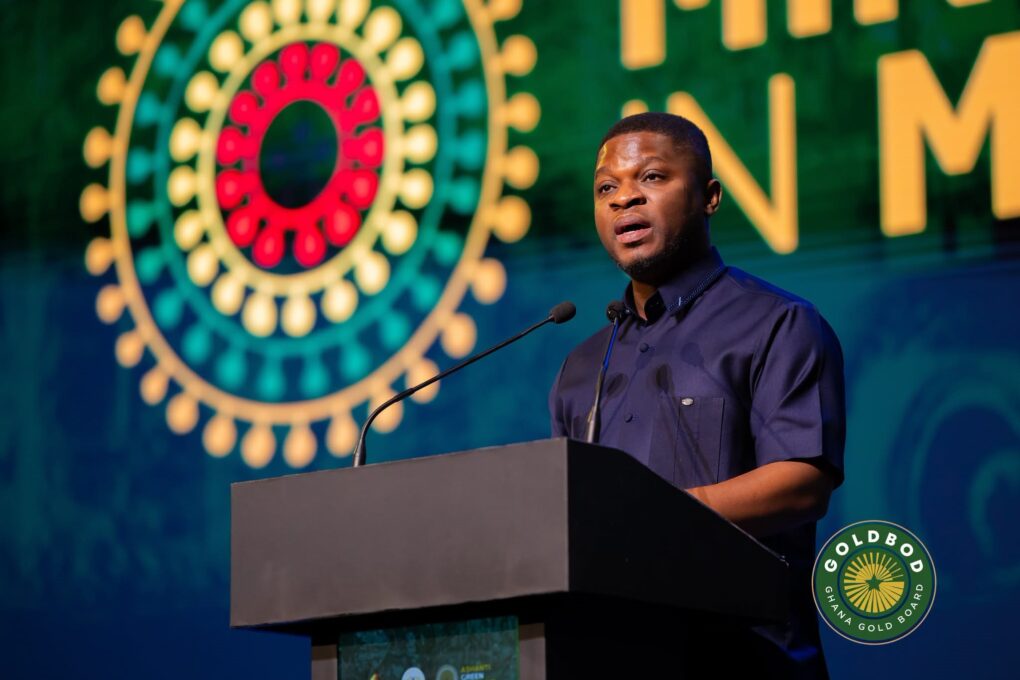
The Ghana Gold Board (GoldBod) has dismissed allegations that its Chief Executive Officer, Sammy Gyamfi, endorsed illegal mining in Ghana.
The institution says a video circulating on social media has been selectively edited to misrepresent the CEO’s comments on the formalisation of artisanal and small-scale mining (ASM).
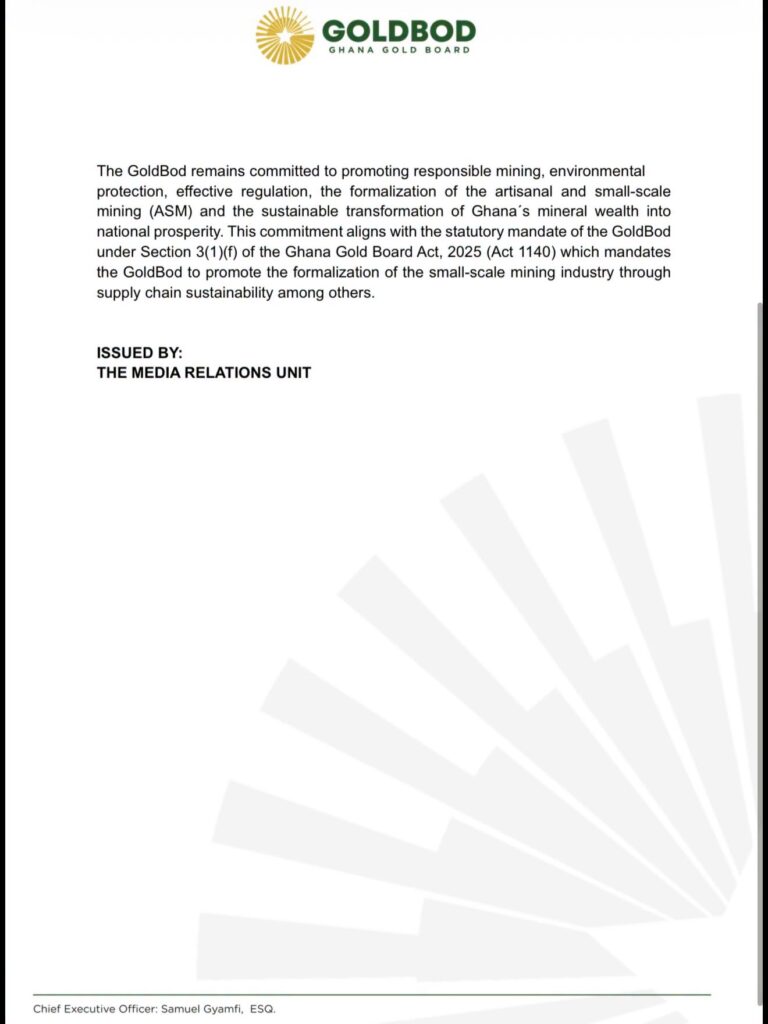
In a press release dated October 24, 2026, GoldBod explained that Gyamfi’s remarks were made during an engagement with small-scale miners in March 2026. According to the Board, the original discussion focused on the government’s policy to transition eligible informal mining operators into a legal, regulated and environmentally responsible mining system.
GoldBod Clarifies Government’s Policy on Illegal Mining
GoldBod stressed that the government’s objective is not to legitimise illegal mining, popularly known as galamsey, but to eliminate unlawful operations by bringing eligible miners into the formal economy.
Under the proposed approach, qualified artisanal and small-scale miners would be supported to obtain the necessary licences, comply with mining regulations and operate under appropriate monitoring and accountability systems.
The Board explained that there is a clear distinction between endorsing illegal mining and creating a legal pathway for eligible unlicensed miners to regularise their operations.
Speaking at the 2026 Mining in Motion Summit, Sammy Gyamfi reiterated that effective mining regulation should combine strict enforcement with practical support, capacity building and opportunities for miners to comply with the law.
GoldBod Plans ASM Formalisation and Financing Support Programme
As part of its efforts to improve Ghana’s small-scale mining sector, GoldBod is developing an ASM Formalisation and Financing Support Programme (FFSP).
The initiative is being pursued in collaboration with the Ministry of Lands and Natural Resources, the University of Mines and Technology (UMaT), and the Mineral Income Investment Fund (MIIF), with technical support from Rand Refinery SA.
The proposed programme aims to help eligible small-scale miners access financing, formalise their businesses, increase gold production, create employment opportunities and improve mineral revenue generation. It is also expected to help reduce operational costs and limit environmental degradation associated with irresponsible mining.
GoldBod has begun consultations with relevant government agencies, mining associations, civil society organisations and other industry stakeholders to gather input for the proposed programme.
The consultations are intended to ensure that the policy addresses the needs of the mining industry and supports sustainable implementation ahead of its planned rollout in 2027.
Geological Studies to Support Responsible Mining in Ghana
GoldBod is also working with the Ghana Geological Survey Authority (GGSA) to conduct geological studies in mineralised areas across the country.
The investigations are currently underway at Funsi in the Upper West Region and Bensere in the Ashanti Region.
According to the Board, the studies will help improve knowledge of Ghana’s mineral resources, encourage responsible expansion of mining activities and reduce environmentally harmful practices associated with uncertain or poorly assessed mining locations.
The initiative forms part of a broader strategy to improve geological information, promote modern mining techniques, strengthen regulatory compliance and make responsible mining a viable alternative to illegal operations.
GoldBod Reaffirms Commitment to Fighting Galamsey
GoldBod has maintained that it does not support illegal mining activities that destroy rivers, pollute water bodies and degrade forest reserves.
The institution says its commitment to fighting galamsey is reflected in its support for the National Anti-Illegal Mining Operations Secretariat (NAIMOS), alongside investments in responsible gold sourcing and environmental rehabilitation.
The Board disclosed that it is funding the reclamation of 50 hectares of degraded land within the Tano Nimiri Forest Reserve. It is also supporting the rehabilitation of water treatment plants affected by irresponsible mining activities.
Additionally, GoldBod is working to strengthen accountability and responsible gold sourcing through a track-and-trace system designed to improve transparency across the gold supply chain.
The Board argued that these interventions demonstrate its commitment to environmental protection, responsible gold trading and the enforcement of mining regulations.
GoldBod Calls for an End to Illegal and Irresponsible Mining
GoldBod has rejected attempts to portray its policy of formalising eligible informal miners as an endorsement of illegal mining.
The institution insists that illegal and environmentally destructive mining must be stopped, while miners who qualify for legal operations should be given a clear opportunity to enter the regulated economy.
According to GoldBod, combining law enforcement with licensing, access to financing, technical support and environmental accountability offers a more sustainable approach to tackling galamsey in Ghana.
The Board maintains that its ultimate goal is to promote a mining industry that supports economic growth, creates jobs, increases national mineral revenues and protects Ghana’s natural resources.


Source: newsthemegh.com