
Michael Oti | Author, Presenter and Editor at DW’s Programs for Africa
After decades of building lives in South Africa, hundreds of African migrants were forced to leave by renewed anti-immigrant tensions. A Ugandan who spent two decades in South Africa shared with DW how she’s coping.
When Winniefred Kabiri boarded a flight from Johannesburg to Kampala, she was leaving behind much more than a country. The Ugandan entrepreneur spent 20 years legally living in South Africa. During that time, she earned two university degrees and a postgraduate qualification, raised her children and established several businesses.
“Initially everything was very successful. I created a life for myself and educated my children,” Kabiri told DW.
But as anti-foreigner campaigns intensified in parts of South Africa this year, she no longer felt safe.
“There was always a threat,” she said. “But this year they gave ultimatums.”
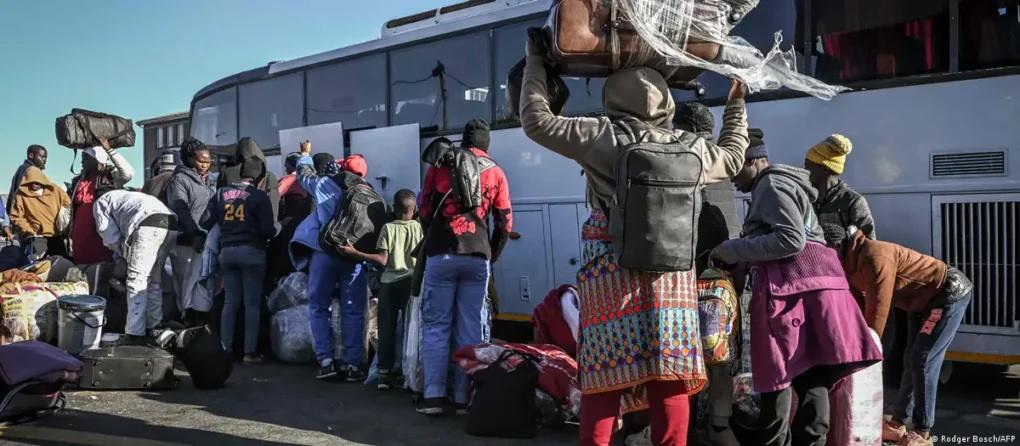
Kabiri is among more than 1,100 Ugandans evacuated from South Africa by their government following months of escalating xenophobic tensions, protests and intimidation targeting mostly African migrants. Uganda completed the first phase of its repatriation exercise in July, bringing home 1,102 nationals through six evacuation flights from Johannesburg.
South Africa has experienced recurring outbreaks of xenophobic violencesince the late 1990s, with migrants often blamed for unemployment, crimeand poor public services. Analysts say persistent inequality and economic frustration have continued to fuel anti-immigrant sentiment for a while, despite evidence that migrants contribute significantly to local economies.
This year, however, many migrants say the atmosphere became markedly different.
Groups demanding tougher action against migrants organized public demonstrations and campaigns, while reports of intimidation, evictions and sporadic violence heightened fears among foreign communities. Many immigrants interviewed by DW said they felt vulnerableregardless of whether they possessed legal documentation.
Leaving behind years of investment in South Africa
For many returnees, like Kabiri, departure meant abandoning years of investment. She left businesses in commodities trading, mining, real estate and perfume manufacturing. She also left behind a professional network built over two decades.
“Obviously,when you are told to leave and you’re unprepared, you leave things behind,” she said.
Another Ugandan returnee, Mathias Baguma, said he lost a business he spent years developing in Johannesburg. Baguma moved to South Africa in 2017 and later invested in a guesthouse, restaurant and retail operation. During the unrest, he says the property was attacked and looted.

“My business was vandalized. The shop was robbed, the restaurant broken into,” he told DW. “I had to run for my life.”
Like many migrants across the continent, Baguma had viewed South Africa as a place where hard work could provide opportunities unavailable at home. Instead, he returned to Uganda with little more than personal belongings and memories of the life he had built.
Starting over in Uganda after fleeing xenophobia
Back in Uganda, the challenge for returnees is no longer escape, but rebuilding. Authorities say returning migrants were received at Entebbe airport and taken through orientation and reintegration programs, including counseling, health assessments and information sessions on government support initiatives.
Officials also introduced returnees to programs in agriculture, tourism, technology and small-business development aimed at helping themrestart their lives.
DW correspondent Frank Yiga said the Ugandan government moved quickly to organize transport, reception centers and psychosocial support for those affected.
“The government helped prepare them for reintegration and informed them of the opportunities available,” Yiga said.
Kabiri praised the initial response but acknowledged that rebuilding after 20 years abroad would be difficult. “I have to rebuild myself. I need to rebuild a new home and a business,” she said.
She says family members have offered emotional support, but the financial reality remains daunting. For now, her focus is on creating a new future in Uganda.
“East or West, home is best,” she concluded.
This article was adapted from an AfricaLink Podcast. You can listen to the podcast here
Edited by: Chrispin Mwakideu.
Source: dw.com