
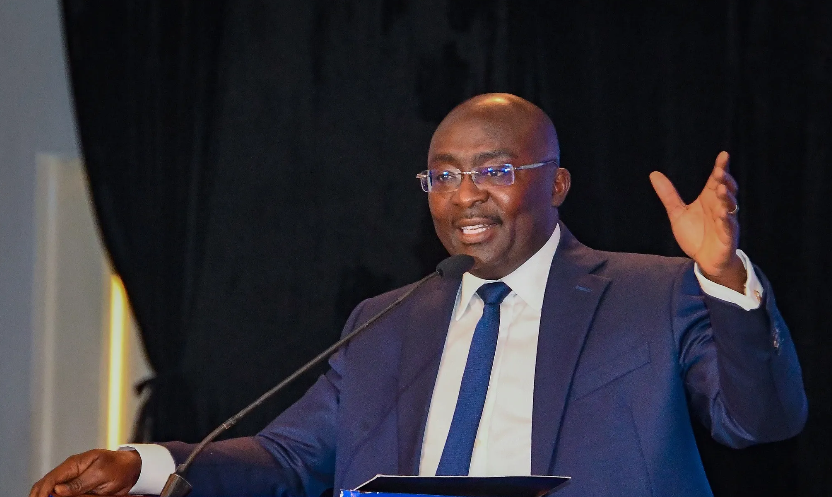
Ghana’s recent economic stability has been linked to the Domestic Gold Purchase Programme (DGPP), an initiative associated with former Vice President Dr. Mahamudu Bawumia that was designed to use locally produced gold to strengthen the country’s foreign exchange reserves and support the stability of the Ghanaian cedi.
Former Bank of Ghana (BoG) Governor Dr. Ernest Addison publicly acknowledged Dr. Bawumia’s role in initiating the Domestic Gold Purchase Programme during remarks at the launch of the programme on June 17, 2021.
The programme has also received recognition from senior officials of the central bank. In 2025, BoG First Deputy Governor Dr. Zakari Mumuni described the DGPP as an important economic lifeline for Ghana during a period of severe external financial pressure.
According to Dr. Mumuni, the Domestic Gold Purchase Programme helped provide foreign exchange liquidity when Ghana was facing major economic challenges, including the impact of the COVID-19 pandemic and the Russia-Ukraine war. The programme also helped strengthen foreign reserves, support the local currency and improve investor confidence.
The initiative involves the Bank of Ghana purchasing gold produced domestically and paying for it in cedis. The gold can then be used to build the country’s reserve assets, allowing Ghana to strengthen its foreign exchange position without using scarce foreign currency to purchase the locally produced mineral.
Bawumia Explains the Idea Behind the Gold Programme
Dr. Bawumia has recently provided further details about the thinking behind the Domestic Gold Purchase Programme and Gold-for-Oil programme, two major economic policies introduced during the previous NPP administration.
Speaking to members of the Ghana National Association of Small-Scale Miners in Accra, the former Vice President explained that the initiatives emerged from intense economic pressures facing Ghana at the time.
He identified the loss of access to external financing following the COVID-19 pandemic and the Russia-Ukraine conflict as one of the major challenges confronting the country.
According to Dr. Bawumia, the situation contributed to a balance of payments crisis, placing additional pressure on Ghana’s foreign exchange market and the cedi.
He also pointed to restrictions under Ghana’s International Monetary Fund (IMF) programme, which limited the amount of foreign exchange the Bank of Ghana could use to support the market.
Dr. Bawumia explained that the Bank of Ghana was permitted to use only about $80 million per month to support the foreign exchange market, despite demand for dollars being significantly higher.
The imbalance between foreign exchange demand and supply, he said, contributed to the rapid depreciation of the Ghana cedi.
Gold-for-Oil Programme Introduced to Address Dollar Shortage
Faced with limited access to foreign currency, Dr. Bawumia said he developed the Gold-for-Oil programme as an alternative approach to reducing Ghana’s dependence on dollars for petroleum imports.
The policy enabled Ghana to use gold to facilitate the purchase of petroleum products, helping the country secure fuel supplies while reducing pressure on its limited foreign exchange reserves.
Dr. Bawumia said the idea for the Domestic Gold Purchase Programme came to him while reflecting on Ghana’s position as one of Africa’s major gold-producing countries.
He questioned why Ghana had to depend heavily on other exports to generate dollars for its foreign exchange reserves when the country was already producing gold domestically.
The former Vice President said this thinking led to the idea of purchasing locally produced gold with cedis and transforming the country’s mineral resources into reserve assets.
He described the approach as “out-of-the-box thinking”, noting that the concept did not come directly from conventional economic textbooks.
Bank of Ghana Conducted Extensive Due Diligence
Dr. Bawumia said he subsequently presented the proposal to the Bank of Ghana, where officials conducted extensive due diligence because of the unconventional nature of the policy.
According to him, the central bank spent nearly a year assessing the proposal before eventually agreeing to implement it.
He said officials initially had concerns because there was limited international precedent for such a policy. Ghana eventually proceeded with the programme, and Dr. Bawumia claimed that other countries have since shown interest in learning from Ghana’s experience.
The Domestic Gold Purchase Programme has therefore emerged as a significant part of discussions surrounding Ghana’s foreign exchange reserves, gold production, monetary policy and efforts to stabilise the cedi.
The development also highlights how Ghana’s large gold resources can potentially be leveraged to strengthen foreign reserves, economic stability and investor confidence, particularly during periods of global economic uncertainty.
Source: newsthemegh.com