
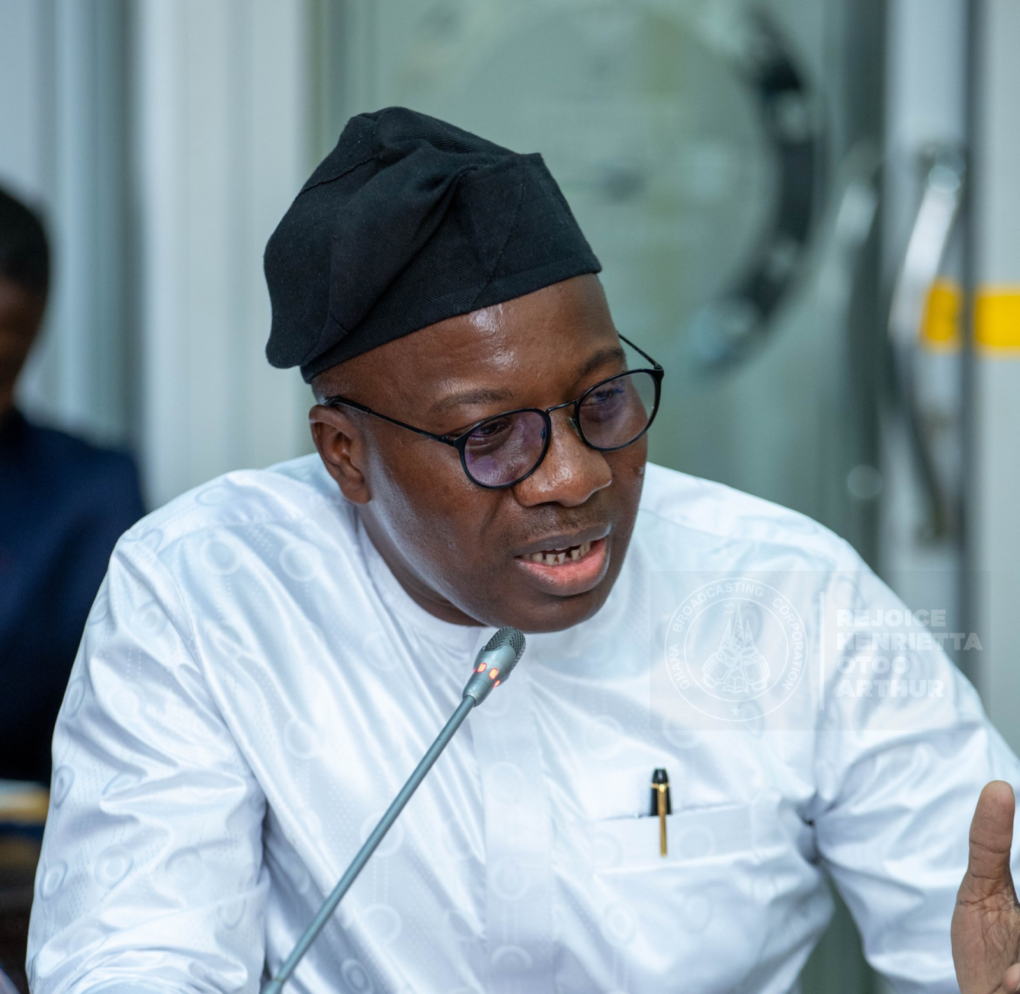
Minister-designate for Local Government, Chieftaincy and Religious Affairs, Mahama Ayariga, has projected that Metropolitan, Municipal and District Assemblies (MMDAs) in Ghana could generate nearly GH¢20 billion annually from property rates if properties across the country are properly identified, valued and billed.
Mr Ayariga, the Member of Parliament for Bawku Central, made the projection during his vetting by Parliament’s Appointments Committee in Accra on Thursday, August 27, 2026.
He was responding to questions from Minority Leader Alexander Afenyo-Markin about measures to improve local government revenue mobilisation and strengthen the financial independence of MMDAs.
MMDAs Could Raise GH¢20 Billion From Property Rates
According to Mahama Ayariga, the GH¢20 billion projection was based on preliminary analysis conducted with experts. He described the figure as a conservative estimate that focused mainly on property rate revenue.
He explained that additional internally generated funds from sources such as basic rates, market tolls and lorry park tolls could increase the total revenue available to local assemblies.
Mr Ayariga argued that Ghana’s Constitution envisages MMDAs becoming increasingly self-financing, with allocations from the District Assemblies Common Fund primarily supporting development projects rather than routine administrative expenses.
He said local assemblies had largely failed to meet this constitutional expectation because they had not fully utilised their revenue mobilisation powers.
Property Valuation and Digital Revenue Collection
The minister-designate proposed a nationwide property identification, description and valuation exercise to improve property tax collection in Ghana.
He said the existing street-naming and house-numbering programme had helped identify the locations of properties but did not adequately capture important details about their physical characteristics and market values.
Under his proposed approach, properties would be properly documented and assessed to enable MMDAs to impose appropriate property rates.
Mr Ayariga also wants the entire property-rate collection system to be digitised, covering property identification, valuation, billing, payment and revenue disbursement.
He said digitalisation could improve transparency, reduce revenue leakages and prevent the diversion of funds collected on behalf of local assemblies.
Political Influence Affects Revenue Mobilisation
Mahama Ayariga also raised concerns about political and social pressures affecting property-rate collection.
He said District Chief Executives sometimes faced difficulties collecting rates from politically influential individuals, including traditional leaders and political party supporters.
According to him, some individuals appointed to collect local revenue could fail to properly account for funds after collection.
He believes a transparent and digitally managed revenue system could help address these challenges and improve Ghana’s local government revenue mobilisation.
Common Fund Clarification
During the parliamentary vetting, Mr Ayariga also clarified concerns surrounding the District Assemblies Common Fund.
He explained that Members of Parliament receive only a limited parliamentary allocation for constituency emergencies, which is managed through Assembly accounts and should not be confused with the broader Common Fund.
He added that the utilisation of the Common Fund is guided by Assembly regulations, guidelines and resolutions.
GRA Property Rate Revenue Estimate
Mahama Ayariga’s projected GH¢20 billion annual property rate revenue is significantly higher than an earlier estimate associated with the Ghana Revenue Authority (GRA).
The GRA has indicated that its MyAssembly.gov.gh property-rate platform, which has identified more than 10 million properties nationwide, is expected to generate over GH¢1.77 billion annually.
The significant difference between the two estimates was not immediately explained during the parliamentary vetting.
It also remained unclear whether the projections were based on different property valuations, revenue sources or assumptions about collection efficiency.
Ayariga Set to Lead Local Government Ministry
The vetting was conducted under Standing Order 217 at Parliament House in Accra as part of the confirmation process for ministerial nominees following President John Dramani Mahama’s cabinet reshuffle announced on August 7, 2026.
Mahama Ayariga has been nominated as Minister for Local Government, Chieftaincy and Religious Affairs, replacing Ahmed Ibrahim, the Member of Parliament for Banda, who has been reassigned to the Ministry of Works and Housing.
If confirmed, Ayariga is expected to focus on strengthening MMDAs, improving internally generated funds, expanding property tax collection, reducing revenue leakages and increasing financial sustainability at the local government level.
Source: newsthemegh.com