

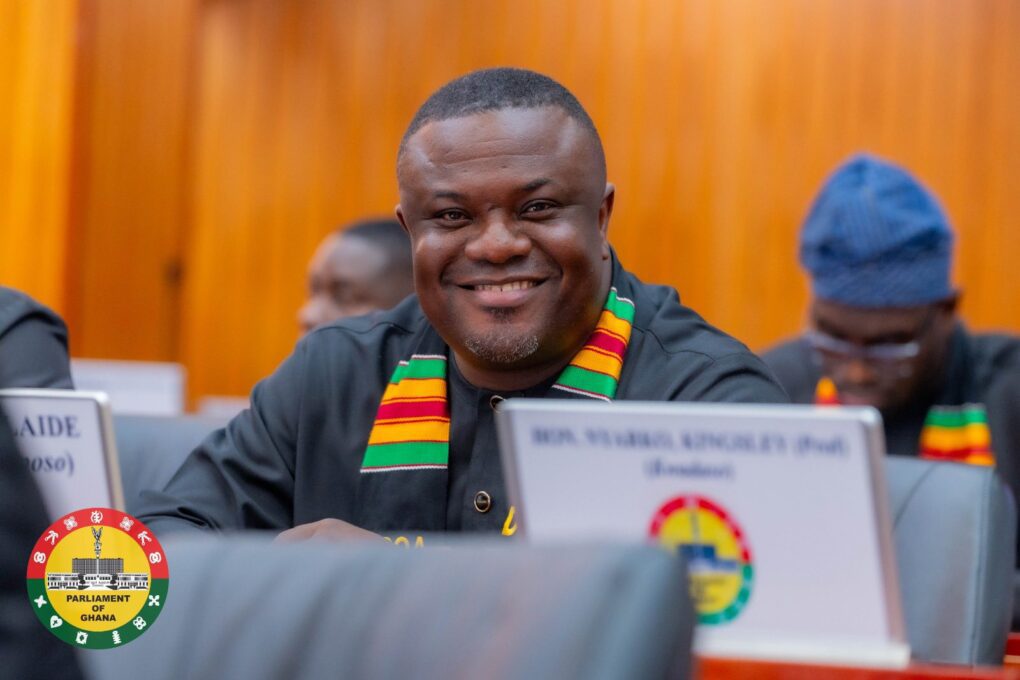
The Minority in Parliament has asked for full transparency and accountability in the management of the recently established GH¢1 ‘dumsor’ charge, highlighting concerns over the monies’ collection and utilisation.
The caucus says that individuals and companies already struggling with the high cost of living are further burdened by the fee.
Although they accept the government’s argument that the fee is required to stabilise the energy market, they maintain that there must be unambiguous guarantees that the money raised would only be utilised for that purpose.
The Minority is requesting a clear plan detailing how the money will be utilised to address ongoing power shortages and enhance the nation’s electricity supply, as well as a comprehensive accounting of the revenue received thus far.
They caution that the public’s trust in the policy may continue to decline in the absence of openness.
The levy has been the focus of heated public discussion since it was implemented as part of initiatives to stabilise Ghana’s electricity sector and pay off legacy debts.
John Dramani Mahama called an emergency cabinet meeting to discuss immediate steps to protect Ghanaians from rising fuel prices associated with escalating tensions in the Middle East.
Collins Adomako Mensah, the Deputy Ranking Member of Parliament’s Energy Committee, stressed in an interview with Citi FM that Ghanaians should receive value for their money, particularly in light of the country’s growing economic strain and rising utility costs.
Additionally, he called on the administration to aggressively include Parliament in overseeing the levy’s use.
“It is a welcoming news although we have not been given specific details as to which levies or taxes or margins will be taken off or suspended. The Minority welcomes the attempt by the government to cushion the Ghanaian people,” he said.
He also urged the government to give consumers a transparent account of the GH¢1 fuel fee.
“The law stipulated that the government was to report to Parliament by the 31st of March as to how much has accrued to the fund from the GHS1 and how it has been used. Up till now, that has not been presented to Parliament. We are not too sure how much has come and how it has been used,” he reiterated.
In the meantime, the Africa Centre for Energy Policy (ACEP) has warned that eliminating the contentious charge would eventually be more detrimental than beneficial, pointing out that doing so might put greater financial strain on regular Ghanaians instead of offering the anticipated respite.
Benjamin Boakye, Executive Director of ACEP, stated that the money collected from the charge is essential for paying off debt in the power industry, maintaining infrastructure, and guaranteeing a steady supply of electricity.
The policy think tank claims that removing the levy would leave a funding gap that the government would still need to address in the absence of a viable and sustainable alternative revenue source.
In an interview with Citi FM on Wednesday, April 8, 2026, he stated that the GH¢1-per-litre fee imposed on loans in the service energy industry cannot be removed without putting pressure on other parts of the economy.
“If you take that one cedi out now, then there has to be some fiscal space created somewhere else, whether you suspend road construction, the building of schools, or even salaries…There will be some debt created for the same consumer to pay in other ways,” he said.
Source: newsthemegh.com