
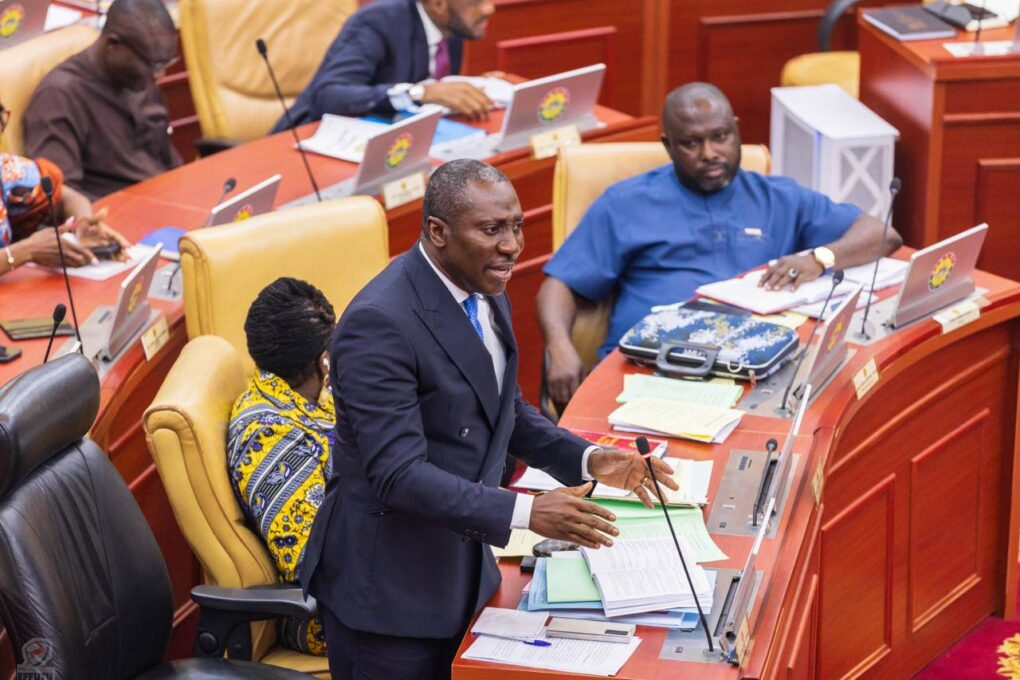
The Minority Caucus in Parliament has renewed its opposition to the Tribunal Bill, urging President John Dramani Mahama not to sign the legislation into law, arguing that it could undermine Ghana’s judicial independence and the rule of law.
Delivering his closing remarks before Parliament adjourned sine die, Minority Leader Alexander Afenyo-Markin appealed to the President to return the bill to Parliament instead of granting presidential assent.
According to Afenyo-Markin, the proposed legislation establishing district and regional public tribunals has generated widespread concern among sections of the Ghanaian public.
He cautioned that tribunals introduced to target political opponents today could eventually be used against future governments, warning that such a development would weaken confidence in Ghana’s justice system.
“Do not sign this bill. Send it back. A tribunal created to be used against political opponents today can easily be turned against others tomorrow. In the end, only the rule of law suffers,” he stated.
Minority Criticizes Government Over Tribunal Bill
The Minority Leader accused the ruling National Democratic Congress (NDC) government of pursuing policies that could negatively affect Ghana’s judicial system.
He also criticized the government over several national issues, including the handling of the June 29 flood disaster, military recruitment, and the fight against illegal mining (galamsey), describing them as unfulfilled promises.
Constitutional Review Committee Recommended Removing Tribunals
Afenyo-Markin acknowledged that Ghana’s 1992 Constitution provides for public and regional tribunals under Articles 125, 142, and 143.
However, he pointed out that the Constitutional Review Committee (CRC), chaired by constitutional law expert Professor H. Kwasi Prempeh, recommended abolishing the tribunal system and replacing it with the regular court structure.
According to him, the committee submitted its recommendations to the President in December last year, advising that Ghana should rely solely on ordinary courts to administer justice.
The Minority questioned why Parliament proceeded with the legislation despite the committee’s recommendation.
Minority Walked Out During Tribunal Bill Debate
The Minority Leader explained that members of the opposition staged a walkout during the passage of the Tribunal Bill to officially register their disagreement with the legislation.
He said the caucus wanted history to clearly reflect that it opposed the reintroduction of public tribunals, which it believes could threaten judicial independence.
Concerns Over Human Rights and Legal Expertise
The Minority also raised concerns about provisions in the bill that allow tribunal panel members to serve even if they are not legally trained.
According to Afenyo-Markin, the legislation states that tribunal members must possess high moral character but “may or may not be lawyers.”
He argued that allowing individuals without formal legal education to determine complex criminal cases involving fraud, taxation, and illegal mining offences, while granting them legal immunity, could create significant risks for Ghana’s justice system.
The Minority further recalled allegations of human rights abuses associated with public and community tribunals during the 1980s, describing them as a painful chapter Ghana should not revisit.
Minority Welcomes Supreme Court Decision on OSP
Despite earlier criticism of aspects of Ghana’s judiciary, Afenyo-Markin praised the Supreme Court for upholding the constitutionality of the Office of the Special Prosecutor (OSP), describing the institution as an important safeguard against corruption.
However, he expressed concern over the court’s decision affirming the Attorney General’s authority to enter a nolle prosequi, allowing criminal prosecutions handled by the OSP to be discontinued.
According to him, such powers should never be used to shield politically connected individuals from prosecution.
Minority Pledges Continued Oversight
The Minority Leader said the opposition would continue scrutinizing the government’s constitutional reform proposals and remain vigilant in defending judicial independence, democratic governance, press freedom, anti-corruption efforts, and equal justice under the law.
He concluded that the Minority’s opposition to the Tribunal Bill reflects its commitment to protecting Ghana’s democratic institutions and preventing any legislation it believes could weaken the country’s legal and constitutional framework.
Source: newsthemegh.com