
On December 6, 2025, NAIMOS stepped up its offensive in the Eastern Region, dealing one of the most severe blows to illicit mining networks along the Ayensu and Birim river systems.
The NAIMOS task team stormed through Akwadum, Ayigbe Town, and Ankaase Osino in the Abuakwa South and Fanteakwa districts from early morning until late at night, dismantling active sites and turning off heavy gear that was destroying forest reserves and essential water sources.
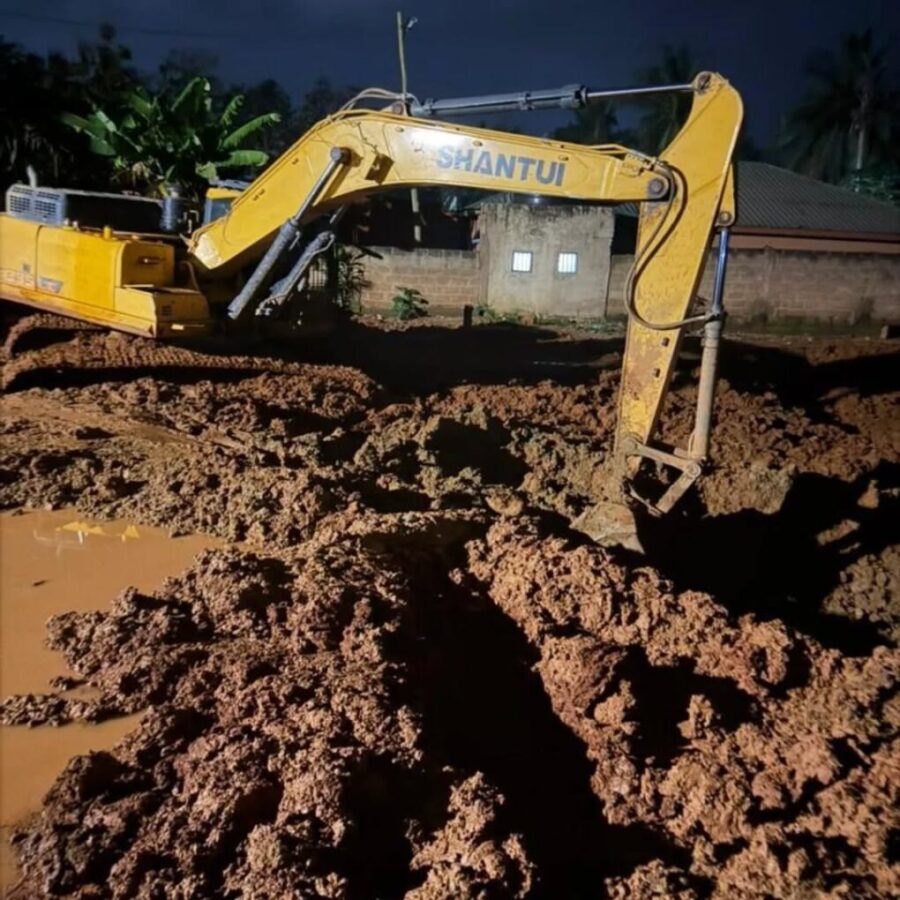
Officers moved in on an illicit mining site along the Birim River in Akwadum, where the operation began. During the raid, five excavators were secured.
Two of the excavators were immobilized on site to prevent further usage, while three were placed onto low-bed trucks and driven to Accra under armed protection.
Operators fled into the nearby woods as a result of the action, which instantly stopped mining activity in the region.
Another ongoing unlawful activity was discovered by NAIMOS officers at Ayigbe Town, close to the fire service area.
The control boards and monitors of two excavators were removed, rendering them inoperable.
Officers also seized two industrial pumping devices that were supplying water to processing pits and diesel fuel.
The site’s temporary housing and processing shelters were demolished and set on fire, so removing the operators’ ability to quickly reestablish themselves.
The task group then moved to Ankaase Osino in the Fanteakwa District. Awini Yahaya, a site caretaker, stated the enterprise belonged to Victor and that he was affiliated with Extra Gold Mining Company Limited.
However, no authentic documentation were provided to back up this allegation. NAIMOS officials seized a tributer identification card given at the scene, as well as two pumping devices and an unregistered black Toyota Land Cruiser discovered in the concession area.
Subsequent examinations of previously targeted locations revealed illicit miners’ shifting strategies.
Excavators left immobilized after earlier operations at Nsutem were clandestinely removed by their owners, demonstrating how operators exploit holes in enforcement windows.
Subsequent reconnaissance revealed that while some miners had left their locations because of persistent pressure, others were still working less than a mile from the Birim and Ayensu rivers, continuing to excavate deep trenches and flood vast areas of land in order to wash gold.
Severe environmental degradation was recorded by NAIMOS in a number of areas, including six-acre excavation fields and trenches deeper than eight feet that were all filled with tainted water.
Officers also verified a common strategy used by operators to avoid confiscation by moving machines to roadside places or removing excavator parts after getting tips.
Despite these obstacles, NAIMOS’s persistent presence has started to alter the environment.
Key river segments have seen a considerable decline in illegal activity, and field evaluations suggest that sustained pressure could result in a notable improvement in water quality in the upcoming months.
In order to make it more difficult for operators to physically and monetarily retrieve and transfer machinery, technical officers assigned to the operation recommended that future immobilizations include the removal of fuel pumps in addition to control boards and monitors.
Under central supervision, NAIMOS personnel maintained strict control over the operational areas throughout the day, solidifying their standing as the major force behind Ghana’s national campaign to protect waterways and forests.
Another decisive win in the battle against environmental crime was achieved on Day Three when their activities led to the confiscation of important logistical equipment, the destruction of numerous unlawful constructions, and the seizure or disabling of excavators.
As activities proceed, NAIMOS has reiterated its dedication to maintaining momentum until illicit mining networks are eliminated from the Eastern Region forever.
Source: newsthemegh.com