
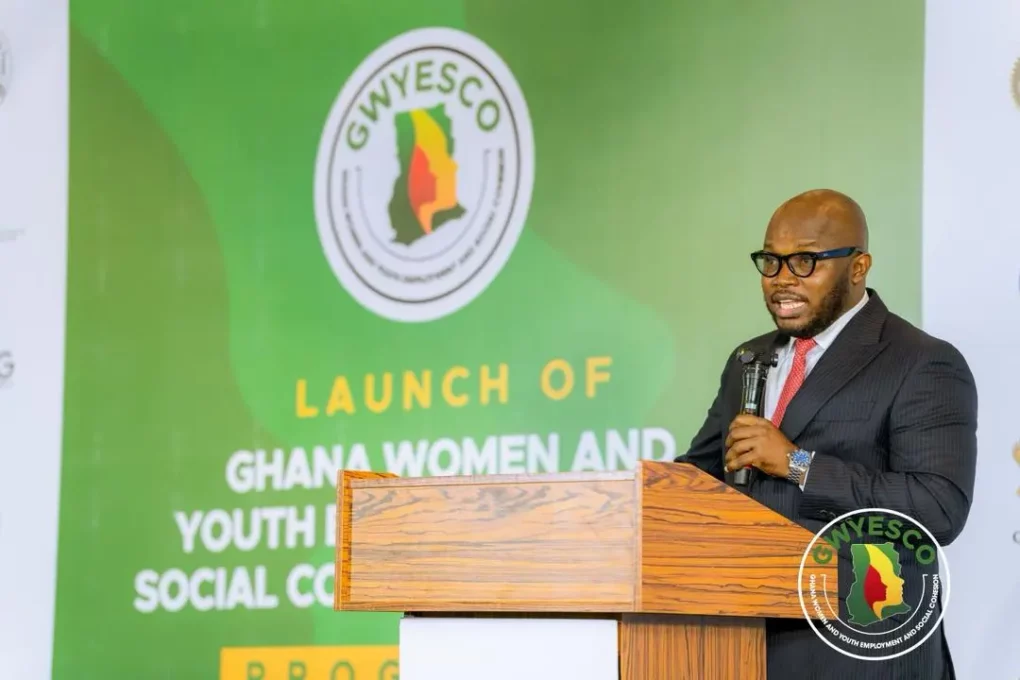
The Ghana Women and Youth Employment and Social Cohesion (GWYESCO) Programme, a major initiative that is anticipated to generate over 30,000 jobs and economic opportunities for women and young people nationwide, has been formally inaugurated in Ghana.
Key participants in the launch included Chief Executive Officer of the Social Investment Fund Abass Nurudeen, AfDB Country Director Halimah Hashi, and Deputy Minister for Finance Thomas Nyarko Ampem.
Through sustainable livelihood options, especially in vulnerable and neglected regions, the project aims to solve young unemployment, support women’s economic empowerment, and build social cohesion.
Speaking during the launch, Mr. Nurudeen stated that the initiative is based on the idea that providing women and young people with chances for employment, skills, and hope is crucial for the advancement of the country.
“At the heart of this programme is the idea that when women and young people are empowered with skills, financing opportunities and hope, nations thrive,” he said.
He pointed out that one of the biggest risks to social stability and economic advancement in Ghana and throughout Africa is still youth unemployment and underemployment.
He states that a lack of market-relevant skills is a major factor in the rising number of young people who are not enrolled in school, working, or receiving training, and that many female entrepreneurs still struggle to get access to markets, technology, and funding.
According to Mr. Nurudeen, the GWYESCO Program has been created to directly address these issues through three major interventions: increasing access to financial and non-financial services for micro, small, and medium-sized businesses owned by women and young people; fostering market-driven training that is in line with industry demands and emerging sectors; and bolstering institutional capacity and accountability systems to guarantee sustainable program delivery.
Beneficiaries of the initiative will receive training in STEM, digital technology, agriculture, technical and vocational skills, and the creative industries. Additionally, TVET centers will be built, rebuilt, and equipped nationwide, and enterprises owned by women and young people will gain access to financing options, business development services, and entrepreneurship support.
By 2029, the program hopes to help over 22,000 women and young people find wage or self-employment, train over 28,000 beneficiaries in STEM, digital, and creative industry skills, support 10,000 MSMEs owned by women and youth with entrepreneurship and business development services, give 8,000 businesses access to financing, and build, renovate, and equip ten TVET centers across the country.
One of the program’s unique features, according to Mr. Nurudeen, is its Results-Based Financing (RBF) mechanism. Instead of just funding activities, this strategy links funding directly to quantifiable and validated results.
“This is a shift from financing inputs to financing impact,” he stated, outlining how the strategy centers program execution on performance, accountability, transparency, and quantifiable change.
He acknowledged the difficulties that Results-Based Financing frequently faces in Africa, such as bureaucratic delays, poor institutional coordination, procurement bottlenecks, and limited technical capacity, but emphasised that these difficulties should spur greater cooperation and creativity among stakeholders.
He urged all implementing partners, financial institutions, development partners, and government agencies to play their responsibilities effectively to ensure the program’s success.
Source: newsthemegh.com