

With the implementation of a new Palm Industry Policy, the government plans to plant 50,000 hectares of oil palm across the country, establishing the crop as a significant economic pillar alongside cocoa.
The project’s first phase, which would span 20,000 hectares, will cost $100 million, according to Dr. Cassiel Ato Forson, Minister of Finance.
In a Friday, April 4, 2025, Facebook post announcing the change, Dr. Forson said the policy is a part of a larger strategy to lessen Ghana’s reliance on imports of palm oil while fostering job creation and agribusiness expansion.
“We are looking to attract private sector investment to cultivate 50,000 hectares of palm. For the first 20,000 hectares alone, we estimate a need for $100 million in investment,” Dr Forson stated.
He pointed to Ghana as an example of how oil palm planting helped Malaysia successfully modernize its economy. Ghana is still a net importer of palm oil even though it is well situated for oil palm development.
“We must reverse this. Our neighbour, Côte d’Ivoire, is already exporting, which underlines the urgency for Ghana to scale up,” he noted.
It is anticipated that the Palm Industry Policy will support Ghana’s import substitution goal and generate thousands of jobs in rural areas.
Dr. Forson disclosed that the Ministry of Finance will shortly establish a Real Sector Division as part of its intentions to assist the palm initiative and other high-impact industries.
Key sectors of economic growth, including agriculture and responsible mining, will be identified and developed by this new organization.
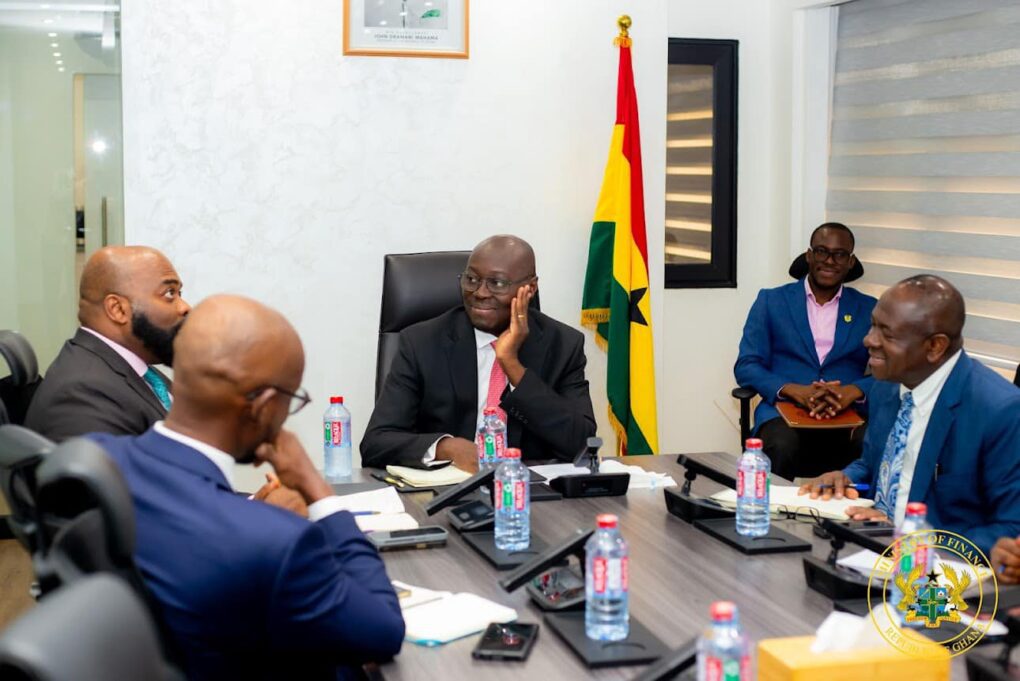
The announcement comes after representatives from British International Investment (BII), the development financing arm of the UK government, met with the financing Ministry.
At the moment, BII has about $200 million invested in Ghana, mostly in the energy industry.
According to Dr. Forson, BII has demonstrated a strong desire to broaden its investment base to encompass banking, forestry, and small and medium-sized businesses (SMEs).
“They are also considering bringing their full board to Ghana for the first time in nearly a decade,” he added.
Value-added agriculture and targeted investments to boost the real economy are the focus of the government’s most recent effort.
Source: newsthemegh.com