

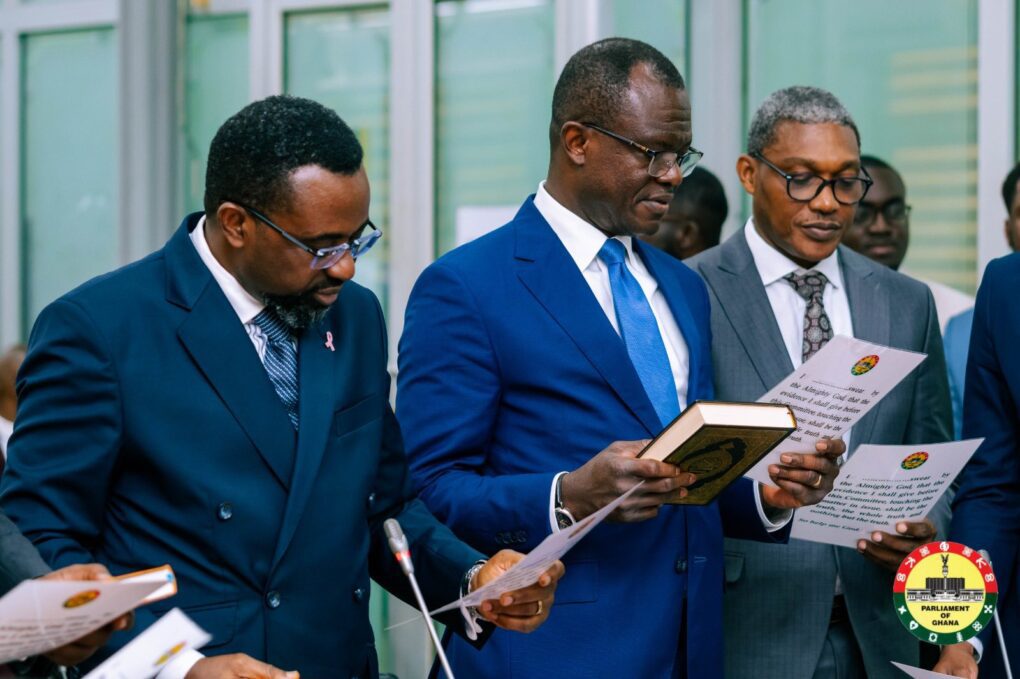
The governor of the Bank of Ghana, Dr. Johnson Pandit Asiama, urged a coordinated national response on Monday to alleviate losses resulting from the Gold-for-Reserves initiative.
Speaking in front of the Public Accounts Committee (PAC) of Parliament in Accra, he stated that even if the program has seen considerable financial losses since its launch in 2021, it is still essential for reserve accumulation.
According to Dr. Asiama, the losses should be viewed as a chance for group reform rather than as a foundation for assigning blame.
“The losses should not be a source of blame but rather a rallying point for collective action. Our appeal is for a unified national approach. We want everyone to join in reforming the programme to sharpen efficiency and support economic stabilisation,” he stated.
Dr. Asiama clarified that although the Gold-for-Reserves (G4R) program was intended to increase Ghana’s reserves and diversify its foreign exchange portfolio, it now forced the Central Bank to bear some expenses that weren’t specifically included in its budget.
He informed the Committee that by 2025, the program’s total gold holdings had reached 110.99 tonnes, or US$11.399 billion.
According to him, the program had recorded a total net loss of GHS4.893 billion, which included GHS1.054 billion in 2023 and GHS3.893 billion in 2024. The 2025 data were being audited.
Dr. Asiama stated that while the initiative was accomplishing its main goal, more cost-cutting measures were needed because the Bank of Ghana could no longer cover all related expenditures.
He said that the national budget ought to account for these expenses.
The plan was implemented to address issues facing the country. He added that the Bank had already lowered some fees and was working on more reforms. “The question now is how to reform them and make them more efficient,” he said.
“The Gold for Reserves program is still relevant,” he said, reiterating the program’s importance. Building reserves is its goal. Research indicates that improving efficiency and eliminating inefficiencies is more important than shutting it down.
Budgeting for the program’s expenses as quasi-fiscal activities, according to Dr. Asiama, would further lower losses and enhance sustainability, allowing the model to function more effectively.
He declared that additional stakeholder interactions were planned to address program difficulties, and meetings with the Ghana Gold Board had been set for later in the week.
“Beyond that, we are going to be meeting with other stakeholders, and we’ll be happy for experts in Parliament to join us. We believe that it can be made a win-win,” he stated.
Dr. Asiama urged ministries and stakeholders to work together to modernise the G4R program and thanked Parliament for supporting measures meant to strengthen the Central Bank.
The Public Accounts Committee Chairperson, Madam Abena Osei Asare, voiced concerns over the US$217 million allotted for Gold Board activities in the 2025 Budget, pointing out that no payments were made between January and September of that year.
She urged prompt disbursements and backed proposals for program improvements to increase efficiency, saying, “Actual cash was only provided in December, forcing the Bank of Ghana to sustain trading in the interim.”
Source: newsthemegh.com