

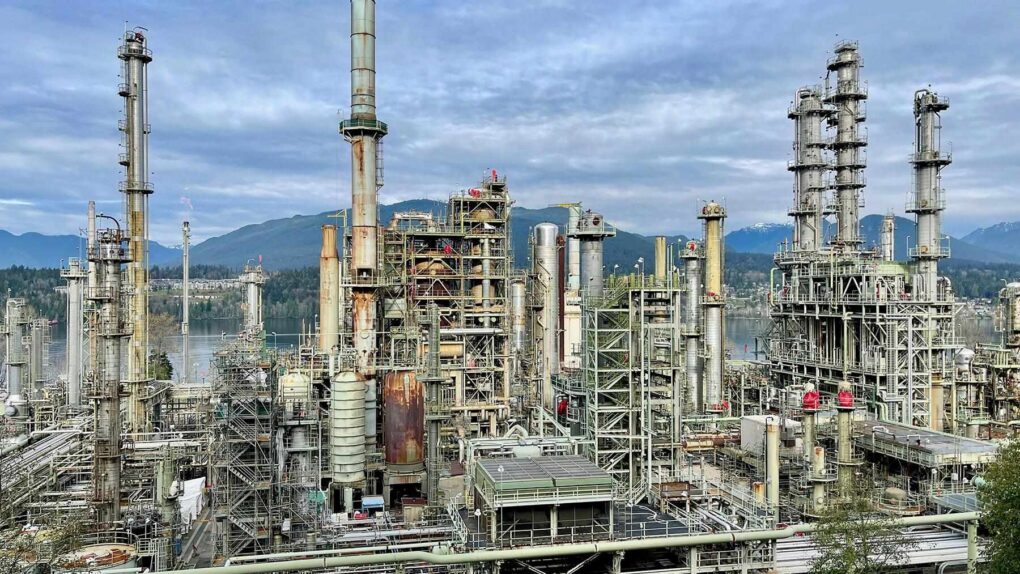
The Tema Oil Refinery (TOR) has cleared a six-year backlog of outstanding audited financial statements and returned to profitability for the first time in a decade, posting a Profit Before Tax of GH¢1.24 billion in 2025.
The refinery has received commendation from the State Interests and Governance Authority.
TOR successfully finished and submitted audited accounts covering the years 2019 to 2025, according to a SIGA communiqué. This closed a protracted financial reporting gap that had hampered the refinery’s governance credentials and complicated attempts to address its financial position.
Stronger corporate governance, strategic leadership, and operational reforms carried out by the present management team were credited by SIGA with the dual successes of restoring audit compliance and profitability as proof of improved institutional performance.
“SIGA recognises that these achievements are the results of deliberate strategic leadership, strengthened corporate governance practices, operational reforms, and the unwavering dedication of the Board, Management, and staff of TOR,” the authority stated.
A GH¢1.3 billion foreign exchange gain from financial and forex management strategies, an increase in associate profit to GH¢155 million, a decrease in trade and other payables from GH¢7.1 billion to GH¢5 billion, and a significant improvement in receivables management, with receivable days falling from 1,099 days to 652 days, were some of the financial improvements that SIGA highlighted.
The effective completion of Turnaround Maintenance activities and the processing of about 600,000 barrels of crude oil during the year were among the operational improvements that the authority cited as supporting the financial recovery.
After several years of dormancy, TOR started processing crude again in December 2025 following major maintenance on its Crude Distillation Unit.
“The Authority also acknowledges the important role played by the Board in supporting management’s recovery agenda, particularly through initiatives relating to debt restructuring, receivables recovery, cost containment measures, and continued investments in critical refinery infrastructure,” SIGA added.
SIGA acknowledged the refinery’s advancements but pointed out that there are still major obstacles to overcome. Liquidity limitations, accumulating deficits, and the necessity of ongoing balance-sheet restructuring were mentioned by the authority as issues that need ongoing attention.
“SIGA therefore urges the Board and Management of TOR to sustain the current momentum, deepen operational efficiencies, strengthen corporate governance standards, and accelerate efforts toward achieving long-term profitability, competitiveness, and national energy security,” the statement said.
The refinery has recently achieved a number of operational milestones, which coincides with the commendation.
Under a tolling agreement with Fujairah/Triangle Commodities Trading, which procured the cargo from Shell, TOR received about a million barrels of Bonga crude oil on May 27 onboard the Motor Tanker MT Cap Felix.
Produced from deepwater fields in Nigeria’s Niger Delta, the low-sulfur Bonga crude was chosen for its compatibility with TOR’s hydroskimming refinery configuration. It is anticipated to produce fuel oil for the domestic market as well as LPG, petrol, diesel, kerosene and aviation turbine kerosene.
Edmond Kombat, the managing director of TOR, was also honoured at the 10th Ghana CEOs Summit in Accra, when the Ghana CEOs Network presented him with the Outstanding Public Sector Leadership Award.
His efforts in spearheading institutional change and operational reforms at the refinery was commended in the citation.
The recovery of the refinery is taking place in the context of increased volatility in the world’s oil markets. International oil prices and refining margins have increased as a result of supply interruptions impacting crude transport routes.
A stable TOR, according to analysts, might lessen Ghana’s vulnerability on fluctuations in the price of imported petroleum.
The refinery has the potential to improve domestic energy security and save the government hundreds of millions of dollars in monthly refined product import expenses once it operates at between 45 and 60 percent of the country’s fuel demand.
Source: newsthemegh.com