
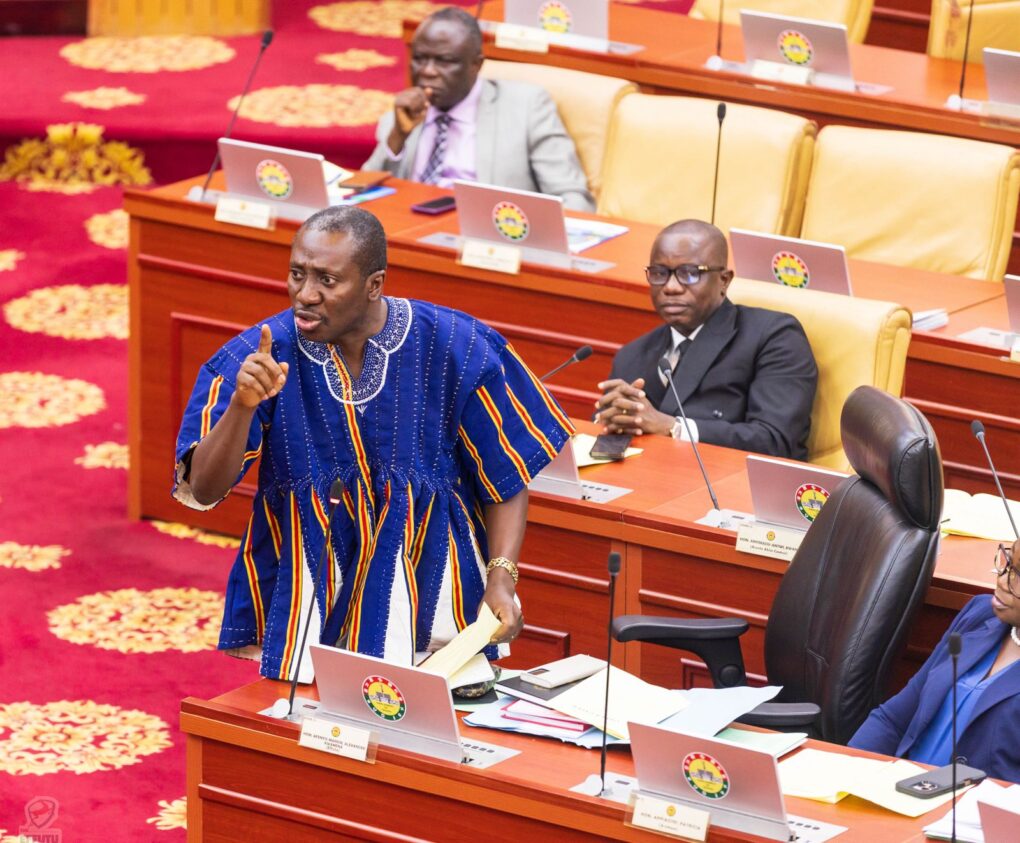
The newly enacted Tribunals Bill is faulty and might have significant effects on Ghana’s legal system, according to the Minority in Parliament, which has urged President John Dramani Mahama not to sign it.
Kwame Anyimadu-Antwi, the MP for Asante Akim Central and Ranking Member of Parliament’s Constitutional, Legal, and Parliamentary Affairs Committee, claims that the President has a chance to preserve his legacy by declining to sign the measure into law.
Mr. Anyimadu-Antwi stated on Channel One Newsroom that before formally appealing to the President, the Minority plans to release a statement detailing what it believes to be the legislation’s flaws.
“We would come out with a press release telling Ghanaians the wrong things in the bill. And then we would also ask President Mahama, whom we all think should leave a good legacy, not to sign this bill because it’s no good for Ghana,” he said.
The measure, according to Mr. Anyimadu-Antwi, revives a tribunal system that many Ghanaians believe was abused during the AFRC and PNDC eras.
He contended that the establishment of a new tribunal structure is not justified by the government’s rationale for enacting the legislation, which included addressing illegal mining and clearing the backlog of court cases.
He claims that the new tribunals are superfluous because the Chief Justice already has the constitutional power to create additional specialised courts to handle particular types of matters.
The Asante Akim Central MP also voiced concerns regarding clauses controlling tribunal panel membership, alleging that the standards for certain members’ educational backgrounds had been loosened while the law was being considered in Parliament.
He went on to say that certain of the legislation’s elements are illegal and threatened to seek judicial intervention if President Mahama signed the law in spite of the Minority’s objections.
Despite fierce opposition from the Minority, who contended that the measure may cause complexity within the legal system, Parliament enacted the Tribunals Bill. However, the majority has defended the law, arguing that it addresses issues brought up during the legislative process and offers a more robust legal foundation for the administration of justice.
Source: newsthemegh.com