

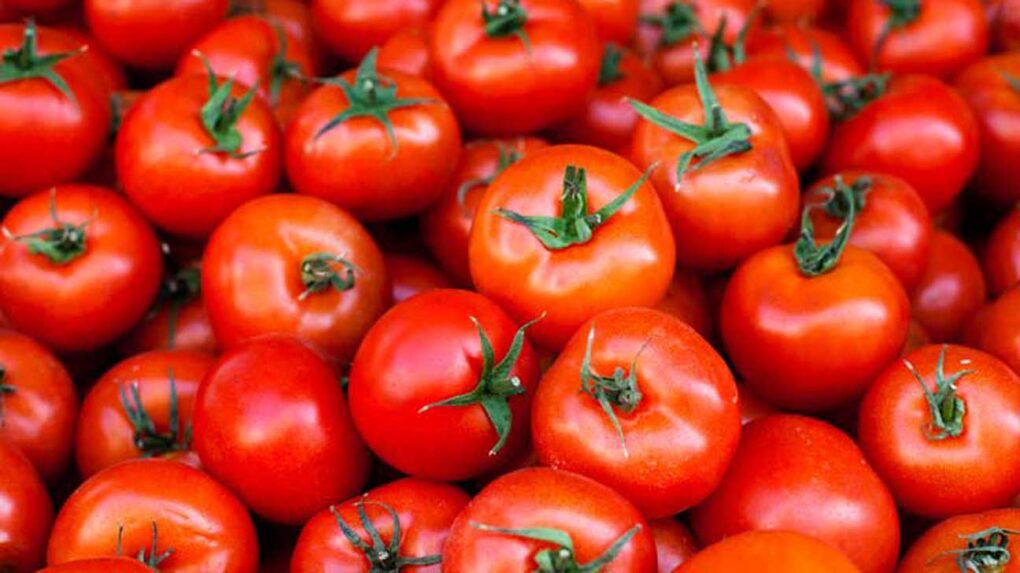
Rev. John Awuni, Chairman of the Food and Beverages Association of Ghana, has delivered a blistering indictment of Ghana’s agricultural leadership, declaring that the Ministry of Food and Agriculture has “no justification to exist” if the country cannot mobilise to produce tomatoes within 60 to 90 days.
The strong-worded declaration comes after an extreme tomato supply crisis caused by a prohibition on shipments from Burkina Faso, exposing Ghana’s ongoing reliance on foreign sources for a critical food product.
FABAG states that the scenario demonstrates “dangerous weakness, poor planning, and policy failure” in the country’s agricultural sector, despite the presence of large arable land, irrigation infrastructure, research institutions, and extension services.
Rev. Awuni emphasised, “It is completely unacceptable that a country with such resources cannot produce enough tomatoes to feed its own population,” emphasising that the current situation is a result of poor leadership and implementation rather than theoretical issues.
According to FABAG, tomatoes are a short-cycle crop that, with the right irrigation and better seed systems, can be grown and harvested in two to three months.
Rev. Awuni stated that Ghana has no justification for ongoing shortages, citing access to fertilisers, pesticides, mechanisation centers, and agricultural knowledge in addition to significant irrigation projects like Vea, Tono, Botanga, Kpong, and Dawhenya.
The statement noted, “If the Ministry were proactive and results-oriented, Ghana could immediately launch a national emergency tomato programme and begin harvesting within three months.”
The Association cautioned that depending on another nation for a basic food item goes beyond agriculture and becomes a threat to national security.
“Today it is tomatoes; tomorrow it may be something else. Economic security is national security,” Rev. Awuni said.
FABAG further contended that rather than structural constraints, the inability to attain self-sufficiency in spite of the existence of agricultural universities, research centers, and government subsidy programs is a clear indication of poor leadership and policy.
The Association has demanded swift and decisive government action to handle the situation, including the announcement of a national tomato emergency program and the quick distribution of enhanced seeds across the country in less than two weeks.
Additional recommendations include the implementation of guaranteed pricing for farmers, the activation of irrigation infrastructure for dry-season farming, the mobilising of jobless youth into commercial tomato production, and the subsidisation of fertilisers and agrochemicals.
In order to reduce post-harvest losses, FABAG also promoted greenhouse farming, the reopening of tomato processing plants, and investments in cold storage and transportation.
The Association is striving for Ghana to become completely self-sufficient in tomatoes in a year.
In a particularly striking recommendation, FABAG asked the government to think about reorganising the Ministry of Food and Agriculture into a production-focused agricultural authority with specific goals and accountability systems in the event that it doesn’t take action within the suggested period.
“The time for excuses is over.” The statement ended, “The time for production is now,” asking authorities to align policy goals, such as the government’s 24-hour economic agenda, with observable results in terms of food production.
The comments are anticipated to heighten public discussion over Ghana’s agricultural policy and its susceptibility to outside shocks in vital food supply chains.
Source: newsthemegh.com