

By Portia Gabor
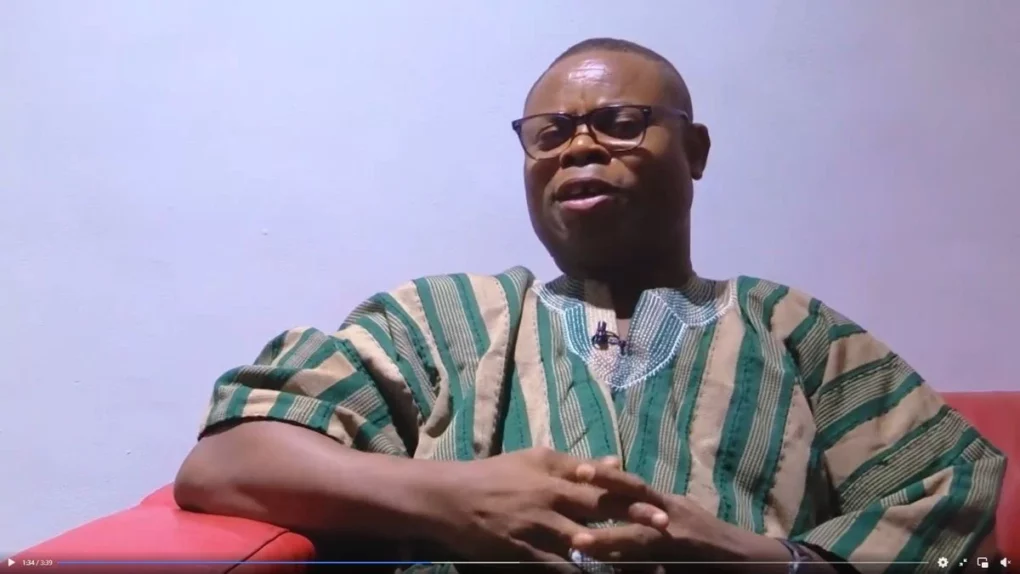
For years, he has dominated the public space as a global voice for African development and institutional reform.
As the Founding President and CEO of IMANI Centre for Policy and Education, a think tank consistently ranked among the most influential worldwide, Franklin Cudjoe has navigated the highest corridors of power.
From consulting for the U.K. Prime Minister’s office and being named a World Economic Forum Young Global Leader, to debating heads of state and advising Ghana’s Finance Ministry, his career has been defined by a relentless pursuit of transparency and accountability.
Yet, eight years ago, the alumnus of Harvard Kennedy School and doctoral candidate at Buckingham University began a silent, personal battle within his own nervous system.
“I remember I was being told that, look, my hand shakes sometimes. And I said, ‘Well, well, it happens. it shakes a bit, then it goes away.”
What followed was an “elevated shoulder” on his left side and spasms.
Then came January 20, 2020 at the beginning of the COVID-19 pandemic when returning from the UK to Ghana after spending holidays, something happened at the airport.

“I shook vigorously. I was shaking vigorously, you know, and I just couldn’t lift anything.”
After returning to Ghana, Franklin went to his doctor who referred him to a movement disorder specialist, Dr. Augustina Charway-Felli.
“She diagnosed me, and she said, she said it was Parkinson’s. You know, look, Parkinson’s diagnosis is clinical.”
Seeking absolute certainty, Franklin pursued second, third, and fourth opinions from neurologists in Ghana, Europe, and Dubai.
“European doctors had a live scan of my brain. They said, ‘Yeah, it is Parkinson’s.’ But they thought it was advanced… The final one I had to do with an Italian neurologist in Dubai. He also diagnosed same thing. So now it was settled.”
On January 8, 2026, when Franklin appeared as a guest on Ghana Tonight, the symptoms including the “head swings” caused by his medication became impossible to hide.

The reaction on social media was swift and, at times, cruel.
“Some of the guys on the other side were like, ‘Why are you shaking yourself? Is he autistic? Is he this?’ All kinds of disparaging comments.”
For a man who has spent his life demanding accountability from leaders, Franklin felt he owed the same transparency to his audience.
“I needed to be accountable to the people as what was happening to me. I’ve never understood African leaders actually don’t like to tell what happens to them. Anyway, so I took that leap of faith, and I did it.”
The impact of his openness was profound. One neurologist in Kumasi, Dr. Obese, reported that about twenty people walked into her clinic shortly after, saying, “We saw this gentleman on TV, and we think we have the same thing.”
Parkinson’s disease is a movement disorder of the nervous system that worsens over time.
Managing this requires a strict regimen of medications like Levodopa and Carbidopa, which keep Franklin “afloat” for four to five hours at a time.
“It’s not been easy, but it’s been manageable,” he says. He supplements his treatment with resistance training and stationary bicycling to help coordinate his motor skills.
As Franklin’s diagnosis became public, the pressure to seek a spiritual cure intensified.
“I remember before the medication, in my hometown… people, when they saw me, they eventually went to my dad and said, ‘Hey, we can’t allow this, so please, we know a spiritualist in Tafi Agome, let’s take him there.'”
As much as Franklin believes in spiritually, he says he will not allow it to weigh him down.
“I believe that God has given us the brain to also manage it and see how it works. “
Despite the worsening nature of the disease, Franklin’s outlook remains focused on resilience.
“It probably affected me positively because I have this attitude towards life that, look, everything’s happening in life. Life is certain,” Franklin reflects. “Indeed, being diagnosed with Parkinson’s disease is not the end, but a new navigation in life.”
Source: https://3news.com