

GNA
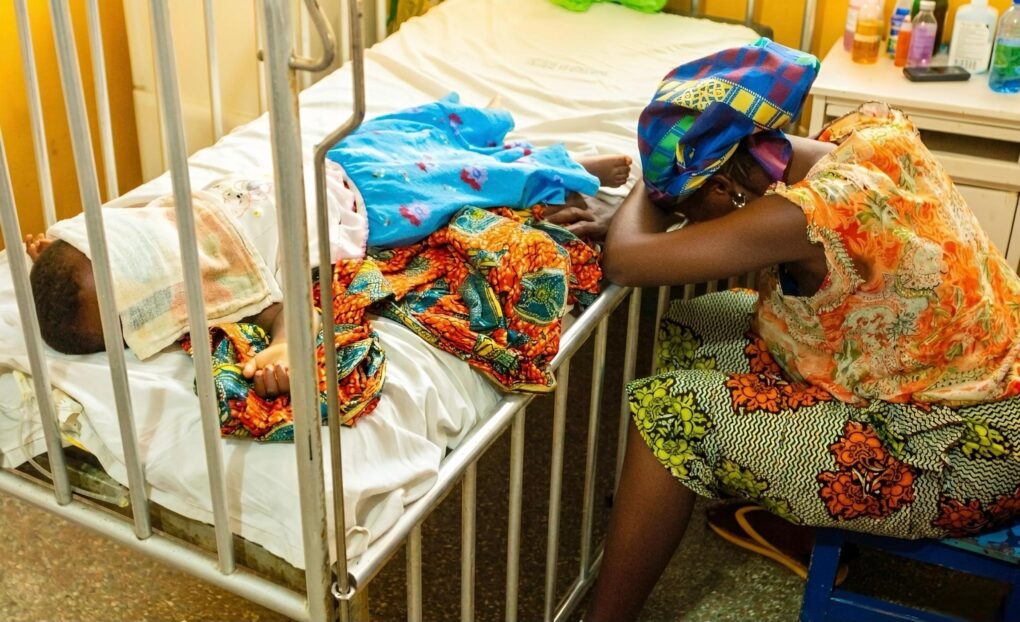
Long before the first light beamed across the dry savannah horizon of Tanzui in Bolgatanga, Upper East Region, Mmaa was already awake in a poorly lit room, her back pressed against the cold mud wall, cradling her young son in a silence thick with fear and uncertainty.
The night had offered no rest. Sometime past midnight, the fever had taken hold.
Her three-year-old boy, Atanga, who only hours earlier had been playing on the compound with other children, was now limp in her arms, his body burning with an intensity that made her heart race.
She did not need a thermometer to know that he was seriously ill, though the cause was not always certain.
“In this house, when the child becomes hot and refuses food, you think of malaria. But you still go to the hospital to confirm,” she said in a steady, reflective tone.
At first light, she wrapped him to her back and rode with her husband on a motorbike to the Bolgatanga Regional Hospital, the short journey that looked longer than before.
When the diagnosis came as severe malaria, it confirmed what she had suspected, but it did not ease the weight of what could have been. Although Atanga survived, the questions lingered.
“What if I had waited till morning? What if I thought it was just a normal fever and didn’t make a move?” she recalls.
Those questions echo across households in Ghana, where malaria often arrives unannounced in the stillness of the night, forcing families to make decisions that can mean the difference between life and loss.
A global crisis that refuses to fade
Mmaa’s story, though rooted in a small community in northern Ghana, reflects a crisis that continues to unfold on a global scale, defying decades of intervention and investment.
According to the World Malaria Report 2025, malaria remains one of the world’s most persistent infectious diseases, with an estimated 282 million cases and more than 610,000 deaths recorded in 2024, marking a troubling stagnation in global progress.
The burden is not evenly shared as Africa continues to account for approximately 96 per cent of all malaria cases and deaths, a disproportionate impact that reflects both structural inequalities and the complex interplay of climate, health systems, and socioeconomic conditions that sustain transmission.
Children under five remain the most affected, representing the majority of deaths, a reality that continues to challenge global health efforts despite the availability of preventive tools and effective treatment.

Compounding the challenge is a growing convergence of threats.
The report highlights increasing resistance to antimalarial drugs and insecticides, weakening the effectiveness of long-standing interventions such as treated nets and first-line treatments, while climate change is projected to expand mosquito habitats, potentially adding over 120 million new cases and hundreds of thousands of deaths in Africa by 2050 if current trends persist.
At the same time, funding gaps remain a critical barrier.
Global malaria financing continues to fall significantly short of targets, with available resources covering less than half of what is required, raising concerns that progress could stall further or even reverse in high-burden countries.
Yet, even within this uncertainty, there are signs of possibility.
New vaccines are being rolled out across more than 25 countries, protecting millions of children annually, while next-generation insecticide-treated nets, now accounting for over 80 per cent of distributed nets, offer improved effectiveness against resistant mosquito populations.
For the first time in decades, experts suggest that malaria elimination is not just aspirational, but technically achievable, if momentum is sustained.
Ghana’s story: Progress against the odds
Within this global landscape, Ghana presents a story of both progress and unfinished work, where years of sustained interventions have reshaped outcomes, even as the disease continues to exert pressure on communities.
Malaria, once widely regarded as a near-fatal illness, has gradually shifted into a more manageable condition, largely due to coordinated national strategies, improved access to healthcare, and expanded preventive measures.
According to the National Malaria Elimination Programme (NMEP), Ghana has made significant progress in malaria control, with prevalence declining from 27.5 per cent in 2011 to 8.6 per cent in 2022, while malaria deaths dropped sharply from about 2,799 in 2012 to 151 in 2022, and further declined to 52 in 2025 based on programme data.
This progress reflects a combination of interventions, including widespread distribution of insecticide-treated nets, improved diagnostic capacity, effective treatment protocols, and targeted campaigns aimed at vulnerable populations.
However, the scale of infection remains substantial.
In 2025, more than 5.3 million malaria cases were recorded in Ghana, according to the National Malaria Elimination Programme, a reminder that despite progress in reducing deaths, transmission remains widespread and continues to put millions at risk.“Malaria is a major drain on the economy. If we eliminate it, we could save billions of cedis every year,” said Dr Hilarius Abiwu, Programme Manager of the NMEP.
Recognising the need to move beyond control, Ghana has adopted a more ambitious approach through the National Malaria Elimination Strategic Plan (2024–2028), which shifts focus from reducing disease burden to actively disrupting transmission.
The strategy prioritises data-driven, locally tailored interventions, including next-generation insecticide-treated nets, indoor residual spraying, seasonal malaria chemoprevention, expanded vaccine coverage, and enhanced surveillance systems such as reactive case detection in low-transmission areas.
Yet, this progress remains fragile.
A projected $1 billion funding gap between 2024 and 2026, compounded by uncertainties in external support, could undermine recent gains and slow Ghana’s progress towards malaria elimination.
Upper East Region: Progress at the frontlines
In the Upper East Region, where children like Atanga remain at the centre of the malaria burden, recent data offers a picture of cautious but meaningful progress, shaped by sustained interventions and growing community engagement.
The incidence of malaria per 1,000 population declined from 256 in 2024 to 226 in 2025, representing an 11.7 per cent reduction, while testing rates for suspected cases increased from 99.1 per cent to 99.5 per cent, indicating a strong and responsive diagnostic system that ensures cases are confirmed and treated early.
Perhaps most striking is the outcome among children under five, the age group to which Atanga belongs, where the case fatality rate remained at zero in both years, a milestone that reflects improvements in early detection, access to treatment, and effective clinical management.
For Sydney Ageyomah Abilba, Principal Medical Entomologist and Upper East Regional Malaria Focal Person, these gains are the result of years of sustained effort.
“For the past years, malaria has been a big challenge in the region, but we have seen a lot of improvement due to interventions that have been rolled out,” he said in an interview with the Ghana News Agency.
Central to these interventions is Seasonal Malaria Chemoprevention (SMC), introduced in 2016, which provides preventive medication to children under five during peak transmission periods, helping to reduce the frequency and severity of infections in communities like Tanzui.
Mr Abilba explains that “the essence is to reduce the parasite load in children and prevent severe malaria, especially during the rainy season when cases increase.”
Other measures include the distribution of insecticide-treated nets through schools and antenatal services, indoor residual spraying in high-risk districts such as Builsa North, Builsa South and Kassena-Nankana West, and larval source management aimed at reducing mosquito breeding.

The human factor: behaviour and responsibility
Despite the availability of interventions, behaviour remains a critical determinant of success.
Mr Abilba notes that while many households possess insecticide-treated nets, their misuse continues to undermine efforts.
“We see people using bed nets for gardening or other purposes. That is not what they are meant for,” he states.
He adds that eliminating malaria will require more than policy and technology; it will depend on collective responsibility.
“The Ghana Health Service can do its part, but without community support, we may not achieve a malaria-free region,” he adds.
Environmental conditions also play a significant role, with stagnant water and poor sanitation creating ideal breeding grounds for mosquitoes.
Science at the frontier: A new possibility
While existing interventions continue to save lives, scientific innovation is opening new pathways that could redefine malaria control, particularly in Africa where the burden remains highest.
One of the most promising approaches is gene drive technology, being explored under the Target Malaria project, with ongoing research contributions from Ghana.
Unlike conventional tools that require repeated use, gene drive works by altering the genetic makeup of malaria-carrying mosquitoes so that their populations decline over time or lose the ability to transmit the parasite.

During a recent engagement at Imperial College London, Lamin Jadama, a Research Technician at Imperial College London, Target Malaria demonstrated how these genetic traits could be passed on to nearly all offspring, allowing the modification to spread rapidly through mosquito populations.
Mr Jadama, who works on transgenic mosquito strains, mosquito dissection and other insectary-based experiments, said targeting specific Anopheles mosquito species responsible for malaria transmission, could significantly reduce transmission in a more sustained way.
Dr. Federica Bernardini, a researcher at the Department of Life Sciences at Imperial College London, explained that the goal is not to eliminate all mosquitoes, but to focus on those responsible for malaria transmission.
“If mosquito populations drop to levels where transmission cannot be sustained, the malaria parasite cannot survive,” she said.
For Africa, where malaria persists despite decades of interventions, such innovation is seen as a complementary solution, especially as resistance to insecticides and antimalarial drugs continues to grow.
Rather than replacing existing tools like bed nets, vaccines, and medicines, gene drive is being developed to strengthen them and help close the gaps that current methods have not fully addressed.
In Ghana, researchers under the Target Malaria project at the University of Ghana, led by medical entomologist Dr Fred Aboagye-Antwi, are studying mosquito behaviour and ecology to ensure that any future use of the technology is safe, targeted, and responsive to local conditions.

However, experts emphasise that the approach is still under development, with no gene-drive mosquitoes released anywhere in the world, and that extensive testing, regulation, and community engagement will be required before any real-world application.
For communities like Tanzui, the promise of such technology lies not in complexity, but in its potential to reduce the frequency of nights like the one Ayine endured, where a single mosquito bite can turn into a race against time.
Tanzui: where the fight continues
Back in Tanzui the morning unfolds slowly, carrying with it the quiet resilience of a community that has learnt to live with malaria, even as it continues to fight against it.
Atanga, now fully recovered, runs freely through the compound, his laughter echoing against the mud walls, his earlier illness reduced to a memory that still lingers in his mother’s mind.
“I still check him when he sleeps; even when he is fine, I wake up and touch him, just to be sure.” Mmaa says reassuringly.
Her vigilance speaks to a deeper truth, that malaria may be preventable and treatable, but it has not yet been defeated.
“Now We Can. Now We Must”
On World Malaria Day 2026, the global call: “Driven to End Malaria: Now We Can. Now We Must”, carries both urgency and possibility.
The science is advancing. The tools are available. The progress is visible.

But the path to elimination will depend on sustained investment, strong community engagement, and the collective determination to ensure that no child’s life is left to chance.
Because behind every statistic is a child like Atanga.
And behind every child is a mother like Mmaa, waiting through the night, hoping that this time, the fever will pass.GNA25 April 2026Edited by Samuel Osei-Frempong