
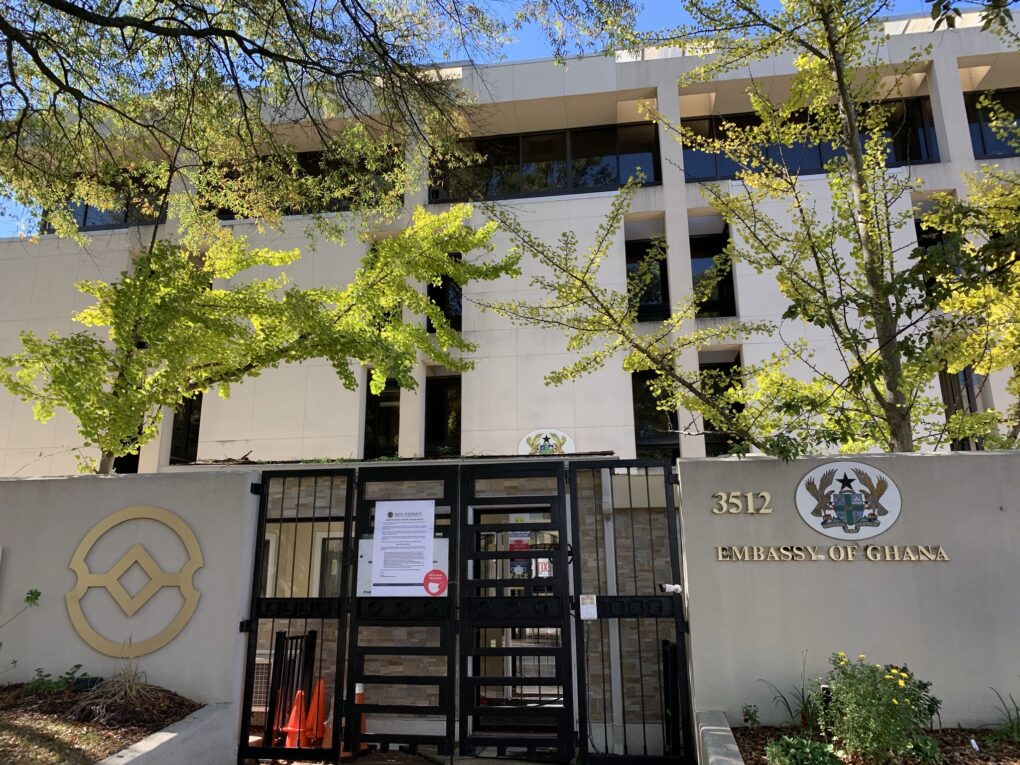
A forensic audit conducted by Ghana’s Auditor-General has uncovered approximately US$19.37 million in irregular payments linked to passport, visa and document delivery charges at the Ghana Embassy in Washington D.C. between 2019 and 2025.
The audit revealed that applicants seeking Ghana passport and visa services were redirected from the embassy’s official website to privately operated external platforms, where they were charged additional fees for application support, document processing and the return of passports and visas.
Ghana Embassy Audit Reveals Millions in Excess Mailing Fees
According to the Auditor-General’s report, applicants were charged US$29.75 for document return mailing, even though the average actual postage cost was estimated at only US$10.10.
During the period under review, applicants paid approximately US$6.95 million in mailing and dispatch fees. After deducting the estimated actual postage cost of US$2.36 million, the audit calculated an excess of about US$4.59 million from mailing charges alone.
Applicants were also charged US$67 for passport application support services and US$76.78 for visa application support services through the external platforms.
The Auditor-General stated that these additional services and charges were not part of the officially approved government fees for Ghanaian passport and visa applications.
$21.34 Million in Transactions Identified
Using information obtained from the embassy’s Electronic Consular Information Management System (eCIMS) and AppTrack, the forensic audit identified approximately US$21.34 million in transactions associated with the activities.
After taking legitimate costs into consideration, about US$19.37 million was classified as irregular proceeds.
The findings have raised concerns about financial management, accountability and the oversight of consular services at Ghana’s diplomatic mission in the United States.
External Websites Used for Ghana Passport and Visa Payments
The audit identified external platforms, including TravelGhana.Net and GhanaPV.org, and linked them to the embassy’s Information Technology Officer, Fred Kwarteng, and associated entities.
According to the report, the platforms were connected to the embassy’s official systems, with applicants redirected from the embassy website to the external websites to make payments for passport and visa-related services.
The Auditor-General noted that the platforms used official symbols, branding and presentation styles, potentially creating the impression that they were authorised by the Ghanaian government.
This arrangement raised concerns about the use of the Ghana Embassy website, unauthorised payment platforms and official government branding in the collection of consular fees.
Ghana Embassy Faced Passport and Visa Backlog
The audit also uncovered significant delays in the delivery of passports and visas to applicants.
Between June and August 2025, the Ghana Embassy in Washington recorded a backlog of 12,721 applications, despite applicants having already paid fees for document delivery.
Of the applications in the backlog, only 4,507 were mailed, while 8,214 were either collected personally or remained undelivered.
The embassy later spent approximately US$45,000 on postage and other efforts to mail letters and reduce part of the backlog.
Former Ambassador Alima Mahama Mentioned in Audit
The Auditor-General’s investigation also examined the roles of senior officials who served at the Ghana Embassy in Washington during the period covered by the audit.
Former Ghanaian Ambassador to the United States, Alima Mahama, who served between 2021 and 2024, was mentioned in connection with the outsourcing of passport and visa dispatch services.
According to the audit report, Mrs Mahama signed a contract formalising the outsourcing of passport and visa dispatch services to Travel Ghana/Secure Data Center.
The report, however, identified broader institutional weaknesses that contributed to the irregularities.
Auditor-General Blames Weak Controls and Website Manipulation
The Auditor-General attributed the financial irregularities to several factors, including weak internal controls, inadequate oversight, manipulation of the embassy’s website and the use of unauthorised external platforms.
The findings highlight concerns about transparency and accountability in the management of Ghana diplomatic missions, passport services, visa applications and consular revenue.
The Auditor-General has recommended that the US$19.37 million in irregular monies be recovered from the key actors involved.
It also recommended sanctions against affected officers in accordance with the Cybersecurity Act, 2020 (Act 1038).
The revelations are expected to intensify calls for stronger financial controls, digital security measures and accountability in Ghana’s overseas missions, particularly in the collection and management of passport fees, visa fees and other consular payments.
Source: newsthemegh.com